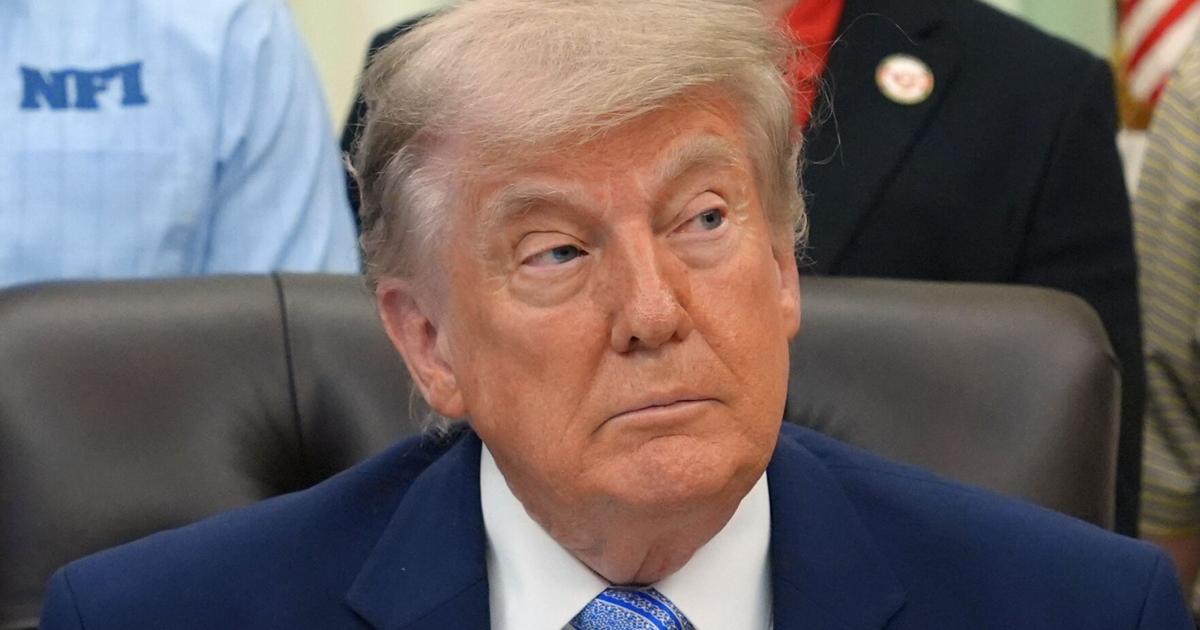
Trump’s investment portfolio bought Deere stock three times since January, including a March 12 unsolicited purchase valued at $15,001-$50,000 and additional buys on Jan. 6 and March 17. The article also says the portfolio bought Bunge shares in February and Tyson Foods and Corteva in March, highlighting ongoing trading activity in companies with business tied to the Trump administration. The piece is primarily a governance/conflict-of-interest report rather than a direct operating update for Deere or the other companies.
The real signal here is not the optics of a few small ag purchases, but the pricing of regulatory optionality into politically exposed names. Deere, the ag complex, and adjacent industrials look like they have a put under them whenever tariff relief, EPA easing, or farm-policy rhetoric becomes part of the administration’s agenda; that support can matter more than earnings revisions in the near term because these are sentiment-driven multiples, not just cash-flow stories. The second-order effect is that suppliers and dealers tied to replacement cycles may benefit before end-demand does, as channel participants pre-position for looser equipment affordability and better farm economics.
The more tradable angle is that the market may be underestimating how this kind of political signaling distorts relative performance inside the broader industrial and ag baskets. If the administration continues to frame Deere as a policy winner, the stock can keep grinding even without fundamental acceleration, while peers with less visible political alignment may lag despite similar operating trends. On the flip side, any reversal in tariff rhetoric or a renewed push to pressure equipment pricing would compress the multiple quickly because the premium is being supported by narrative, not just fundamentals.
For AAPL and NVDA, the important read-through is that large-cap tech remains hostage to geopolitical bargaining chips rather than domestic policy alone. If China-related talks stall, these names can retrace on export/control headlines even if their underlying demand remains intact; if negotiations improve, the upside is mostly multiple expansion, not a near-term earnings step-up. This creates a cleaner expression in options than in outright equity, because the catalyst window is measured in weeks to a few months and headline volatility is likely to dominate realized fundamentals.
The broader contrarian point is that the consensus may be too focused on ethics and not enough on positioning. Politically connected ownership does not automatically create tradable alpha, but it can amplify trend persistence by attracting both follow-on flows and management engagement. That means the crowded trade is not necessarily "long the obvious winners"; it is long the names that can convert administration proximity into durable policy asymmetry before the market discounts the advantage.
AI-powered research, real-time alerts, and portfolio analytics for institutional investors.
Request DemoOverall Sentiment
neutral
Sentiment Score
0.05
Ticker Sentiment
