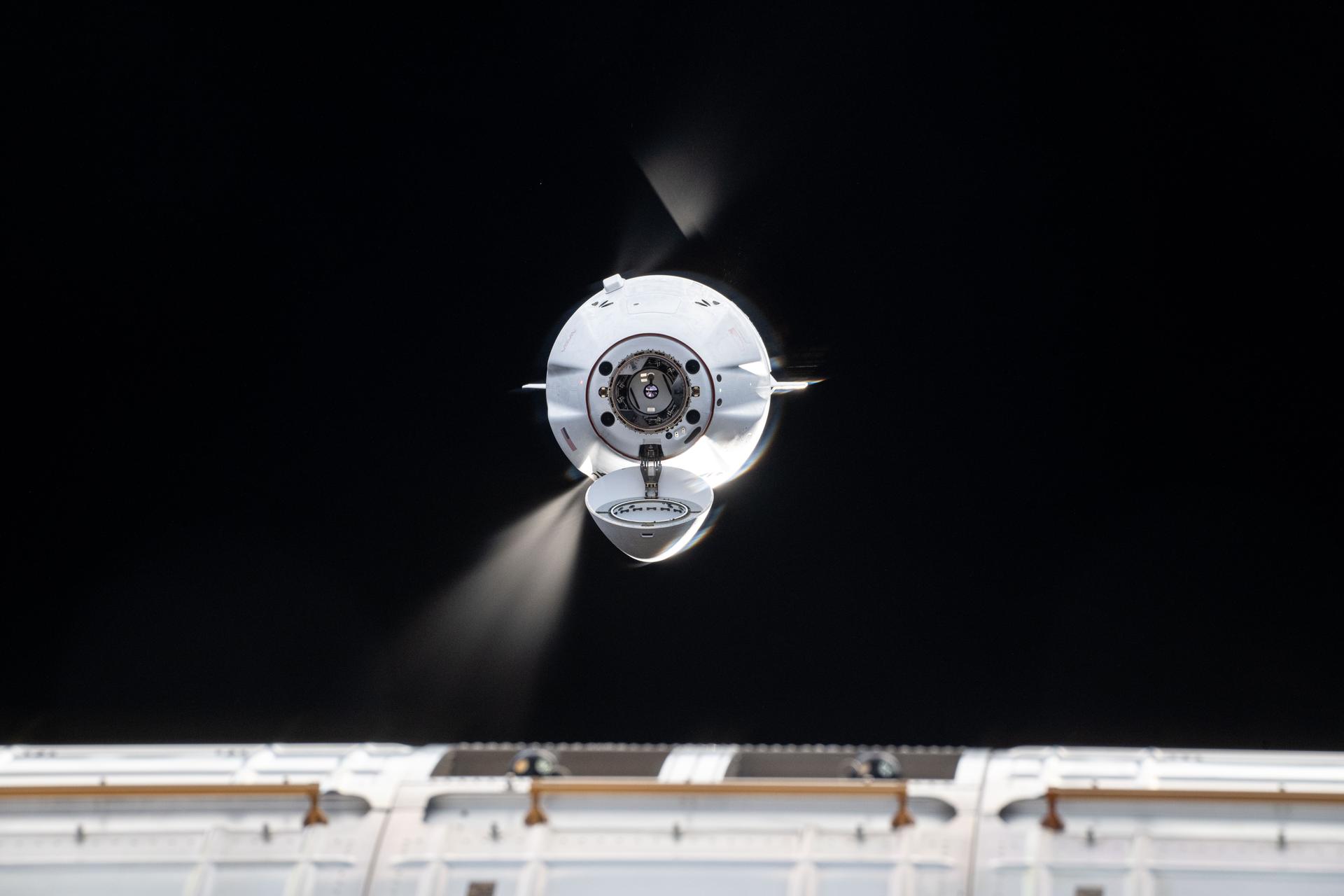
SpaceX’s Dragon spacecraft is approaching the International Space Station with nearly 6,500 pounds of cargo as part of NASA’s 34th commercial resupply mission. The spacecraft is scheduled to dock autonomously at approximately 6:38 a.m. EDT to the Harmony module’s forward port. The update is routine mission coverage and is unlikely to have a material market impact.
This is a small but useful read-through for the space supply chain: the incremental signal is not the cargo itself, but the cadence of reliable, repeatable LEO logistics. A steady manifest on a privately operated system reinforces the idea that orbital infrastructure is transitioning from “mission-by-mission procurement” to something closer to a recurring service model, which should modestly benefit companies with reusable launch, autonomous rendezvous, and mission ops capabilities. The second-order winner is the industrial base that can monetize utilization rates rather than one-off launches: software, avionics, thermal control, and ground support all become higher-quality revenue streams when flight frequency rises.
The competitive implication is that incumbents focused on traditional aerospace project cycles are increasingly vulnerable to margin compression if commercial operators keep proving lower-cost, higher-cadence access. Over months to years, the key issue is not one docking, but whether NASA and adjacent customers continue migrating budget share toward providers that can absorb more missions per year with fewer bespoke labor hours. That creates a durable advantage for vertically integrated players with flight heritage and hardware reusability, while pressuring contractors whose economics depend on lower utilization and slower turn times.
The main risk to the bullish read is execution credibility: any anomaly in docking, loss of cargo, or schedule slip would quickly reset expectations because this business is still judged on reliability, not just throughput. Near term, the market tends to overreact to single mission headlines, so the opportunity is usually in buying dips on proof of operations rather than front-running them. Over a 6–18 month horizon, the better signal is contract expansion and cadence, not media coverage.
Consensus may be underestimating how much recurring orbital logistics can normalize supplier economics. If flight frequency keeps rising, the earnings leverage is likely to accrue first to the “picks and shovels” layer—communications, simulation, power systems, and mission software—before the pure launch names fully rerate. That makes the opportunity broader than just space launch; it’s an infrastructure monetization story with defense adjacency and a long-duration optionality premium.
AI-powered research, real-time alerts, and portfolio analytics for institutional investors.
Request DemoOverall Sentiment
neutral
Sentiment Score
0.10
