





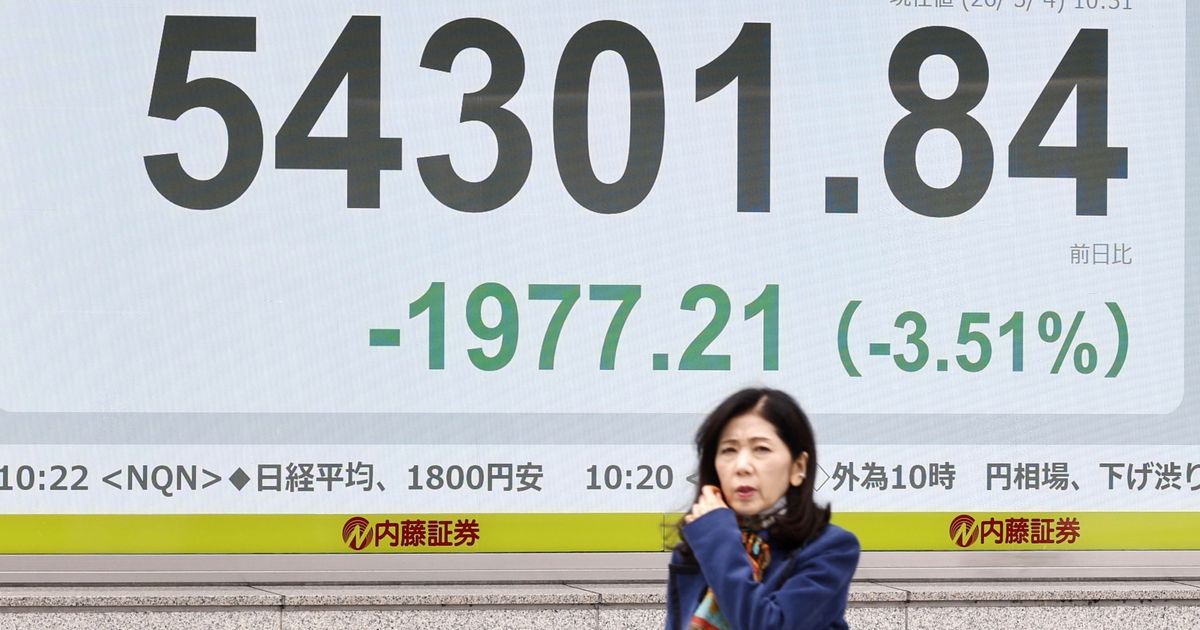
U.S. equities rebounded—S&P 500 +1%, Nasdaq +1.5%, Dow +0.7%—after oil prices cooled (Brent settled at $81.40, U.S. crude $74.66) and two upbeat economic reports showed accelerated growth in services/real estate/finance (fastest since summer 2022) and hiring gains outside government. Risk-sensitive moves were apparent: South Korea’s Kospi plunged 12.1% earlier amid Iran war fears while crypto-linked names rallied (Coinbase +15.3%, Robinhood +8.3%) and retail/tech outperformed (Ross +7%, Amazon +4%, Nvidia +2%). Treasury yields ticked up (10-year 4.08%), and traders pushed expected Fed rate cuts further into summer, keeping policy and oil-driven inflation risks central to positioning.
Market structure: Geopolitical risk is re-pricing energy-sensitive sectors and concentrating returns into large-cap tech and digital-asset plays; Brent at $81 (U.S. crude $74.7) and the S&P bounce show investors are rewarding liquidity and earnings visibility (NVDA, AMZN) while routing cyclicals and EM. Direct beneficiaries are integrated oil producers, large-cap tech and crypto-exposed equities (COIN, HOOD) in the near term; losers are airlines, leisure and energy-intensive industrials if Brent sustains >$85 for more than 4–6 weeks. Cross-asset: higher geopolitical risk lifts Treasury yields (10y ~4.08%), USD strength and equity/option vols—expect widening credit spreads and outperformance of USD-denominated safe assets in the short run.
Risk assessment: Tail risks include escalation that pushes Brent >$100 within 30 days (low probability, high impact) causing a 3–5% hit to S&P EPS for energy-dependent sectors and forcing Fed rate-hike persistence. Time horizons: days—spiky intraday volatility and flight-to-quality; weeks/months—earnings revisions and sector rotation; quarters—Fed timing shifts (rate cuts pushed into summer) that will re-rate duration-sensitive growth. Hidden dependencies: Fed reaction function to energy-driven CPI, OPEC spare capacity and SPR releases; catalysts include OPEC+ meetings, SPR announcements and Friday payrolls that can swing positioning rapidly.
Trade implications: Favor convex, size-controlled exposures: 1) selective long in NVDA/AMZN for 2–4% portfolio beta with call spreads to cap cost; 2) tactical 1–2% long in COIN/HOOD equities on crypto momentum but with 15% trailing stops; 3) hedge systemic tail via 1% allocation to 3–6 month SPX puts or VIX call spreads sized to limit a 7–10% drawdown. Rotate out of long-duration small caps and EM cyclical exposure; increase cash/floating-rate instruments if 10y exceeds 4.25% or Brent >$90.
Contrarian angles: The market may be overstating persistent supply shock risk—histor parallels (1990, 2011) show Middle East conflicts often produce short-lived oil spikes absent shipping chokepoint closures. If Brent reverts to sub-$75 within 6–8 weeks (trigger to watch), rotate from defensive positioning back into beaten-down cyclicals (Asia value, travel) where 6–12 month upside is underpriced. Conversely, consensus underestimates how quickly Fed delay on cuts (beyond summer) could compress growth multiples; avoid full-size longs in long-duration names without hedges.
AI-powered research, real-time alerts, and portfolio analytics for institutional investors.
Request TrialOverall Sentiment
mildly positive
Sentiment Score
0.30
Ticker Sentiment
