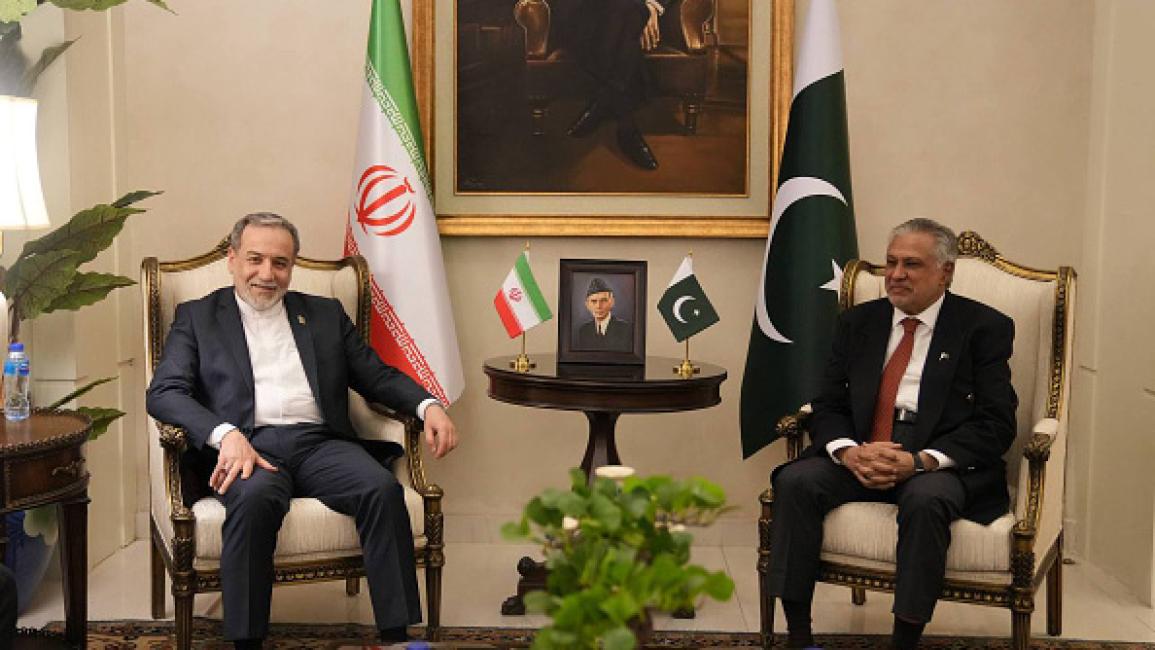
Iran stepped up diplomatic outreach to Oman, Qatar, and Saudi Arabia to build a regional framework for ceasefire stabilization and conflict resolution. Foreign Minister Abbas Araghchi urged Gulf states to support a collective security mechanism led by neighboring countries rather than US intervention. The article is geopolitically relevant but does not present an immediate market-moving development.
The market implication is not a direct commodity shock so much as a probability shift: Tehran is trying to convert a military standoff into a diplomatic process that lowers the odds of a wider Gulf escalation premium. That matters because risk assets in the region typically re-rate not when headlines improve, but when shipping insurance, FX hedging costs, and capital flight expectations stop worsening; even a modest de-escalation can compress those spreads faster than fundamentals improve.
The likely winners are Gulf sovereign-linked assets and regional infrastructure beneficiaries that are most sensitive to lower geopolitical friction, especially entities tied to tourism, aviation, ports, and project finance. The more interesting second-order effect is that Oman and Qatar gain as structural intermediaries, which can strengthen their regional influence and support tighter risk premia versus peers; this can also modestly aid local bank funding conditions if deposit stability improves.
The main risk is that this diplomacy is a ceiling on escalation, not a durable settlement. If talks merely freeze the current conflict while proxy disruptions continue, the market may quickly fade the headline relief and leave implied volatility too low for the tail risk that a single incident re-prices energy, defense, and Gulf sovereign spreads over 1-3 weeks. The contrarian view is that consensus may be underestimating how often markets misprice 'mediated calm' as true peace, when in practice it is often just a lower-frequency path to the next flare-up.
From a positioning lens, this argues for selectively owning beneficiaries of regional normalization while keeping cheap convexity against relapse. The cleanest expression is long GCC cyclicals or airlines versus broad EM exposure, paired with small, date-defined downside hedges in energy or defense where geopolitical complacency can unwind abruptly.
AI-powered research, real-time alerts, and portfolio analytics for institutional investors.
Request DemoOverall Sentiment
neutral
Sentiment Score
0.00
