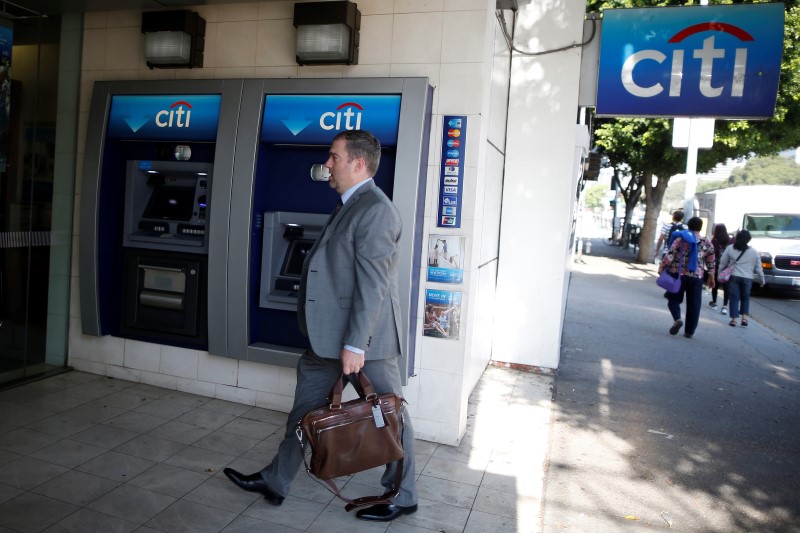
Citigroup CEO Jane Fraser said investment-banking fees and the markets business are tracking a mid-teens percent increase year-over-year in Q1 and reiterated a 10%-11% return on tangible common equity target by end-2026. Fraser described the global economy as "just fine," noted some hedge funds have taken hefty losses in rates, and said recent private credit turmoil is not systemic. She also warned a proposed Trump administration credit-card cap would "crush" access to credit, a regulatory risk for consumer lending.
Elevated rate-driven trading losses at some hedge funds are a double-edged sword: near-term volatility expands fee pools for prime brokers and clearing banks but also concentrates counterparty and margin-call risk into a handful of bespoke credit conduits and private credit sponsors. Expect outsized trading revenues to show up over weeks-to-months while loan-loss provisioning and idiosyncratic counterparty impairments materialize over the following 2-4 quarters, pressuring RoTE if reserves are ratcheted up.
A prospective regulatory intervention on consumer credit changes the economics of unsecured lending beyond headline NII compression. Caps on card yields/interchange would disproportionately hurt thin-margined card-centric portfolios and originator securitization economics, shrinking supply into ABS markets and pushing spreads wider — which in turn raises funding costs for non-bank lenders and creates selective pickup opportunities for well-capitalized banks that can warehouse paper at richer spreads over a 6-18 month window.
Separately, the macro of higher volatility plus structural AI capex creates asymmetric opportunities: firms selling low-latency, high-density compute (hardware/cloud integrators) are positioned to capture incremental spend even if overall tech capex remains choppy. The market still underprices the scenario where trading-driven liquidity + re-shoring of compute lead to a multi-quarter surge in specialized server demand, but execution and supply-chain risk remain binary short-term catalysts that can flip sentiment rapidly.
AI-powered research, real-time alerts, and portfolio analytics for institutional investors.
Overall Sentiment
mildly positive
Sentiment Score
0.20
Ticker Sentiment
