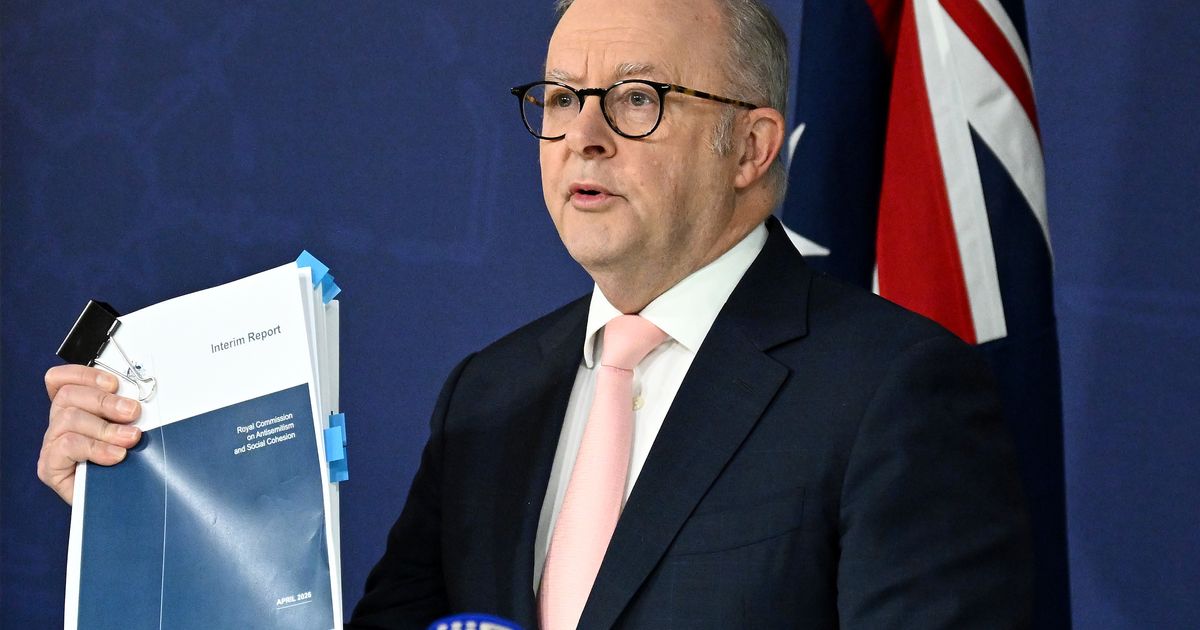
Australia's inquiry into the Bondi Beach Hanukkah shooting, which killed 15 people, recommended prioritizing nationally consistent gun-law reform, including tighter licensing, periodic license reviews, and a buyback scheme. The report also flagged a sharp rise in antisemitic incidents since Oct. 7, 2023, and said recent US/Israel strikes on Iran likely increased risks to the Australian Jewish community. The government has already allocated A$102 million ($73 million) for security at Jewish sites.
The immediate market read is not on the public-safety headline itself but on the policy transmission: Australia is moving toward a tighter, more administrative firearms regime that increases recurring compliance, license-review, and transaction friction. That creates a slow-burn revenue opportunity for businesses tied to secure storage, digital licensing, background-check workflows, surveillance, and facility hardening, while pressuring any exposed sporting/firearms retail channel through lower unit volumes and slower inventory turns.
The second-order effect is budget reallocation. If federal and state governments share buyback costs, the nearer-term fiscal winner is the defense/security ecosystem: more spend on protective infrastructure for schools, synagogues, transport nodes, and event security, likely over multiple budget cycles rather than a one-off response. That tends to favor contractors with recurring service contracts over hardware-only providers, because the political imperative is to show visible protection quickly and then maintain it cheaply.
The contrarian angle is that the policy response may be slower and less uniform than rhetoric suggests. Australia’s federal structure creates implementation risk, and any buyback program that depends on state cooperation can stretch into months or years, diluting the tradeable impact. Also, if the inquiry keeps the issue framed as domestic extremism plus societal cohesion rather than a broad public-order crisis, the market opportunity may be narrower than headline risk implies, making overreaction in security names a fade candidate after the first budget announcements.
Catalyst-wise, the next 4-12 weeks matter for legislative language and funding commitments; the next 6-18 months matter for actual contract awards and compliance enforcement. Tail risk is a repeat incident or credible threat escalation, which would accelerate spending and shorten procurement timelines materially. The reversal case is political pushback on gun reform cost-sharing or evidence that existing security allocations are deemed sufficient, which would reduce the urgency premium quickly.
AI-powered research, real-time alerts, and portfolio analytics for institutional investors.
Request DemoOverall Sentiment
moderately negative
Sentiment Score
-0.45
