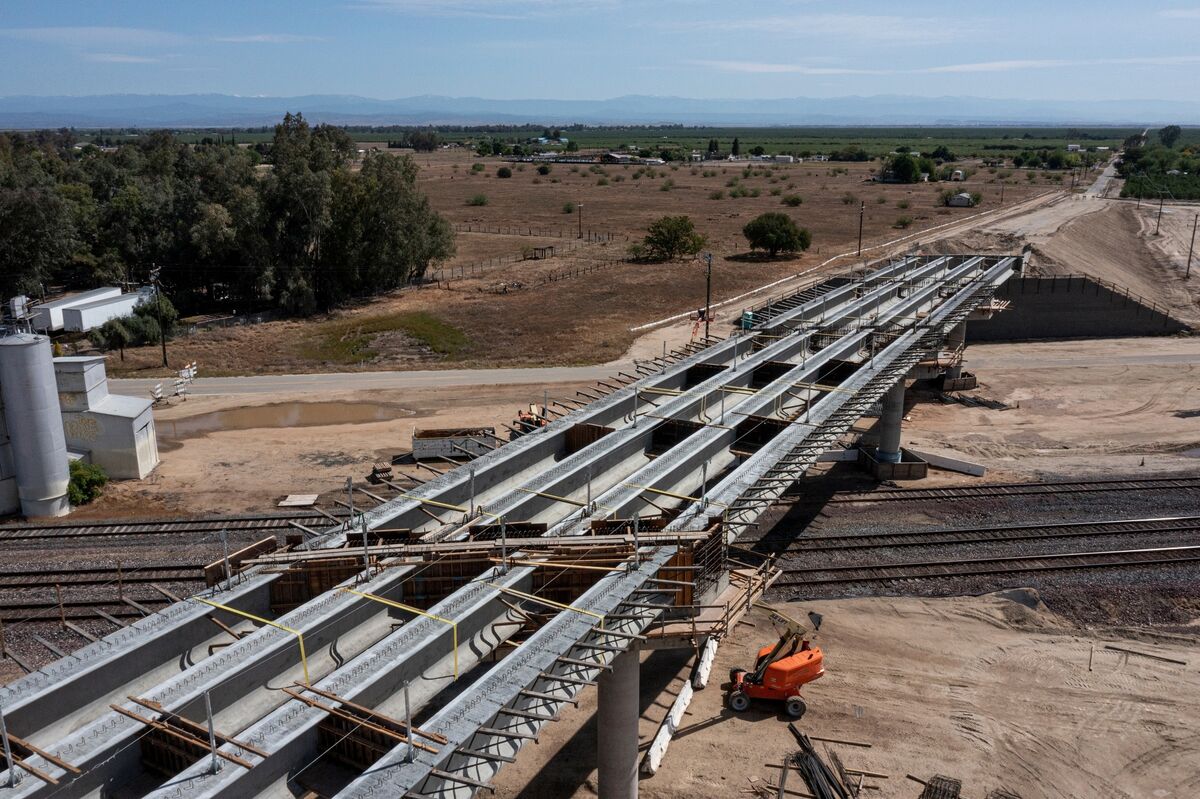
The California High-Speed Rail Authority projects passenger service on its Central Valley segment by 2032, a year earlier than previous estimates. However, the project's financial sustainability is contingent upon extending this segment north to the Bay Area or south to Los Angeles County. Achieving this crucial expansion will require stable state funding, new powers to resolve utility disputes, and significant private-sector participation, highlighting ongoing challenges for the long-delayed infrastructure initiative.
The California High-Speed Rail Authority has revised its forecast for the initial Central Valley segment, now anticipating passenger service by 2032, a year sooner than previously estimated by the Inspector General. While this accelerated timeline is a modest positive, the project's overall financial viability remains highly conditional. The agency's own review states that the 171-mile line will not be financially sustainable as a standalone segment. Its success is entirely dependent on securing the necessary resources to extend the line to the major economic hubs of the Bay Area and Los Angeles County. This expansion itself faces substantial hurdles, including the need for stable, long-term state funding, new legislative powers to resolve persistent utility disputes, and significant participation from the private sector. These dependencies introduce considerable uncertainty and highlight the persistent financial and regulatory risks that have characterized this long-delayed infrastructure initiative.
AI-powered research, real-time alerts, and portfolio analytics for institutional investors.
Request DemoOverall Sentiment
mixed
Sentiment Score
-0.05
