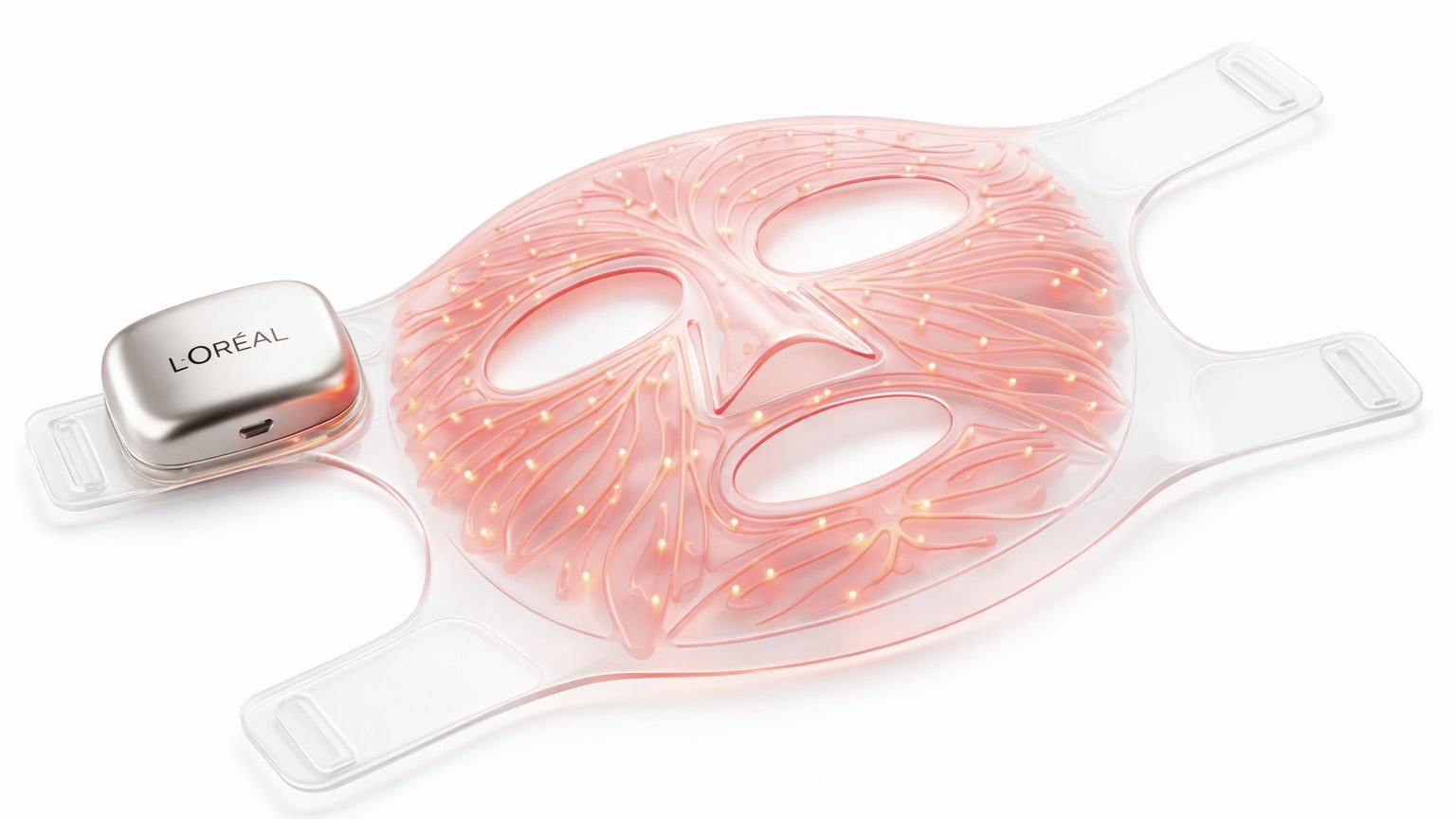
L’Oréal unveiled a prototype ultra-thin, flexible silicone LED face mask at CES developed with LED specialist iSmart, targeting visible signs of ageing using red and near‑infrared wavelengths, with a consumer launch slated for 2027. The device incorporates a transparent support with a skin‑safe microcircuit for precise wavelength control, signalling continued investment in beauty‑tech R&D and an extension of L’Oréal’s product pipeline; the announcement is strategically positive for brand and product positioning but is unlikely to be materially market‑moving in the near term.
Market structure: L’Oréal (OR.PA / US ADR LRLCY) stands to gain brand halo, higher ASPs and capture at-home premium skincare spend; LED-component suppliers (e.g., ams-OSRAM, Seoul Semiconductor) and premium retailers (ULT, selective DTC channels) are potential beneficiaries. Losers: mid-market commoditised skincare brands and some professional spa chains could see 1–3% revenue erosion over 3 years as adoption shifts to validated, science-backed at-home devices. Competitive dynamics favor incumbents with R&D scale — a successful 2027 launch would raise L’Oréal’s pricing power in personal tech and compress margins for non-tech competitors.
Risk assessment: Tail risks include regulatory safety rulings or adverse clinical findings that trigger recalls (low prob, high impact), patent litigation with iSmart or component suppliers, and component shortages that could lift COGS +10–20%. Time horizons: immediate: sentiment bump (days–weeks); short: 6–18 months for product validation and pre-orders; long: 2027 launch impacts revenue/earnings 2027–2029. Hidden deps: battery life, firmware/updatability, aftercare SKUs and warranty costs; catalysts: peer-reviewed clinical data, CE/FDA clearances, pre-order velocity.
Trade implications: Tactical overweight L’Oréal (1–2% portfolio) to play brand/tech premium; buy 18–30 month LEAP calls on LRLCY (e.g., Jan 2029 ~10% OTM) sized 0.5% for asymmetric upside. Pair trade: long OR.PA / short EL (Estée Lauder) dollar-neutral 0.5–1% each, 6–18 month horizon, exit on 10% relative move or competing device announcement. Add small exposure (0.5–1% combined) to LED component suppliers (AMS, 046890.KS) with 6–12 month order-flow checkouts.
Contrarian angles: Consensus underestimates post-launch margin erosion if L’Oréal discounts to drive adoption — device could become a customer acquisition cost, not a margin driver. Historical parallel: Neutrogena light-mask hype faded after safety and adoption issues; therefore initial stock moves may be overdone. Unintended consequence: strong device adoption could prompt vertical integration, squeezing third-party device makers and making supplier names the true alpha of the cycle.
AI-powered research, real-time alerts, and portfolio analytics for institutional investors.
Request DemoOverall Sentiment
mildly positive
Sentiment Score
0.32
