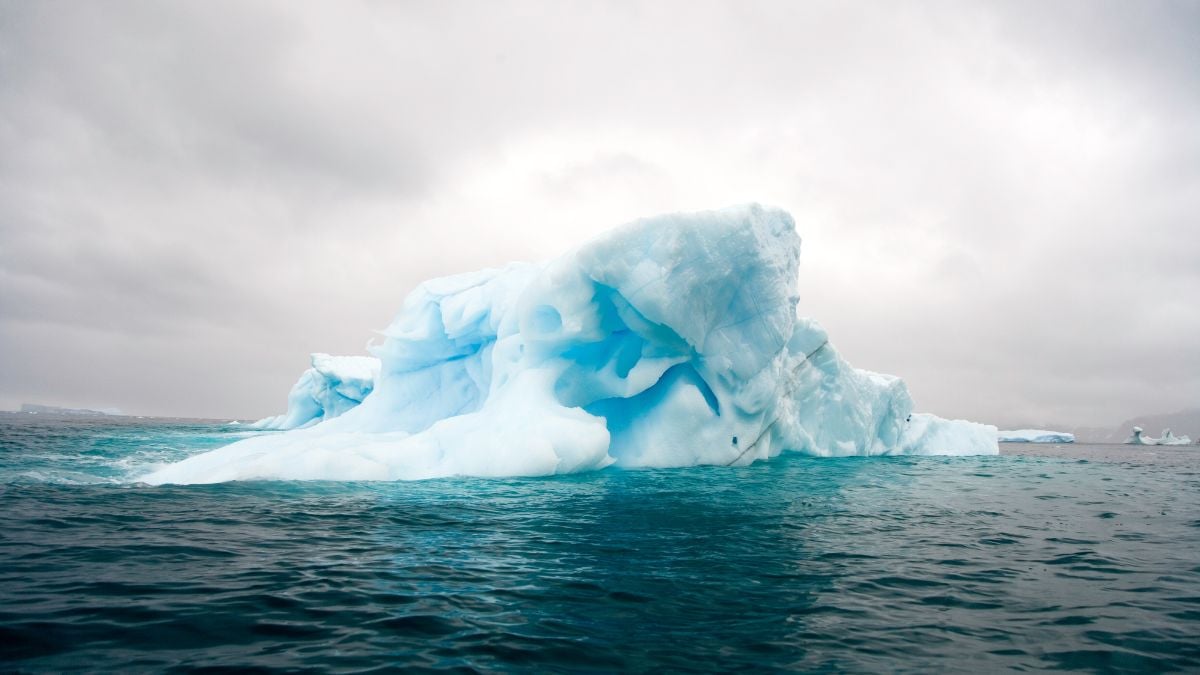
Antarctic sea ice has fallen sharply since 2015, with 2023 winter extent reaching record lows and an estimated one-in-3.5-million chance of occurring randomly. The article argues the Southern Ocean has entered a new regime where rising deep-water heat is reinforcing further ice loss, with implications for global warming, ocean carbon storage, and Antarctic ecosystems. While highly significant for climate science, the piece is unlikely to move markets directly in the near term.
The market implication is less about a single climate headline and more about a regime shift in the odds of persistent polar amplification. If the Southern Ocean is moving into a self-reinforcing lower-ice state, the second-order effect is higher variability in global weather, not just a gradual temperature drift: more extreme cold-air outbreaks in some regions, more maritime disruption in high latitudes, and a higher probability of climate-model underestimation in asset pricing. That creates a gap between long-duration climate narratives and nearer-term realized volatility, especially for insurers, shipping, and commodity logistics.
The biggest winners are not obvious “green” beneficiaries, but firms exposed to adaptation, hardening, and monitoring. Aerospace/satellite data, climate analytics, grid resilience, and specialty construction names should see incremental demand as governments and corporates budget for more tail-risk management. On the loser side, Southern Ocean-dependent fisheries, Antarctic tourism, and any supply chains reliant on predictable southern shipping/weather windows face a rising variance problem; the cost is not just lost volume but higher insurance and rerouting costs.
The key catalyst is persistence: if low sea-ice conditions remain through the next austral winter, the market will have to price this as a structural rather than episodic change. What could reverse it is a re-strengthening of surface stratification from anomalously high freshwater input or a temporary wind regime shift, but that likely changes the pace, not the direction, over a multi-year horizon. The contrarian mistake is assuming this is too remote to matter for investable assets; in reality, the first tradable impact is in volatility and capex, not in headline GDP.
For commodities, the cleanest channel is input-cost inflation for Antarctic-adjacent logistics and a medium-term uplift in demand for insurance and risk transfer. For public equities, the asymmetric setup is long resilience spend versus short exposed cold-chain, marine services, and Antarctic-linked tourism. Green finance also gets a tailwind because adaptation projects become easier to justify politically once the climate system demonstrates a non-linear shift.
AI-powered research, real-time alerts, and portfolio analytics for institutional investors.
Request DemoOverall Sentiment
moderately negative
Sentiment Score
-0.45
