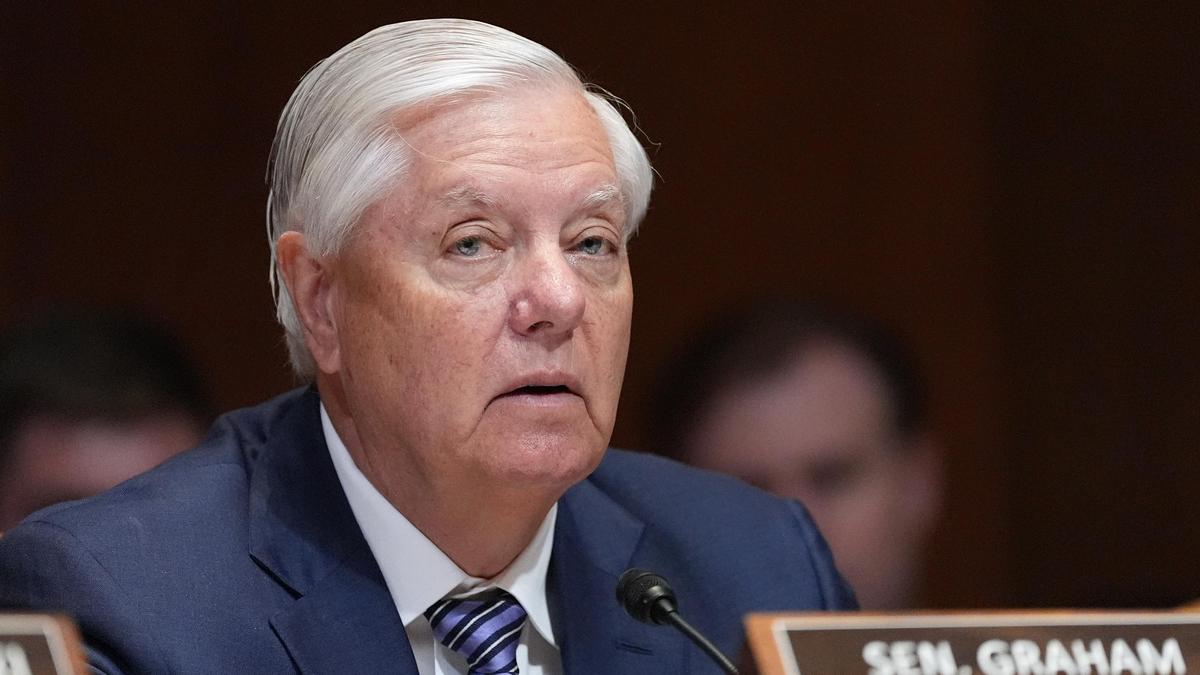
Lindsey Graham said Pakistan's role as a mediator in the U.S.-Iran conflict is "problematic," citing Islamabad's long-standing hostility toward Israel and reports of Iranian military aircraft at Pakistani air bases. Pakistan's defense minister reiterated opposition to joining the Abraham Accords until a Palestinian state is established on pre-1967 borders with East Jerusalem as its capital. The article is geopolitically sensitive but does not indicate an immediate market-moving policy change.
The market significance here is not the rhetoric itself but the signaling function for U.S. policy flexibility toward Pakistan. If Washington starts treating Islamabad as an unreliable intermediary, the immediate consequence is a higher geopolitical risk premium on Pakistan-linked assets and a lower probability of near-term U.S. diplomatic cover for any Pakistan-specific financing or IMF goodwill. That matters most over days to weeks, because frontier debt, FX, and local equities can reprice quickly on perceptions of external support rather than fundamentals. The second-order effect is that any closer U.S.-Gulf-Israel coordination will likely bypass Pakistan and concentrate incremental security spending in alternative corridors: Gulf air-defense, ISR, cyber, and logistics. That is constructive for prime U.S. defense contractors with exposure to CENTCOM modernization, while negative for Pakistan’s ability to monetize its geography as a mediator. It also raises the odds that Pakistan remains structurally underinvested relative to peers, because foreign capital tends to avoid countries seen as strategically ambiguous during active conflict cycles. The contrarian read is that this may be more headline risk than regime shift. Pakistan has often extracted near-term concessions by being indispensable in crises, and if mediation remains useful, Washington may tolerate public friction while continuing private engagement. So the cleanest edge is not a broad EM short, but a relative-value expression: short assets that benefit from a stability premium in Pakistan, and long defense/security beneficiaries that win if the U.S. leans harder on regional containment. Catalyst watch: any formal U.S. request for Pakistan to align with the Abraham Accords, any confirmation of reduced aid/IMF support, or any escalation that forces visible basing/logistics decisions in the Gulf. The risk to the bearish Pakistan view is a quick diplomatic reset; the risk to the bullish defense view is de-escalation that lowers urgency for new procurement over the next 1-2 quarters.
AI-powered research, real-time alerts, and portfolio analytics for institutional investors.
Request DemoOverall Sentiment
mildly negative
Sentiment Score
-0.15
