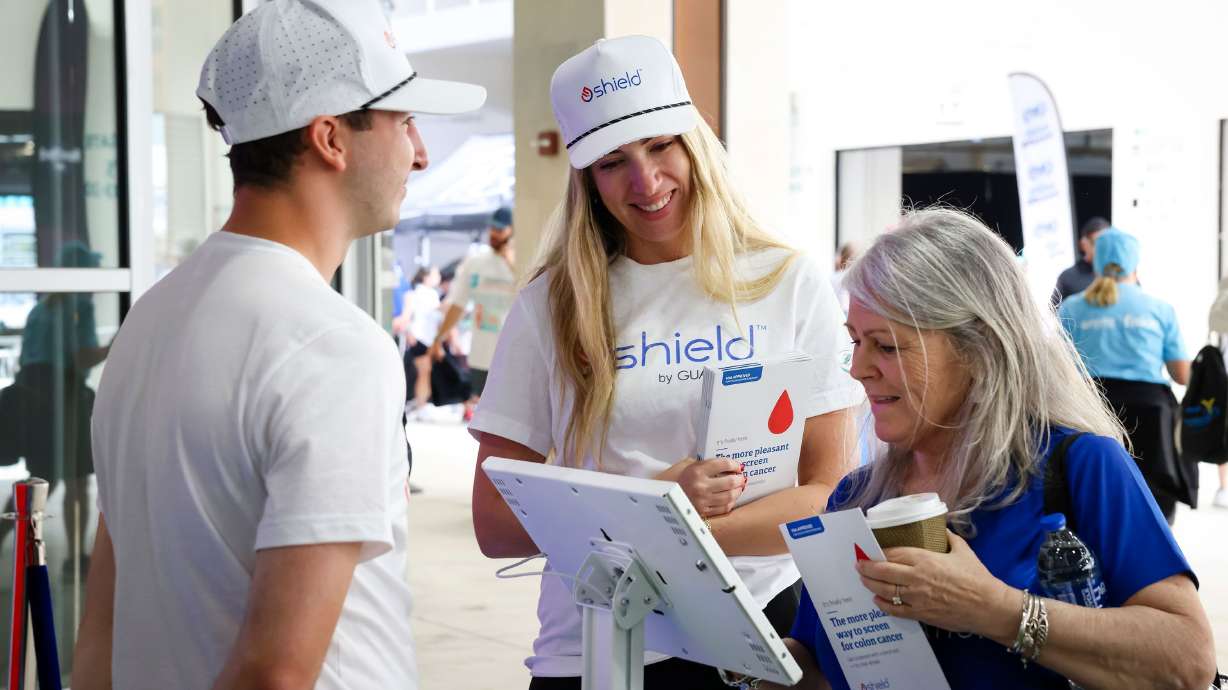
The American Cancer Society has added blood-based colorectal cancer screening to its recommended options for adults 45+ at average risk who decline colonoscopy or stool tests, with Guardant Health’s Shield test specifically recommended. The update also adds stool tests Cologuard Plus and ColoSense, broadening screening choices for patients who avoid invasive exams. The guidance is supportive for access and adoption, though blood tests remain a secondary option because they are less sensitive than colonoscopy or stool-based screening for precancerous lesions.
This is less a “medical breakthrough” than a distribution unlock for Guardant. The key second-order effect is not immediate physician conversion, but payer and PCP normalization: once a major society places blood-based CRC screening into the guideline stack, the product becomes easier to order in the exact population with the highest friction and lowest prior adherence. That matters because the addressable pool is not the average-screening cohort; it is the chronic non-complier cohort, where incremental penetration can be meaningful even with inferior sensitivity. The market may be underappreciating that the first wave of revenue can come from a behavioral substitution channel rather than a pure clinical superiority channel. If Shield becomes the “better than nothing” option in primary care, test volumes can scale faster than test performance would suggest, especially given the large age-45+ population and the secular push to close screening gaps in younger patients. The risk is that reimbursement and ordering behavior lag the guideline by quarters, not days; in the interim, upside will be driven more by investor multiple expansion than by clean near-term EPS contribution. Competitive dynamics favor first-mover branding, but this also raises the bar for execution. If Shield usage expands, the next battleground is not just competing stool tests; it is whether larger diagnostics players use their distribution with health systems and payers to bundle lower-friction screening pathways and compress Guardant’s pricing power. The contrarian point: because the guideline explicitly frames blood testing as second-line, the market may be overestimating penetration in compliant patients and underestimating how small the long-run blood-test share may remain absent better sensitivity data. Still, even a modest share of the avoiders can support a re-rate if commercial uptake is visible over the next 2-3 quarters.
AI-powered research, real-time alerts, and portfolio analytics for institutional investors.
Request DemoOverall Sentiment
mildly positive
Sentiment Score
0.15
Ticker Sentiment
