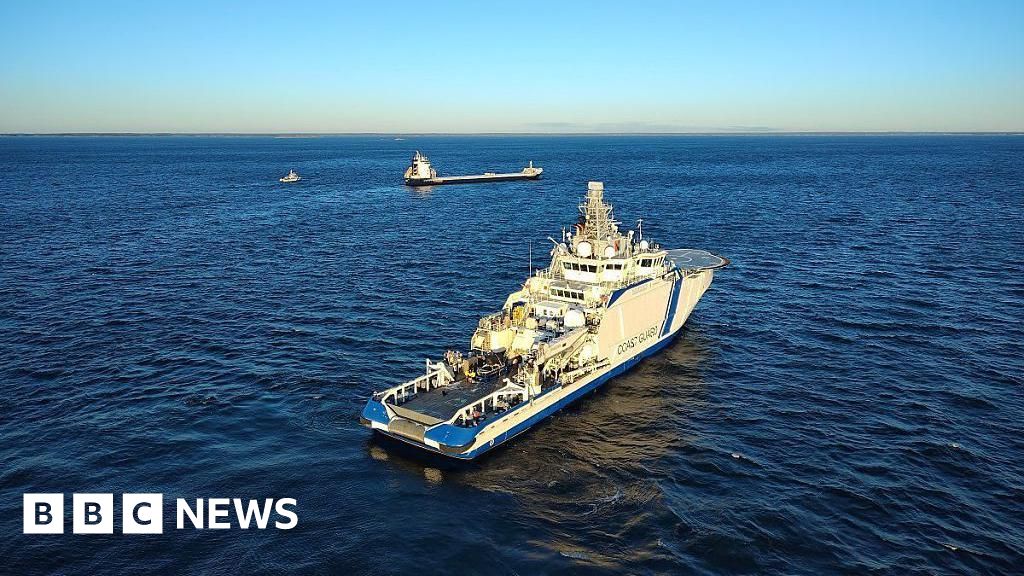
Finnish authorities have seized the cargo vessel Fitburg and detained all 14 crew after an undersea telecoms cable owned by Elisa between Helsinki and Estonia was damaged; the ship was en route from St Petersburg to Haifa under the flag of St Vincent and Grenadines. Elisa reported no service disruption due to rerouting, but police are investigating aggravated disruption and sabotage amid rising concern over targeted attacks on Baltic undersea infrastructure—an issue with geopolitical and critical-infrastructure implications for NATO-bordering states and regional communications resilience.
Market structure: Direct winners are undersea-cable and cable-repair suppliers (Prysmian PRY.MI, Nexans NEX.PA), network-equipment vendors (NOK, ERIC) and cybersecurity/defense contractors (PANW, CRWD, RTX) as governments and carriers re-rate resilience capex; losers are regional shipping operators and small Baltic telcos that face repair costs and insurance hikes. Expect 5–15% incremental capex for Northern European carriers over 12 months and a near-term 10–30% pricing power lift for specialist cable repair services on spot repairs.
Risk assessment: Tail risks include state-attributed sabotage triggering sanctions or NATO escalations that could widen to trade/insurance disruptions — low probability (<10%) but high impact on regional trade and energy flows over 1–12 months. Immediate risk (days) is operational disruption and insurer loss estimates; medium-term (3–12 months) is procurement cycles and defense budgets; long-term is structural capex to re-route/duplicate cables with multi-year demand.
Trade implications: Favor long positions in cable manufacturers (6–12 month horizon) and cybersecurity/defense names (3–12 months) while reducing exposure to pure-play Baltic shipping/short-haul carriers and marine insurers. Use options to buy convexity (short-dated call spreads on PANW/CRWD; protective VIX calls) to trade volatility spikes tied to investigative milestones (forensic attribution within 30–60 days).
Contrarian angles: Markets may overpay for one-off repair revenue — cable makers’ stock moves could mean-revert after two quarters; conversely high-quality incumbent telcos (e.g., ELISA regionals) could be oversold despite stable cashflow and deserve selective buying at >15% discount to peers. Historical parallels (2014–2016 cable incidents) show one-time security-driven capex fades into steady-state spending — prefer disciplined exposure with 12-month re-evaluation.
AI-powered research, real-time alerts, and portfolio analytics for institutional investors.
Request DemoOverall Sentiment
moderately negative
Sentiment Score
-0.30
