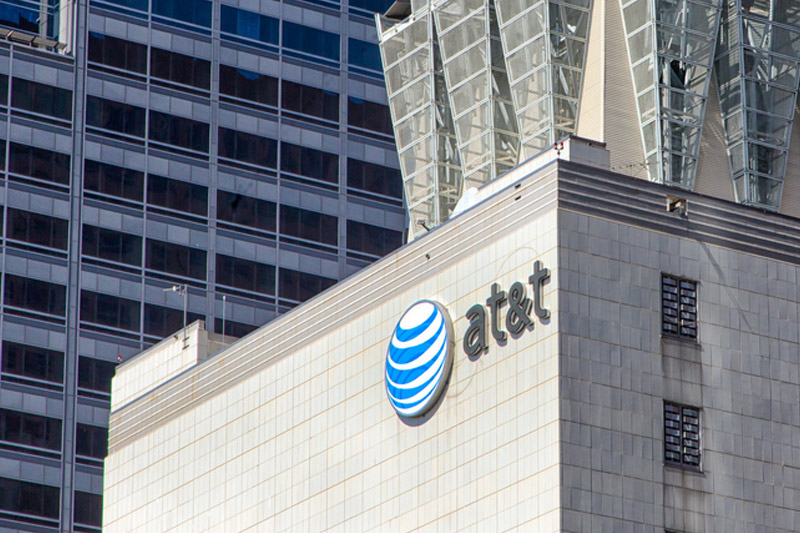
Legacy telecom carriers were hit by a new competitive threat, with Verizon down 7.6%, AT&T down 5.8% near its 52-week low of $21.29, and T-Mobile down 6% as SpaceX signaled a Starlink mobile service for U.S. consumers and explored a possible Charter partnership. Verizon also announced a $625 million 50:50 JV with BT Group, while Comcast surged 7.2% after unveiling a spinoff of NBCUniversal and Sky, potentially creating a leaner broadband competitor. The news is negative for VZ/T on competition and capital allocation concerns, with significant sector-level implications for U.S. telecom and broadband pricing.
The immediate market takeaway is not that legacy wireless is suddenly impaired; it’s that the sector’s valuation multiple is being compressed by a credible alternative distribution model arriving earlier than expected. That matters most for VZ and T because both rely on cash flow stability to defend dividends, yet the new threat is asymmetric: even a modest share of gross adds or a lower-price secondary plan from a satellite/cable coalition can force the incumbents into higher promo spend, lower ARPU, and slower buybacks over the next 4-8 quarters.
The deeper read is that cable is becoming the stealth winner here. If a standalone broadband-focused CMCSA competes without media drag, it can price fixed wireless and fiber more aggressively while funding network upgrades from a cleaner balance sheet. That creates a three-way squeeze on telco economics: cable attacks home broadband, satellite attacks mobility, and the incumbents are left defending two fronts with capital intensity rising and pricing power weakening.
Tactically, the near-term setup is more about positioning than fundamentals. TMUS looks less exposed to immediate balance-sheet optics than VZ/T, but it is the cleanest short-duration indicator of wireless sentiment; if the stock fails to reclaim the recent low, systematic de-risking could accelerate over days rather than months. For VZ, the headline risk is that management is signaling strategic defensiveness just as the market wants offensive capex and clearer return on capital.
Contrarianly, the move may be too far, too fast on an unproven consumer product. SpaceX still needs distribution, customer acquisition, device support, and a cost structure that can sustain retail pricing without undermining its wholesale ambitions. If the next company communication is more about experimentation than launch timing, a relief rally is plausible, especially in T and TMUS where the selloff has already pushed valuation toward stress levels.
AI-powered research, real-time alerts, and portfolio analytics for institutional investors.
Request DemoOverall Sentiment
mildly negative
Sentiment Score
-0.35
Ticker Sentiment
