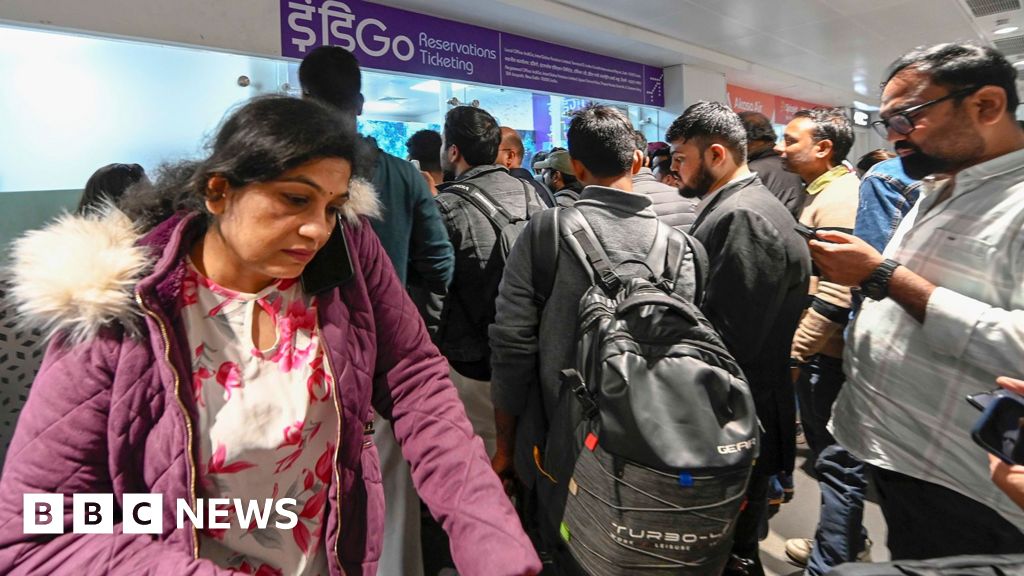
IndiGo, India's largest carrier with roughly 60% market share and over 2,000 daily flights, cancelled hundreds of scheduled services after pilot shortages tied to implementation of new flight duty-time rules; the airline expects normalcy only by 10 February and plans to cut operations from 8 December. The aviation regulator faulted IndiGo for "misjudgment and planning gaps," has ordered an immediate remediation plan on crew recruitment, rostering and safety-risk assessments, and local reports indicate temporary waivers to rest rules—moves attacked by pilots' unions as compromising safety. The disruptions strand thousands during peak December travel, force waivers of cancellation fees for 5-15 December and ancillary support for affected passengers, and materially raise operational, regulatory and reputational risk for the carrier.
Market structure: IndiGo (InterGlobe Aviation, NSE: INDIGO) is the clear near-term loser — a 60% national market share and ~2,000 daily flights means a 10–20% network cut will create a temporary capacity shock. Competitors with available crew (SpiceJet NSE: SPICEJET, Akasa/private) can poach frequency and route share; remaining carriers gain short-term pricing power (fares could reprice +10–25% on affected routes during peak Dec-Jan demand). Airports and travel-tech platforms will see mixed flows: higher ancillary hotel/meal demand but lower throughput volatility.
Risk assessment: Immediate (days) risk is operational disruption and reputational damage leading to higher cancellations; short-term (weeks–months) risks include regulatory fines, mandated capacity caps, and accelerated pilot hiring opex compressing margins by an estimated 200–400 bps. Tail risks include a prolonged grounding or a safety incident leading to systemic fleet restrictions (high-impact low-probability) and potential criminal/regulatory penalties; hidden dependencies are crew rostering software, international pilot supply, and union/legal pushback. Key catalysts: DGCA rulings/waivers (next 7–30 days), IndiGo’s crew recruitment plan, and daily cancellation rates.
Trade implications: Direct short on INDIGO shares or buy 3-month puts priced for >20% move is a high-conviction trade for 1–3 month horizon; consider pair trades (short INDIGO / long OTA MakeMyTrip, NASDAQ: MMYT) to capture rebooking fee capture and market-share reflows. Options: sell short-dated calls to fund 3-month puts if implied vol > historical by 20%+; size trades to 1–3% of AUM and stagger entries over the next 48–72 hours to avoid headline whipsaws. Rotate out of domestic airline equity exposure; overweight travel-tech and selected airport operators for 3–12 months.
Contrarian angles: Consensus focuses on immediate brand damage but may underprice structural outcomes — if IndiGo is forced to permanently reduce night-time flying, industry capacity growth could slow 3–6 months, propping up yields and airport cashflows (positive for ADANIPORTS/GMRINFRA). Conversely, competitors may be unable to scale because of pilot scarcity, meaning IndiGo could recover operationally and re-price lower valuations; SpiceJet is unlikely to sustainably capture market share given balance-sheet stress. Historical parallel: roster/regulatory-induced capacity shocks (regional markets) led to short-lived share disruptions but longer-term higher yields; trade sizing should reflect binary regulatory outcomes.
AI-powered research, real-time alerts, and portfolio analytics for institutional investors.
Request DemoOverall Sentiment
strongly negative
Sentiment Score
-0.60
