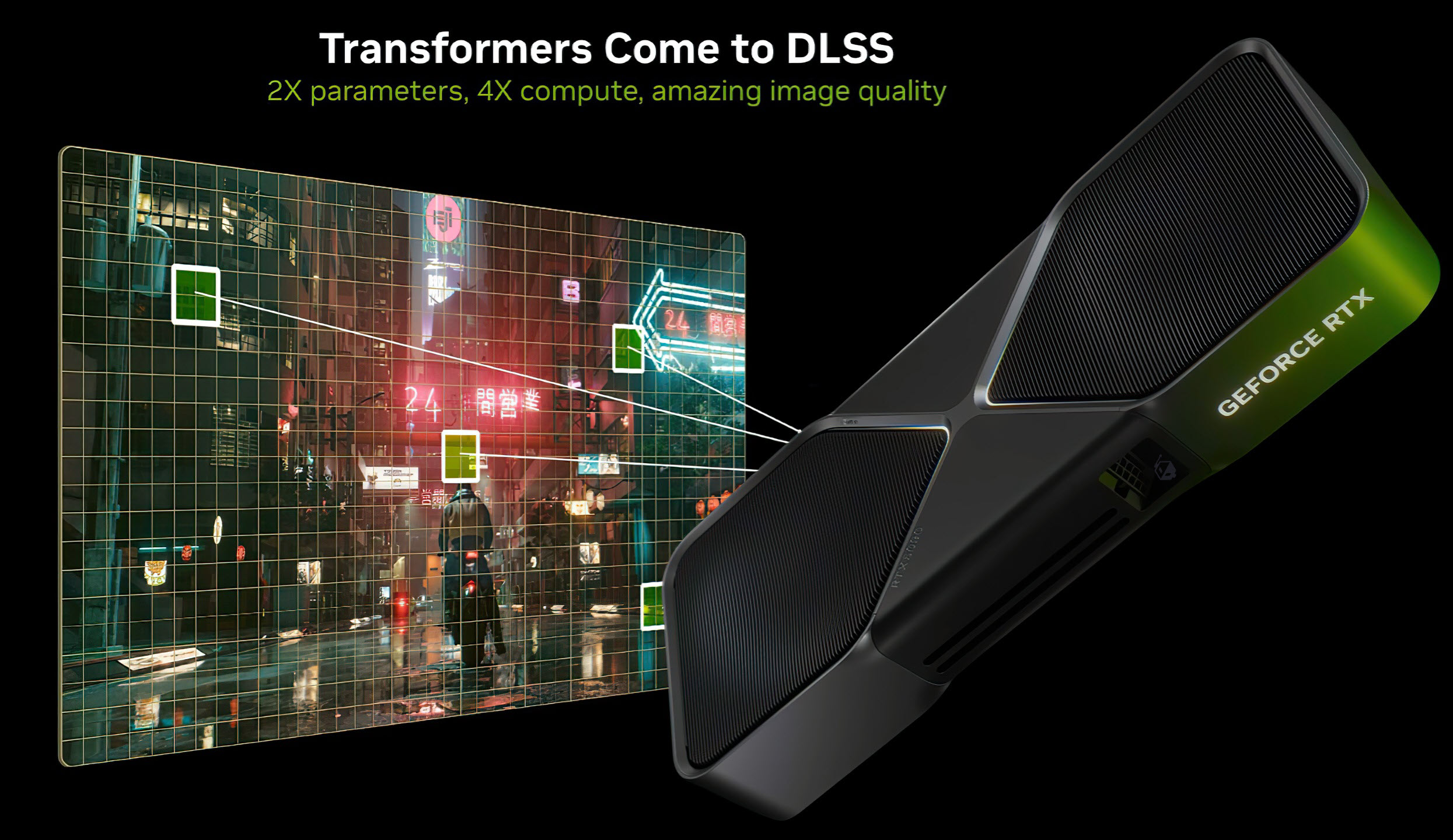
Nvidia has officially released its DLSS 4, transitioning to a new Transformer-based model from the prior CNN architecture. This technological advancement significantly enhances image quality by enabling finer pixel analysis for sharper visuals and boosts efficiency, delivering a 30-50% increment in raytracing performance and reduced latency. While the Transformer model is compatible across all RTX GPUs, its full performance benefits, including advanced multi-frame generation, are optimized for the new RTX 50-series, reinforcing Nvidia's market leadership in upscaling technology and potentially driving upgrades to its latest hardware.
Nvidia's release of its Transformer-based DLSS 4 model, moving it out of beta, marks a significant technological evolution from its prior CNN architecture, reinforcing its leadership in AI-driven graphics. The new model delivers substantial, quantifiable improvements, including a 30-50% increase in raytracing performance and a latency reduction from 3.25ms to just 1ms on the flagship RTX 5090 GPU. While the technology is backward compatible with all RTX GPUs, its most advanced features, such as generating up to three synthetic frames from a single real one, are exclusive to the new Blackwell-powered RTX 50-series. This strategically positions the new hardware as essential for unlocking the full potential of the technology, creating a strong incentive for an upgrade cycle. However, the overall sentiment is mixed; user reports indicate that the Transformer model can result in a notable performance degradation on older hardware, such as the RTX 20-series, compared to the previous CNN model. This suggests a potential friction point for the existing user base and reinforces the narrative that the new technology is primarily a driver for new product sales, solidifying Nvidia's competitive moat against competitors like AMD, whose FSR technology is still perceived as catching up.
AI-powered research, real-time alerts, and portfolio analytics for institutional investors.
Overall Sentiment
mixed
Sentiment Score
0.00
Ticker Sentiment
