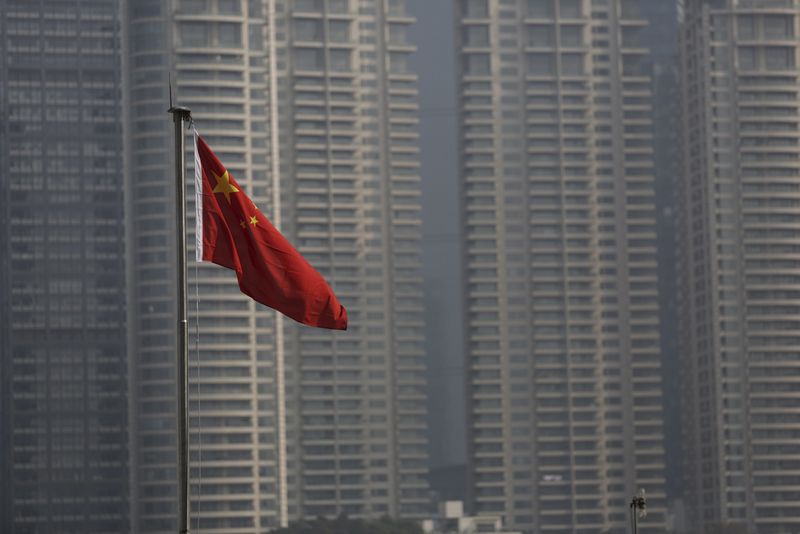
China’s commerce ministry condemned the EU’s 20th sanctions package on Russia after 28 third-country entities, including firms in China and Hong Kong, were added for alleged support of Russia’s military-industrial complex. The ministry warned it would take "necessary measures" to protect Chinese companies and said EU actions are undermining mutual trust in bilateral relations. The EU said its anti-circumvention tool targets exporters in third countries that re-export sanctioned goods to Russia.
The immediate market read-through is not just “more sanctions risk,” but a gradual tightening of the compliance perimeter around Asia-based industrial intermediaries. That tends to hit the least transparent parts of the value chain first: traders, subcontractors, logistics, and distributors with mixed end markets, before it shows up in headline exporters. The second-order effect is that western OEMs with heavier China-sourced component dependence may face more documentation friction and longer lead times, even if they are not directly named.
The bigger medium-term implication is a forced rerouting of trade rather than a clean volume destruction. In the next 1-3 months, expect higher unit economics for “clean” suppliers outside the targeted jurisdictions as buyers pay up for non-screened provenance and redundant inventory. Defense, cyber, customs-tech, and supply-chain compliance software should outperform because the bottleneck becomes verification and traceability, not just physical production.
The clearest loser set is small-cap industrial/export names with opaque customer books or meaningful re-export exposure; these can re-rate lower quickly if counterparties widen payment terms or banks tighten KYC. Over 6-12 months, the more important risk is that this becomes iterative: each sanctions round expands the universe of deemed circumvention, keeping a lid on multiples for firms with any Russia-adjacent or dual-use adjacency. A key reversal trigger would be diplomatic de-escalation between the EU and China, but absent that, the burden of proof shifts to companies to demonstrate clean sourcing.
Consensus may be overestimating the direct revenue loss and underestimating the cost inflation effect. For many global manufacturers, the issue is not lost sales but working capital drag, higher freight/compliance costs, and delayed shipments, which can compress margins before top-line weakness is visible. That makes this more of a margin-risk and sentiment event than a pure demand shock.
AI-powered research, real-time alerts, and portfolio analytics for institutional investors.
Request DemoOverall Sentiment
moderately negative
Sentiment Score
-0.35
