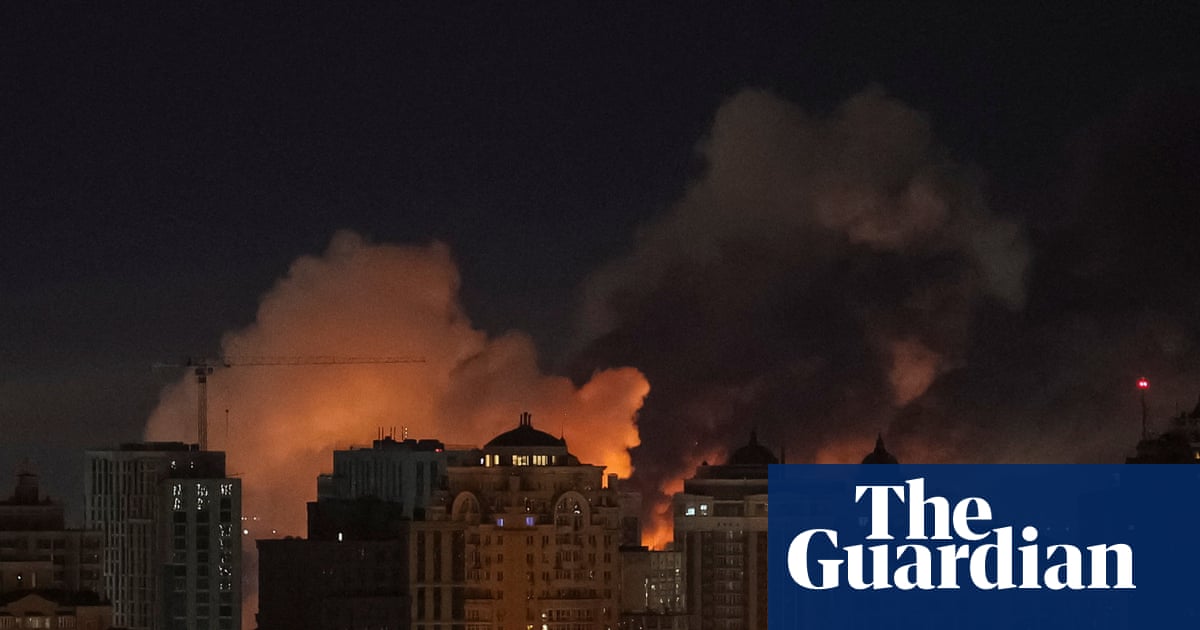
Russian strikes on Kyiv, Dnipro, Kharkiv and Odesa killed at least 3 people, including a 12-year-old child, and injured more than 20 others. The attacks also damaged residential and other buildings, caused fires, and forced civilians to shelter amid an expanded pattern of daytime and nighttime drone and missile strikes. The escalation reinforces geopolitical risk for Ukraine and the broader region, with potential spillovers to defense and risk assets.
The market implication is less about the headline shock and more about the regime shift in target set: repeated strikes on urban and energy-linked infrastructure raise the probability of intermittent disruption to power, logistics, and rail nodes during the next 4-12 weeks. That tends to widen the risk premium on regional assets even when front-line military control does not change, because insurers, lenders, and local corporates price in operational downtime faster than macro data can capture it. The immediate second-order effect is tighter funding conditions for Ukraine-adjacent businesses and higher emergency spend, which can crowd out reconstruction capex.
For defense supply chains, sustained drone-and-missile intensity is a bullish read-through for interceptors, sensors, EW, and short-cycle replenishment inventory rather than legacy platforms alone. The more important signal is consumption rate: if current intensity persists, procurement urgency can accelerate into multi-quarter restocking, which is supportive for vendors with NATO-standard munitions exposure and for primes with replenishment capacity. Conversely, any company with meaningful Eastern European fulfillment, manufacturing, or customer concentration faces a higher probability of margin drag from logistics disruption and working-capital strain.
Contrarianly, the knee-jerk risk-off move may be overdone for broad EM, because the transmission is highly regional and mostly affects specific sovereign spreads and local industrials rather than global growth. The true tail risk is not one more strike cycle, but escalation into infrastructure criticality that forces a policy response on air defense replenishment or energy-grid hardening; that is a months-long catalyst, not a days-long one. If that does not materialize, the trade can mean-revert quickly as markets become desensitized to headline volatility.
AI-powered research, real-time alerts, and portfolio analytics for institutional investors.
Request DemoOverall Sentiment
strongly negative
Sentiment Score
-0.85
