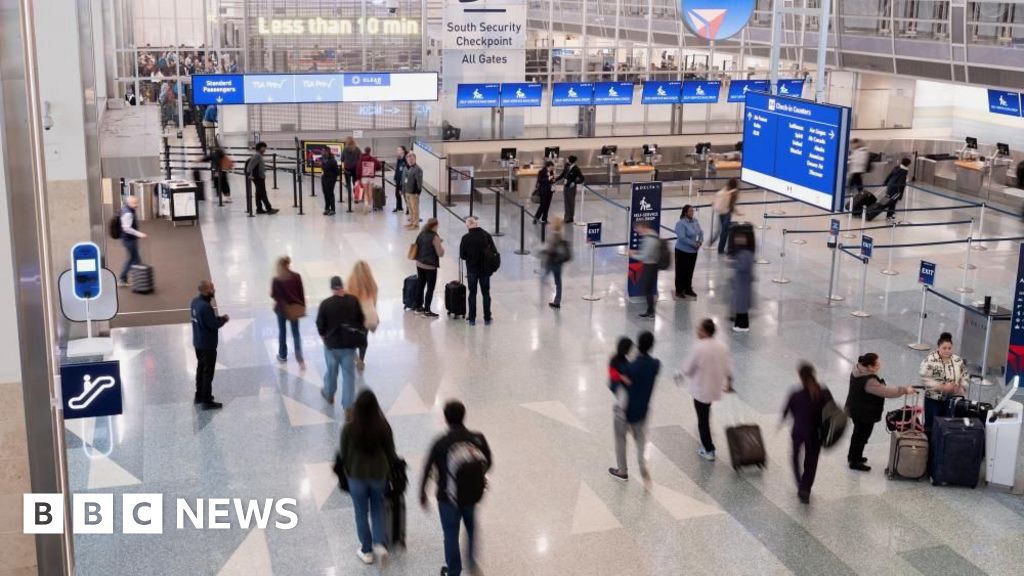
A partial funding lapse for the Department of Homeland Security is set to begin at midnight after lawmakers failed to agree, with airlines and major travel groups warning that unscheduled TSA absences could cause longer airport lines and flight delays over the spring-break period. The shutdown would affect DHS components including the Coast Guard—Vice Admiral Thomas Allan warned about roughly 56,000 workers going unpaid and suspension of non-critical missions—while the FAA remains funded for the year, moderating air-traffic control risk. DHS carries roughly $165bn from last year’s funding package (including about $75bn for ICE) that could be drawn on, and Congress is in recess until Feb. 23, raising the prospect of a multi-week operational disruption that poses sector-specific risks for carriers and travel-related firms.
Market structure: A short, partial DHS shutdown is a concentrated operational risk for carriers and airport operators — TSA absenteeism increases probability of flight delays/cancellations that directly pressure US network airlines (AAL, DAL, UAL, LUV) for the next 1–6 weeks. Online travel agents (BKNG, EXPE) and adjacent leisure names (MAR, HLTH?) are less exposed to gate congestion and can capture rebooking/fee revenue, creating relative winners. Airports and concessionaires face transient footfall shocks but moderate pricing power shields long-term cash flows.
Risk assessment: Tail risk is a >2–4 week shutdown causing sustained TSA walkouts and >10% increase in missed flights across key hubs, amplifying revenue loss and producing a >10% stock move for smaller carriers; probability is reduced by DHS’s $165bn backstop. Immediate (days) risk is operational volatility; short-term (weeks) is earnings/margin noise for carriers; long-term (quarters) political negotiation and reputational damage could modestly increase airline idiosyncratic risk premia. Hidden dependency: carriers with tighter crew utilization (LUV, AAL) suffer disproportionately.
Trade implications: Tactical short exposure to US network airlines via limited-risk put spreads (March expiries) is efficient; simultaneously long 2–3% allocations to BKNG/EXPE captures booking resilience. Rotate underweight from airlines into short-dated Treasuries or cash if shutdown persists >7 days (yields down ~5–15bp typical). Use clear trigger-based sizing: scale protection if TSA sick-call >5% at top-25 airports or average screening wait >20 minutes.
Contrarian angle: The market may over-price systemic damage — FAA funding isolates air-traffic control risk, capping downside; if the shutdown resolves within 7–10 days, airline weakness will be a buying opportunity. Historical parallel (43‑day 2018/19 shutdown) shows operational chaos is front-loaded; buy downside protection for 2–6 week windows but be ready to cover quickly if Congress signals near-term deal.
AI-powered research, real-time alerts, and portfolio analytics for institutional investors.
Request DemoOverall Sentiment
moderately negative
Sentiment Score
-0.35
