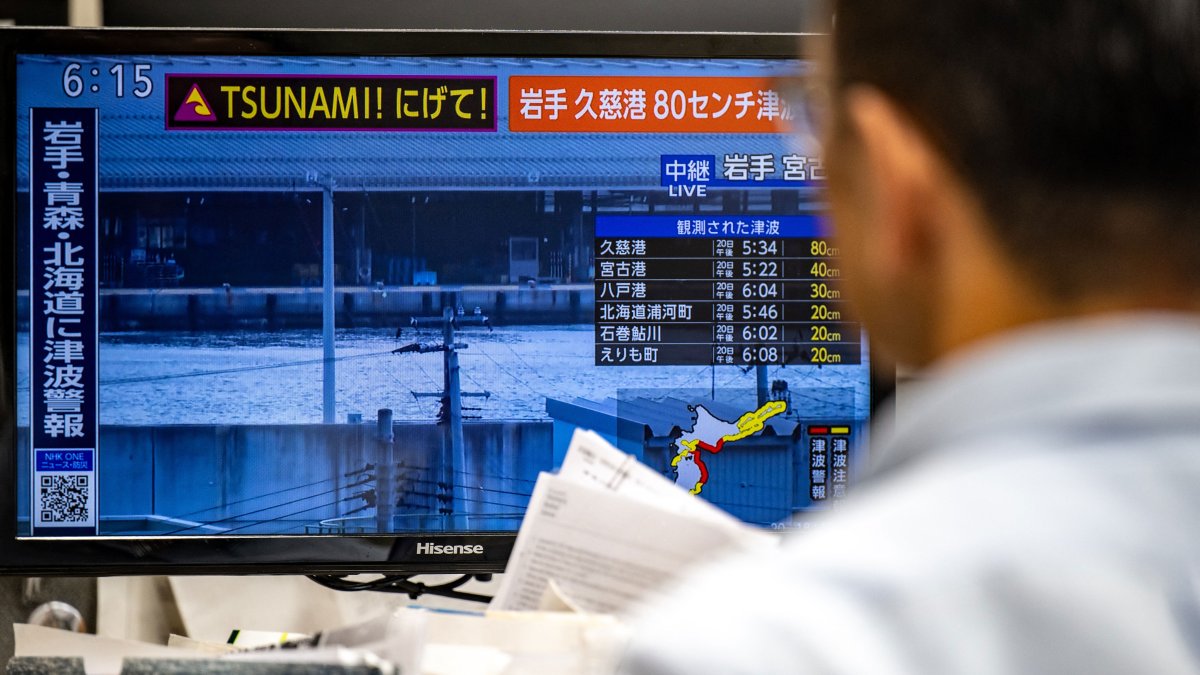
Japan issued an advisory after a preliminary magnitude 7.7 quake off Sanriku, warning of a 1% chance of a larger mega-quake in the next week and possible aftershocks. A tsunami alert was triggered, with waves of up to 10 feet warned and a 2.6-foot tsunami detected at Kuji port, but no major injuries or damage have been reported so far. More than 128,000 residents in Iwate and three other prefectures received non-binding evacuation advisories, while nuclear facilities were reported intact.
The immediate market read is less about direct damage and more about the probability-weighted tail: a one-week elevated aftershock/secondary-event window creates a short-lived but real disruption premium across northern Japan logistics, ports, rail links, and coastal industrial operations. The key second-order effect is inventory friction — even without physical losses, firms tend to preemptively slow just-in-time flows, which can create 3-7 days of shipping congestion and localized labor interruptions that bleed into regional manufacturing output. That matters more for domestic operators than for global corporates, because the shock is concentrated in northern coastal infrastructure rather than the whole country.
The bigger asymmetry is in energy and nuclear perception, not current plant damage. With facilities intact, this is not a balance-sheet event for utilities today, but it reinforces the market’s sensitivity to any future seismic incident around critical infrastructure; that can keep risk premia elevated for Japanese nuclear restart narratives and adjacent utility valuation. In parallel, the “preparedness” framing suggests authorities are trying to avoid panic, which usually caps immediate consumer-spending downside — so the tradable downside is likely in logistics/transport names and insurers, not broad Japan equity beta.
Over the next 1-4 weeks, the main catalyst is whether aftershocks remain nuisance-level or produce a follow-on event that forces broader evacuation advisories. If the next several days pass without damage, the market will likely fade the headline quickly, but the memory of repeated advisories can still slow capex and maintenance scheduling for coastal industrial users. The contrarian point: consensus may overestimate direct reconstruction demand and underestimate the operational drag from cautionary shutdowns; the latter is more immediate, more persistent, and typically less visible in headline damage counts.
AI-powered research, real-time alerts, and portfolio analytics for institutional investors.
Request DemoOverall Sentiment
mildly negative
Sentiment Score
-0.35
