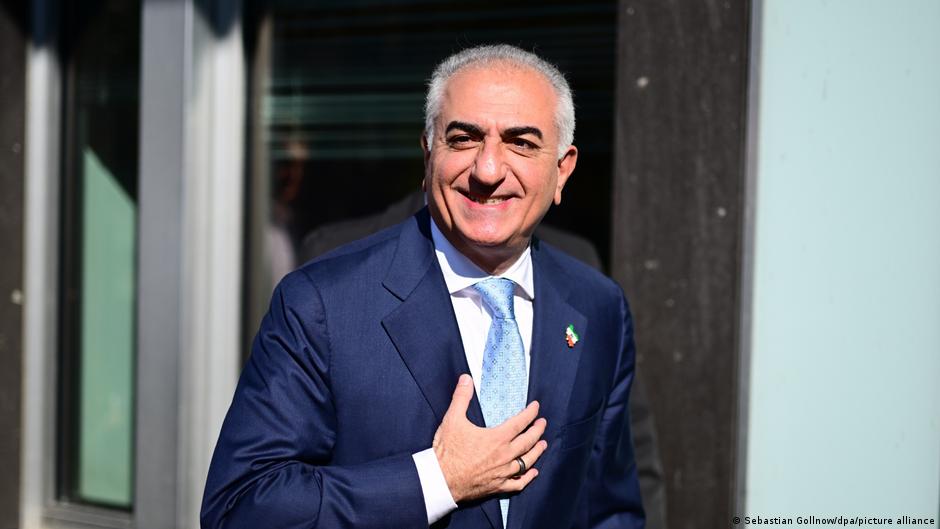
Reza Pahlavi used a Berlin visit to call for regime change in Iran, urging European governments not to appease Tehran and warning that the current leadership is fragile. He claimed 19 political prisoners were executed in the past two weeks and said Europe must choose between the regime and a free Iran. The comments, alongside protests in Berlin and heightened tensions after weeks of US-Israeli attacks and a US Navy blockade, underscore elevated geopolitical risk for the region.
This is less an immediate market event than a signaling shift that raises the implied probability of a regime-fragmentation path in Iran. The first-order market impact is usually oil, but the more durable second-order effect is on discount rates across regional risk assets: if investors start assigning even a small chance to leadership instability, insurers, shippers, and EM allocators will demand a wider premium for exposure tied to the Gulf security envelope. The market is still underpricing how quickly rhetoric around transition can convert into escalation risk if internal cohesion in Tehran deteriorates.
The key tradable nuance is that regime-change narratives often create a brief risk-on impulse for Iran-sensitive logistics and European energy security themes, but that fades unless there is a credible succession architecture. Absent that, the base case is not liberalization; it is institutional paralysis, which is bearish for cross-border trade, capital flight, and project finance in the region. That dynamic favors assets that benefit from higher precautionary spending: defense, missile defense, cyber, and energy infrastructure, especially where procurement cycles can re-rate before physical conflict actually intensifies.
Contrarian angle: the market may be overestimating the near-term probability of a clean political transition and underestimating the risk that opposition fragmentation makes the status quo more durable, not less. In other words, louder regime-change rhetoric can strengthen hardliners by validating their security-first narrative, which is negative for any near-term détente trade. The real catalyst window is days to weeks for oil/shipping vol, but months for defense and infrastructure spend; if there is no visible split inside elite/security institutions, the trade should be treated as volatility, not directional regime collapse.
AI-powered research, real-time alerts, and portfolio analytics for institutional investors.
Request TrialOverall Sentiment
mildly negative
Sentiment Score
-0.20
