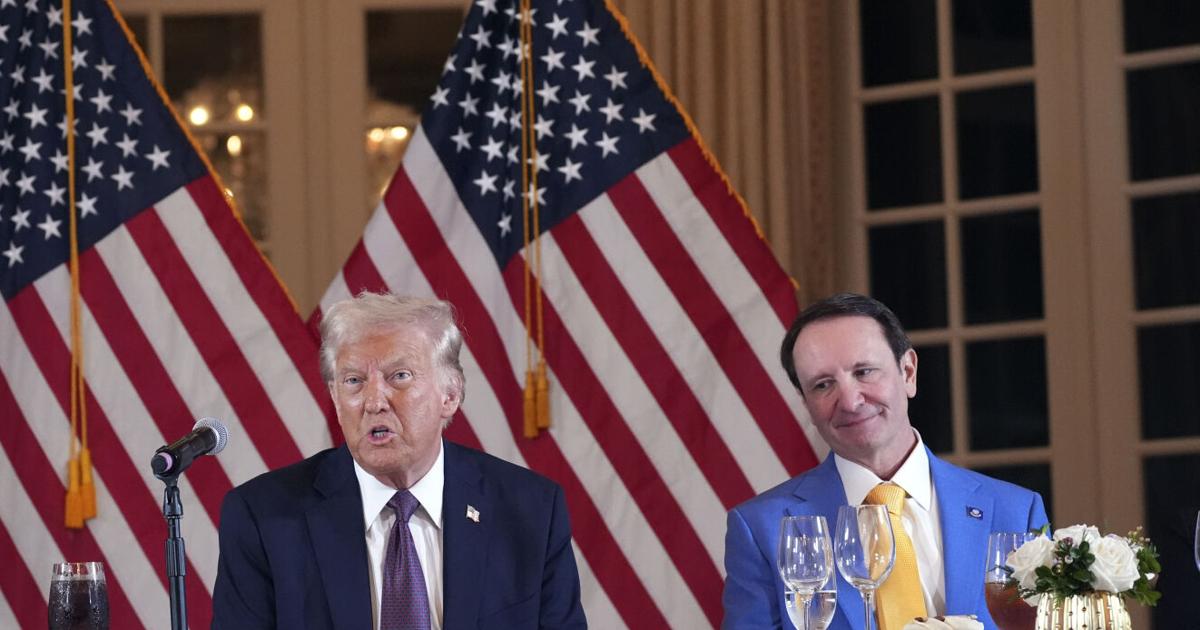
The Supreme Court ruled Louisiana’s congressional map unconstitutional in Louisiana v. Callais, prompting Gov. Jeff Landry to plan a delay of elections for the state’s six House seats while keeping the rest of the election on schedule. President Trump publicly backed Landry’s effort, framing it as a fight to fix unconstitutional maps. The story is politically significant but has limited direct market impact.
This is less about Louisiana and more about the federalization of election administration as a political weapon. A delayed congressional vote creates a short-duration legal vacuum that invites injunctions, emergency appeals, and potentially a patchwork calendar problem; the market implication is not direct equity beta, but a measurable increase in event-risk premiums around any state-facing contracts, public-sector payroll vendors, and political-adjacent media spend. The immediate beneficiary is the party that can convert procedural delay into turnout advantage; the loser is any incumbent team reliant on a clean, compressed election timeline.
The second-order effect is that this reinforces a higher-volatility framework for 2026 midterms: if one state can be pushed into a bespoke schedule, investors should expect more aggressive use of litigation as a campaign tool in other battlegrounds. That matters for sectors exposed to civic administration procurement, courthouse/logistics services, and local media CPMs, because spending becomes more front-loaded and less predictable when elections are stretched or re-litigated. It also raises the probability of last-minute court rulings suppressing or shifting turnout, which is usually bearish for risk assets tied to political clarity and favorable to trading vehicles monetizing volatility.
The contrarian read is that this may be overestimated as a broad policy signal and underestimated as a tactical one-off. If courts move quickly, the delay could be reversed within days, making the tradeable window short and punishing anyone who chases a headline without legal follow-through; conversely, if the dispute persists into the early-voting window, the operational confusion itself becomes the asset. The market should treat this as a catalyst for temporary uncertainty, not a durable legislative regime change, unless similar tactics spread to multiple states over the next 3-6 months.
AI-powered research, real-time alerts, and portfolio analytics for institutional investors.
Request DemoOverall Sentiment
neutral
Sentiment Score
0.00
