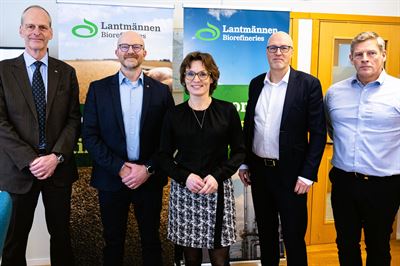
EU Commissioner Jessika Roswall visited Lantmännen’s Norrköping biorefinery to review bioeconomy operations that convert grain and food-industry residues into ethanol, food/feed protein and chemical feedstocks; the company highlighted ethanol production that delivers roughly 80% lower CO2 emissions versus fossil fuels. Lantmännen — a Swedish agricultural cooperative with SEK 70 billion annual turnover, 12,000 employees and ownership by 17,000 farmers — emphasized efficient multi-stream raw material use and urged technology-neutral, long-term EU policy to bolster climate targets and supply resilience; the visit underscores policy focus on scaling domestic sustainable fuels amid EU road transport’s continued >90% reliance on petrol and diesel and only ~2% of EU grain currently used for fuel ethanol.
Market structure: Europe’s push to scale biorefineries (example: Lantmännen) benefits integrated agricultural co‑ops, specialty refiners and B2B protein/feed producers while pressuring margins at pure fossil refiners that lack biofeedstock capacity. If EU policy nudges ethanol/advanced biofuel demand from ~2% of grain use toward 5–8% over 3–5 years, expect a reallocation of grain flows and a 3–8% structural uplift in EBITDA for mid‑sized biofuel players versus peers. Cross‑asset: upward pressure on wheat/corn/sugar and fertilizer prices (commodity vols), modest supportive effect for SEK and select industrial credit vs. weaker sentiment for high‑beta oil refiners and their credit spreads.
Risk assessment: Tail risks include sudden regulatory reversals (political backlash, 1–2% prob/year), severe crop failures (1–3% annual shock raising grain prices >15%) or technology delays for cellulosic fuels that compress margins. Near term (days–weeks) volatility will track EU policy statements and feedstock harvest reports; medium (3–12 months) hinges on subsidy/mandate clarifications; long term (2–5 years) depends on CAP alignment and carbon pricing (EU ETS >€60/t materially favors biofuels). Hidden dependencies: logistics bottlenecks, fertilizer/energy cost pass‑through and food vs fuel political risk.
Trade implications: Favor capacity‑exposed biofuel/refinery converters and equipment suppliers while trimming pure oil refining exposure. Prefer long selective names with visible feedstock integration and short legacy refiner/refinery margin exposure; hedge commodity risk via wheat/corn futures or calls if policy accelerates demand. Option plays: 9–12 month call spreads on quality biofuel equities (buy 1€‑2€ ITM calls, sell farther OTM) to limit premium while capturing policy upside.
Contrarian angles: Consensus understates scale limits from food competition and land constraints — a rapid rerate is unlikely unless waste/cellulosic feedstocks scale or mandates force crop diversion. Watch for mispricings where smaller listed bio‑players already price perfection; these are higher tail‑risk. Historical parallel: 2007–08 biofuel boom led to temporary grain spikes then policy retrenchment; thus favor diversified integrators over single‑product pure plays.
AI-powered research, real-time alerts, and portfolio analytics for institutional investors.
Request DemoOverall Sentiment
mildly positive
Sentiment Score
0.30
