
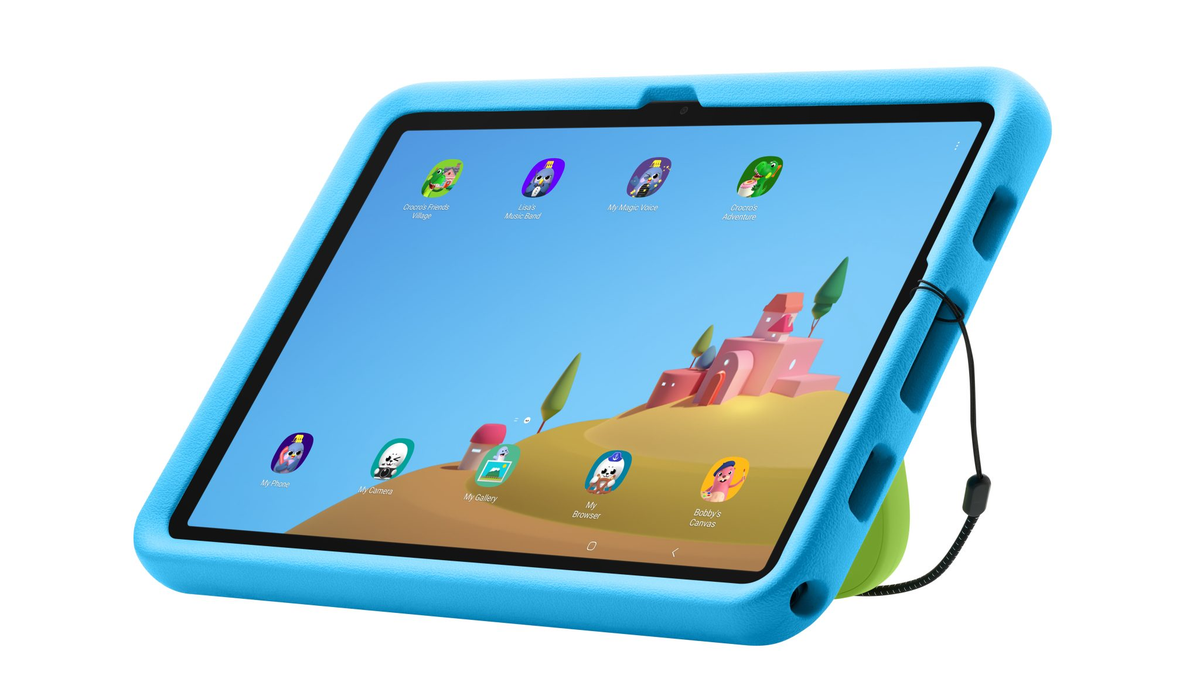
Samsung launched the Galaxy Tab A11+ Kids Edition at $349.99, targeting families with built-in parental controls, a protective case, Crayo-pen stylus, and stickers. The tablet features an 11-inch 90Hz display, 7,040mAh battery, 6GB RAM, 128GB storage, and microSD expansion up to 2TB. A key differentiator is Samsung’s commitment to seven years of One UI, Android, and security updates, but the announcement is likely limited in market-moving impact.
This is a low-dollar, high-retention product move that matters more for ecosystem lock-in than for near-term hardware revenue. The seven-year update policy is the real margin lever: it extends the useful life of a cheap device, which should reduce churn toward iPad refurb/hand-me-down alternatives and keep families inside Samsung’s app, accessory, and account ecosystem for longer. That makes this more relevant to AMZN only indirectly: it increases Android household penetration, which can support Prime Video, Kindle, and shopping engagement on the margin, but the stock impact is likely negligible unless Samsung broadens this support policy across the broader midrange line.
The second-order winner is actually Samsung’s retail and services flywheel, while the losers are smaller Android tablet brands that compete on price but cannot match support duration. In kids tablets, trust and parental controls are a bigger purchase driver than raw specs, so a credible long-support promise compresses the value proposition of adjacent Amazon Fire tablets and low-end Lenovo/Onn devices over the next 12-24 months. The risk is that this remains a niche SKU with limited volume; if sell-through is driven mostly by gifting and back-to-school, the commercial impact will be concentrated into a few seasonal windows rather than creating a sustained demand trend.
From a catalyst standpoint, the key watch item is whether Samsung can convert this announcement into broader retail placement and attach-rate expansion around cases, styluses, and cloud services. If Amazon delays or limits distribution, it suggests Samsung is prioritizing margin over scale, which would cap the competitive threat to Fire tablets. Conversely, if this becomes a template for more low-end Samsung tablets, it could pressure entry-level Android OEM pricing and force Amazon to respond with either deeper discounts or a stronger software/value bundle.
Contrarianly, the market may be underestimating how much seven-year support changes buying behavior in a category usually treated as disposable. For households, the option value of a tablet surviving multiple school cycles is meaningful, and that can justify a higher upfront price if total cost of ownership drops. The flip side is that longer support also lowers replacement frequency, which could slow unit growth for Samsung over time even as it improves brand loyalty and attach economics.
AI-powered research, real-time alerts, and portfolio analytics for institutional investors.
Request TrialOverall Sentiment
mildly positive
Sentiment Score
0.35
Ticker Sentiment
