
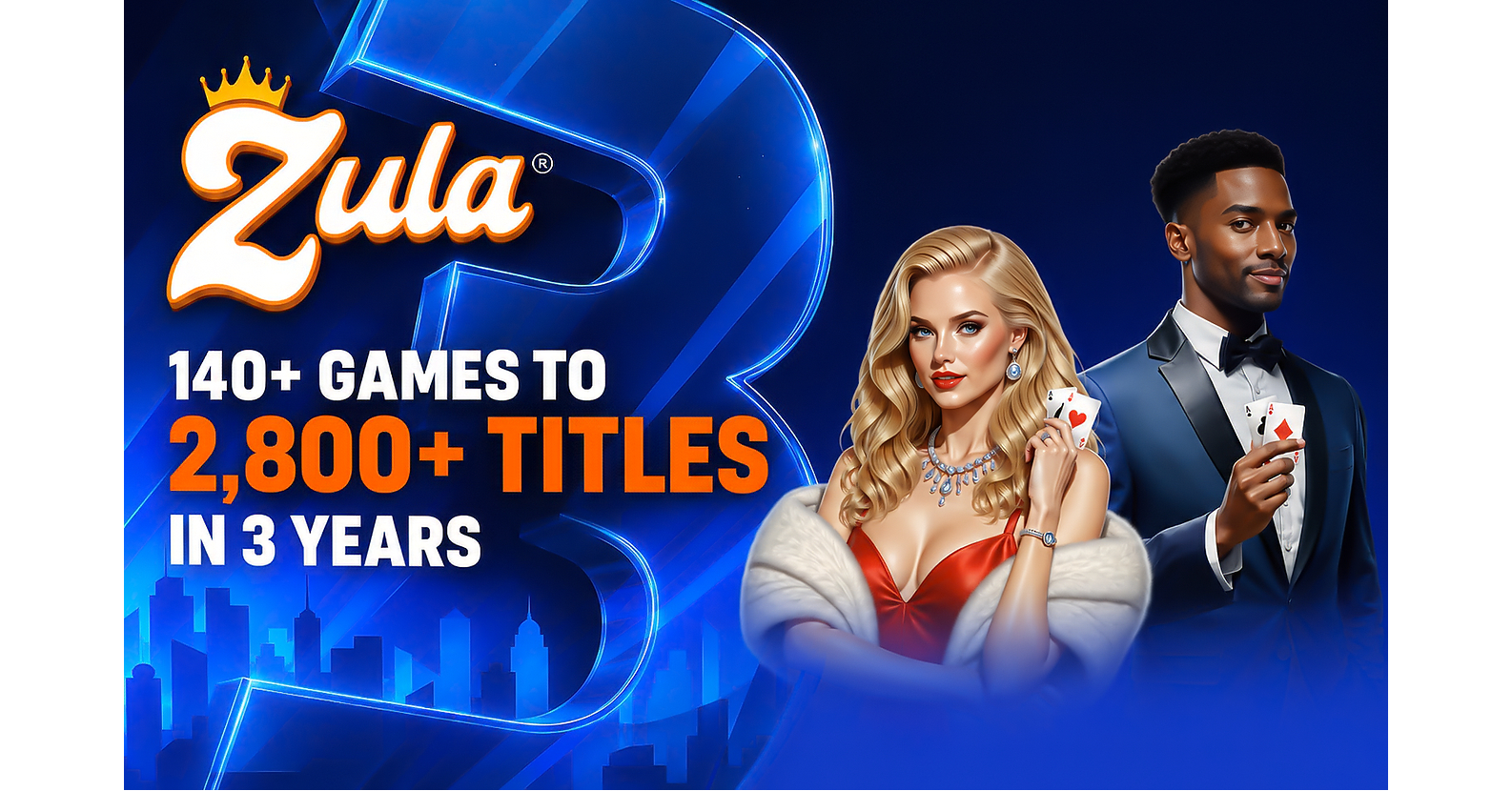
Zula reports rapid scale-up as it approaches its ~3-year anniversary: its free-to-play social entertainment library grew from ~140+ games at launch to 2,800+ titles from 70+ providers (nearly 20x expansion). The platform cites a 4.6 Trust Score based on 33,000+ verified player reviews and is shifting investment toward game discovery (personalized recommendations, navigation, VIP engagement, and community features) alongside continued near-daily content additions.
This is a signal about distribution power, not content breadth. In social/casino-style entertainment, incremental titles are easy to source; the scarce asset is first-party behavior data that improves ranking, reactivation, and VIP economics. That shifts the value pool toward operators with strong recommendation engines and CRM loops, while pressuring standalone content providers whose catalogs become more substitutable and whose negotiating leverage erodes.
Near term, the announcement is mostly sentiment-positive but financially low-signal because it lacks retention, ARPDAU, or payback data. The important catalyst over 1-3 months is whether broader choice actually lifts repeat visits and conversion, or merely creates choice overload that raises acquisition and moderation costs. Over 6-18 months, the bigger risk is regulatory and platform-policy tightening around sweepstakes/social gaming mechanics, which can cap growth regardless of library size.
The contrarian view is that investors may be overrewarding "more titles" as a moat when it is often just inventory aggregation. If discovery does not measurably improve monetization, the catalog expansion is a treadmill: more spend on content curation, more QA/compliance burden, and little pricing power. The DOV tag looks like a data artifact; there is no fundamental read-through to Dover.
AI-powered research, real-time alerts, and portfolio analytics for institutional investors.
Overall Sentiment
mildly positive
Sentiment Score
0.15
Ticker Sentiment
