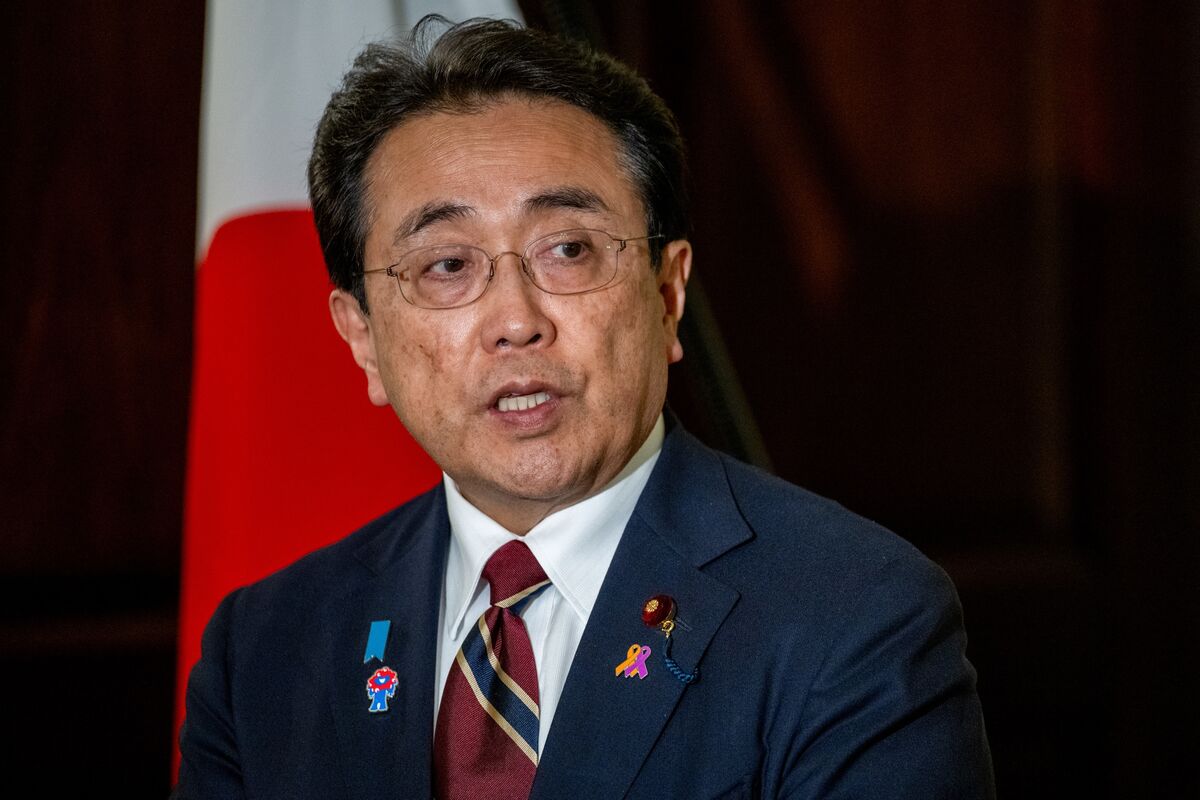
Japan signaled it would be natural for Trade Minister Ryosei Akazawa to meet Chinese Commerce Minister Wang Wentao at the APEC trade ministers' conference in Suzhou, indicating continued diplomatic engagement despite strained bilateral ties. The article contains no policy decision, tariff action, or market-moving announcement, so the immediate financial impact appears limited.
This is less about a near-term diplomatic breakthrough than about preserving optionality in a relationship where both sides need a low-drama channel. For markets, that matters because even modest de-escalation reduces the probability of abrupt administrative actions: customs delays, licensing friction, tourism/visa throttles, and targeted procurement scrutiny. The first-order beneficiary is not a headline equity sector so much as any business with high China revenue exposure and fragile working capital, because the market typically prices these channels only when they break.
The more interesting second-order effect is on supply chains that have been quietly re-routed away from China over the last 2-3 years. A thaw does not reverse friend-shoring, but it can slow the pace of incremental diversification and reduce the premium investors assign to “China-replacement” capacity in Korea, Taiwan, Vietnam, and Mexico. That is a relative loser for industrial automation, logistics, and non-China semiconductor back-end spend if procurement managers infer less urgency to accelerate redundancy.
Risk is asymmetric around headlines, not the meeting itself. The base case is a narrow, symbolic interaction with little follow-through; the tail risk is a public snub or a hardline comment that triggers a fresh cycle of retaliation within days, especially if paired with Taiwan or export-control language elsewhere. Over a 1-3 month horizon, watch for whether this produces any concrete working-level meetings on trade frictions; if not, the signal fades quickly and any risk premium compression should be faded.
The contrarian view is that markets may be underpricing the value of routine communication in a tense bilateral setup. Even absent policy change, re-opened channels can reduce the odds of a low-probability/high-impact shock that would hit Japanese autos, machinery, and global supply chains all at once. In that sense, this is a volatility dampener more than an alpha event.
AI-powered research, real-time alerts, and portfolio analytics for institutional investors.
Request DemoOverall Sentiment
neutral
Sentiment Score
0.00
