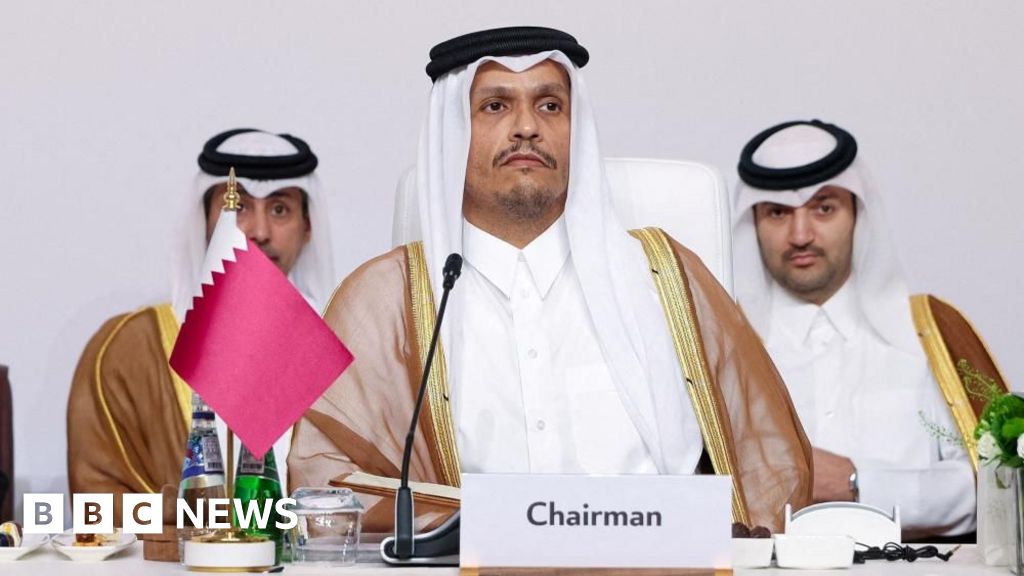
An emergency Arab-Islamic summit in Qatar is condemning Israel's recent air strike on Hamas leaders in Doha, which killed five Hamas members and a Qatari security officer. This incident significantly heightens regional tensions, complicating Qatar's critical mediation role in the Israeli-Hamas conflict and drawing international concern from the US, a close ally, and the UN Security Council. While the summit's draft resolution strongly condemns Israel, the practical implications beyond rhetoric are uncertain, signaling continued geopolitical instability in the region.
The Israeli airstrike in Doha targeting Hamas leaders has precipitated a significant geopolitical escalation, evidenced by an emergency Arab-Islamic summit in Qatar. This event critically compromises Qatar's position as a key mediator, given the death of a Qatari security officer on its sovereign soil and its dual role as a host to Hamas's political bureau and a close US ally with a major American airbase. International reactions highlight the diplomatic complexity; the UN Security Council condemned the strike, while the US administration expressed its displeasure, with President Trump terming Qatar a 'very great ally' and Secretary of State Rubio dispatched to the region. Although the summit's draft resolution uses strong condemnatory language, analysts' assessment that a military response is 'out of the question' suggests the immediate repercussions will be diplomatic and rhetorical. However, Israel's justification of the attack as a necessary measure to advance negotiations, despite the death of a negotiator's son, signals a hardening stance that injects significant uncertainty and risk into an already volatile regional conflict, raising the geopolitical risk premium for a peaceful resolution.
AI-powered research, real-time alerts, and portfolio analytics for institutional investors.
Request DemoOverall Sentiment
strongly negative
Sentiment Score
-0.65
