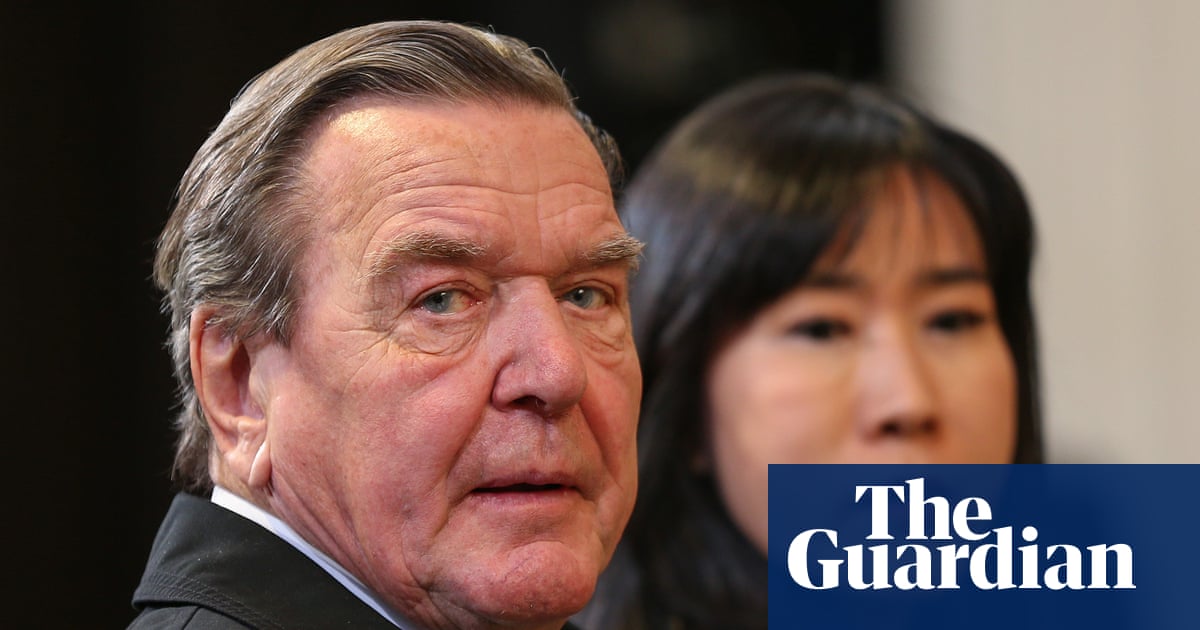
German officials dismissed Vladimir Putin’s suggestion that Gerhard Schröder could mediate Ukraine peace talks, calling it part of a series of "bogus offers" and stressing that any mediator must be acceptable to Kyiv. The US-mediated ceasefire is already under strain, with both sides accusing each other of violations, 3 people killed in drone strikes, and more than 200 battlefield clashes reported since early Saturday. The article also flags rising diplomatic tension involving Armenia, plus Latvia’s defense minister resigning after two Ukrainian drones crossed into its territory and hit oil storage facilities.
The market takeaway is not that a peace process is advancing, but that Moscow is trying to reframe the negotiating venue in a way that fractures Western unity. Any credible de-escalation would be a bearish event for the entire European defense complex, but the first-order probability remains low; the more actionable signal is that every “peace” headline can temporarily compress defense multiples without changing medium-term procurement demand. That creates a tactical short-covering risk in names exposed to Ukraine replenishment narratives, while the longer-duration thesis still rests on structural rearmament across Europe.
Energy is the cleaner second-order trade. If investors start pricing even a remote reduction in Ukraine-related disruption risk, European gas and power risk premia can bleed lower faster than physical fundamentals justify, especially into shoulder seasons. But the ceasefire fragility and continued cross-border escalation mean any price relief should be treated as tradable, not durable; the bigger setup is a whipsaw in nat gas, LNG shipping, and utilities hedged to forward power prices.
The diplomatic noise also matters for sovereign risk dispersion inside the EU: countries on the eastern flank may use every incident to justify faster air-defense and counter-drone spending, while Germany’s political ambiguity delays consensus on exports, replenishment, and industrial capacity. That is a relative-value tailwind for firms with non-Ukrainian demand drivers and less dependence on a single end-market, while pure-play suppliers tied to battlefield cadence are more vulnerable to headline-driven multiple compression. The contrarian miss is that “peace talk” headlines can actually be bearish for the most crowded war beneficiaries before they are bullish for the region as a whole.
AI-powered research, real-time alerts, and portfolio analytics for institutional investors.
Request DemoOverall Sentiment
neutral
Sentiment Score
-0.10
