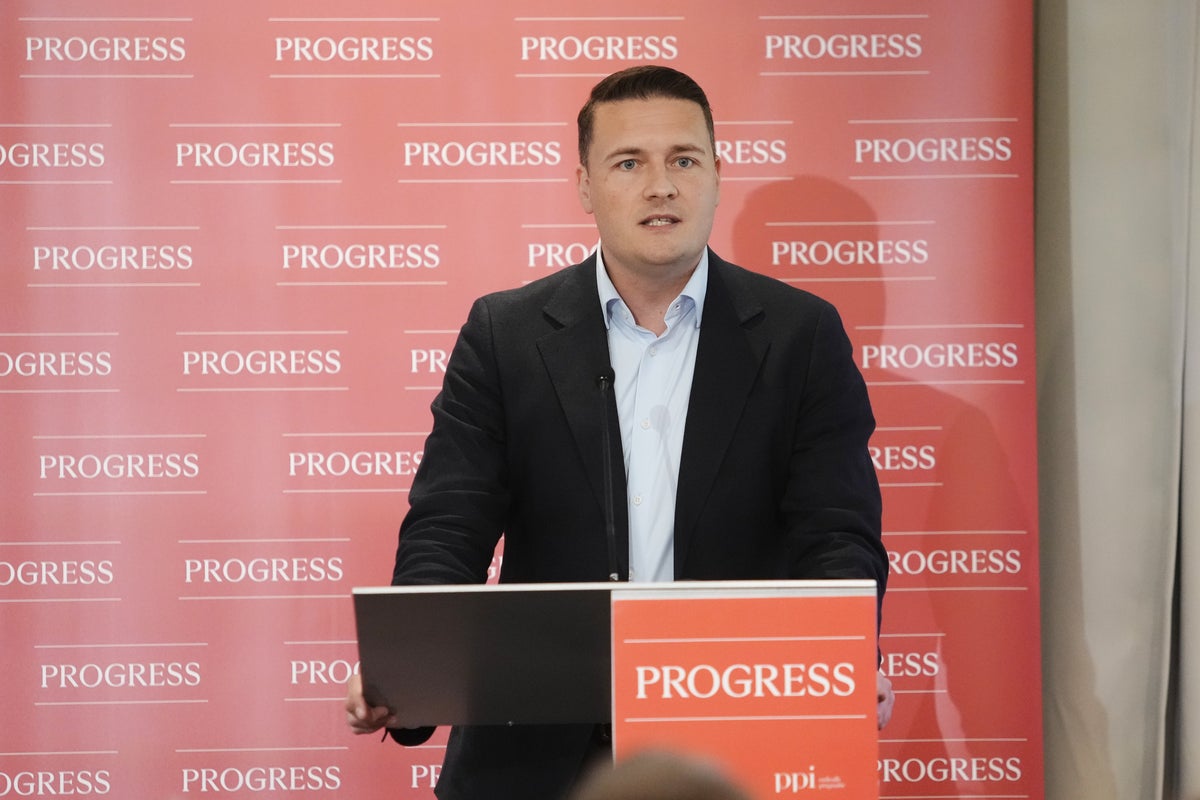
Wes Streeting said he will stand in any Labour leadership contest and used a conference speech to call EU re-entry a long-term goal, describing Brexit as a "catastrophic mistake." He also argued Labour must confront racism more directly, warned the party risks becoming the "handmaiden of Nigel Farage," and said Andy Burnham should be allowed to contest the Makerfield by-election before any leadership race. The article is primarily internal UK political commentary with limited direct market relevance.
The immediate market read is not about a single policy promise; it is about an accelerated fragmentation of the UK opposition and a higher probability of prolonged internal contestation. That matters because unstable leadership at the center of the political spectrum tends to widen policy dispersion on fiscal stance, housing, planning, and EU alignment, which keeps the UK risk premium elevated in rates and sterling even if headline polling does not move much day to day.
The second-order effect is on sectors that trade off policy credibility rather than near-term earnings. A more explicitly pro-EU, pro-housebuilding, pro-regulation-light message could be constructive for UK domestic cyclicals over a 6-18 month horizon, but only if it translates into a settled leadership narrative; otherwise, it is noise. The bigger beneficiary may be companies exposed to planning reform and infrastructure delivery, because any Labour leadership fight that centers on growth, housing, and “competence” raises the odds that the eventual platform becomes more supply-side friendly than the market currently discounts.
The contrarian angle is that the market may be overestimating how much this changes the policy path in the next 12 months. UK politics is increasingly determined by anti-incumbency and identity issues, so even a sharper pro-EU pivot may not restore trust quickly; if anything, it could further split Labour’s coalition and delay decision-making. The real risk is that the party spends the next several months optimizing for internal legitimacy rather than governing, which would keep UK domestic assets range-bound even if the rhetoric sounds more market-friendly.
For housing, the key implication is not demand but supply timing: any leadership contest that elevates planning reform as a unifying economic message could eventually be bullish for builders, land banks, and construction services, but the trade needs patience because implementation risk is high and sequencing matters. Short term, the better expression is to prefer selective exposure to beneficiaries of public investment and planning unlocks, while fading broad UK political beta until the contest clears. If the contest becomes a proxy for a hard pro- vs anti-EU split, expect volatility to rise in sterling and gilt spreads before any earnings revisions show up.
AI-powered research, real-time alerts, and portfolio analytics for institutional investors.
Request DemoOverall Sentiment
neutral
Sentiment Score
-0.05
