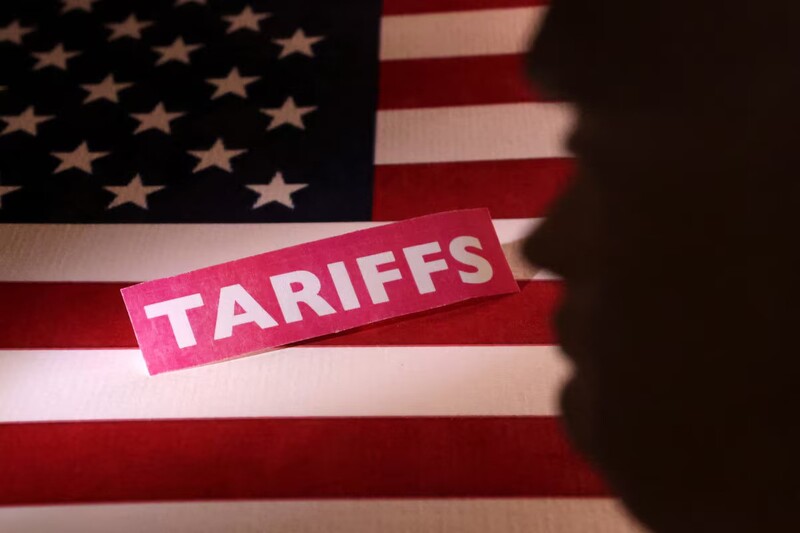
Trump said he will impose 100% tariffs on goods from any country that introduces a digital services tax on American companies, a move that could hit European exports and override existing trade arrangements. The policy threat directly targets large U.S. tech firms such as Alphabet and Meta, while escalating trade tensions just one day after the EU approved a deal setting a 15% tariff ceiling on most exports to the U.S. The announcement raises the risk of broader retaliation and market volatility across technology and trade-sensitive sectors.
This is less a broad tariff story than a targeted margin and multiple compression event for the largest US digital platforms. The market is likely underestimating the second-order risk: even if the tariff never hits in full, the threat gives Europe a fresh bargaining chip to push for broader data/tax concessions, which keeps regulatory overhang elevated for months and depresses terminal multiple assumptions for GOOGL and META.
The bigger issue is not direct tariff math, but policy spillover into ad-tech, cloud, and cross-border payment flows. GOOGL and META are the cleanest proxy for this because they sit closest to the political blast radius, while the broader index impact is muted unless the rhetoric escalates into actual goods retaliation that hits autos, luxury, or consumer staples. That makes this a relative-value trade rather than a market-wide risk-off catalyst.
Near term, headline risk is highest over the next 1-3 weeks: any EU response, legal challenge, or negotiating signal can swing these names sharply. Over a 3-6 month horizon, the trade works only if the administration sustains pressure and Europe hardens its stance; otherwise, this fades into the long list of policy threats that never translate into cash-flow damage. The contrarian setup is that the market may already be discounting a permanent tax/regulatory drag, so downside becomes more asymmetrical only if the rhetoric expands from digital taxes to broader tech enforcement or trade retaliation.
The cleanest read-through is that policy optionality is now a factor in valuation, not just earnings. That favors hedges and pairs over outright shorts: if the tariff threat is walked back, the names can squeeze hard because positioning is likely defensive; if it escalates, multiple compression has room to run before earnings estimates have to move meaningfully.
AI-powered research, real-time alerts, and portfolio analytics for institutional investors.
Request DemoOverall Sentiment
mildly negative
Sentiment Score
-0.35
Ticker Sentiment
