

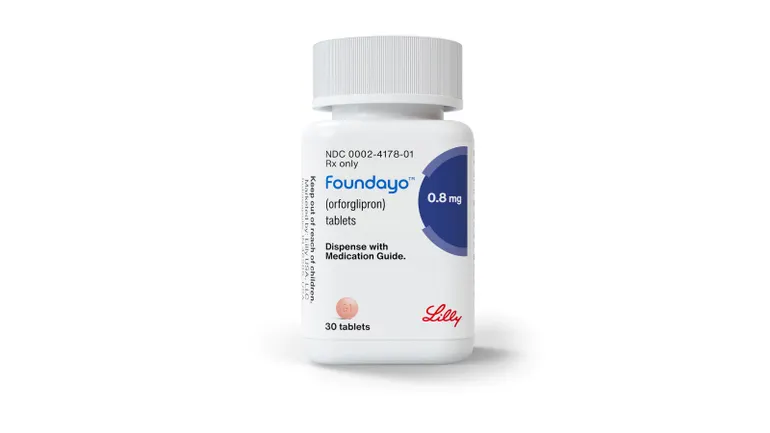
CVS Caremark will add Lilly’s Foundayo pill to formularies on June 1 and restore Zepbound as a preferred option on Oct. 1, removing Novo Nordisk’s prior advantage in CVS coverage. The move puts Foundayo and Zepbound on all three major U.S. PBMs, potentially expanding access to millions more patients, while Lilly shares rose nearly 6% intraday. Novo’s Wegovy pill and injection will remain preferred on CVS Caremark, so the competitive impact is meaningful but not exclusive.
This is more important for Lilly’s distribution power than for near-term earnings. In obesity, formulary placement is a demand-shaping event because it changes the friction cost of initiation; once access normalizes, refill persistence and employer channel penetration matter more than brand preference. The second-order winner is likely the broader GLP-1 ecosystem: better coverage should expand total class adoption rather than merely reallocating share, but the immediate share gain should accrue to the product with the faster prescribing flywheel and stronger rebate leverage.
The key asymmetry is that the market is still underestimating how quickly access can compound into utilization for an oral asset. A pill lowers the operational burden on prescribers and patients, which tends to increase trial rates faster than injectables once payer barriers fall. That said, Novo’s preferred status remaining intact limits the downside for NVO; the bigger risk is that Lilly’s incremental access converts into a durable perception of momentum, forcing more aggressive contracting and compressing net pricing across the category into 2025.
For CVS, the move is strategically defensive: PBMs cannot afford to be seen as structurally favoring one manufacturer if competitors can match economics. The hidden risk is margin leakage, because every incremental GLP-1 covered at scale increases employer-level utilization scrutiny and could trigger more restrictive plan design or higher patient cost-sharing in self-funded accounts. The reversal window is months, not days; if early refill/persistence data for the pill disappoints, or if employers balk at aggregate spend, access gains could normalize quickly.
The contrarian take is that the market may be overpricing the near-term share shift and underpricing the category-wide demand expansion. If coverage broadens materially, the first-order beneficiary may be the company with the best supply chain execution and lowest friction to start therapy, while the loser could be the one with a slower conversion funnel—not necessarily the one with weaker clinical differentiation.
AI-powered research, real-time alerts, and portfolio analytics for institutional investors.
Request TrialOverall Sentiment
mildly positive
Sentiment Score
0.35
Ticker Sentiment
