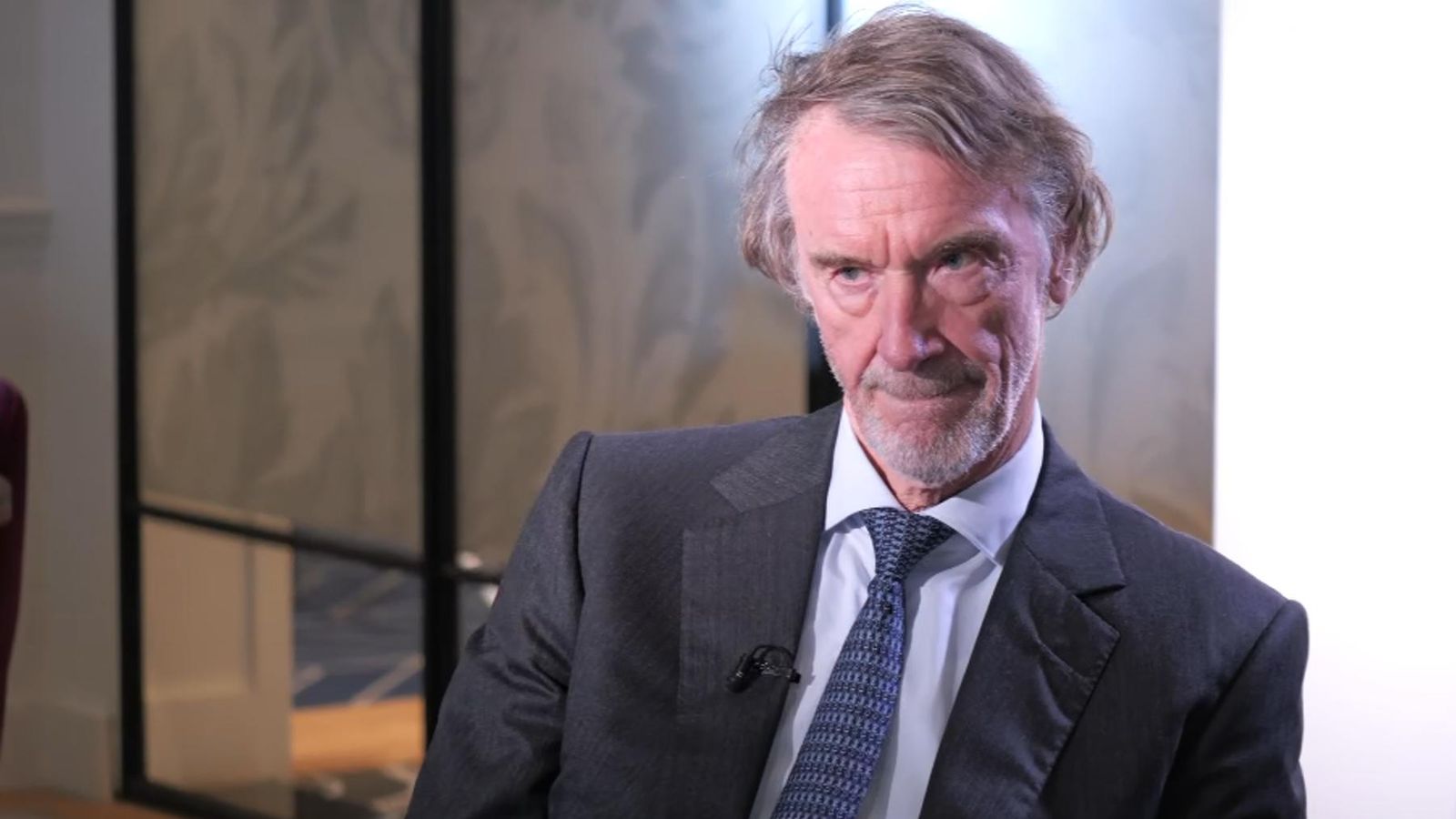
INEOS founder and Manchester United co-owner Sir Jim Ratcliffe warned that the UK faces severe political, social and economic strains, asserting immigration has 'colonised' the country and noting a population rise cited from ONS estimates (about 67m mid-2020 to 70m mid-2024) and a claim of 'nine million people on benefits.' He also flagged closures across the European chemicals sector and described conditions as 'unsurvivable,' while his remarks drew swift political rebuke from Prime Minister Keir Starmer; the episode raises reputational and policy risk around immigration and highlights sector-specific stresses in chemicals but is unlikely to be a broad market-moving event.
Market structure: Politics-driven rhetoric increases downside pressure on UK domestic-facing consumption, low-margin retail, hospitality and public services while accelerating secular winners — industrial automation, robotics and select energy-integrated chemical firms with scale. Expect near-term uplift in wage bargaining power in low-skill sectors and margin compression for small/mid European chemical producers; GBP and UK equities (small caps) are the most directly sensitive. Cross-asset: anticipate a modest risk-off bid in gilts (yields up 10–30bp on polling shocks), ~3–7% directional moves in GBP vs USD on political headlines, and selective commodity sensitivity (natural gas/naphtha) for chemicals margins.
Risk assessment: Tail risks include an electoral shock or rapid immigration clamp triggering acute labor shortages (construction/healthcare) and strikes, or reputational blowback leading to sponsor boycotts for Manchester United; probability low but impact high on specific names. Timeline: immediate (days) — headline-driven FX/stock volatility; short-term (weeks–3 months) — policy proposals, polling and margin reports; long-term (6–36 months) — structural capex shift to automation and possible industry consolidation in chemicals. Hidden dependencies: supply chains that rely on migrant labor, pension/benefit fiscal drag, and energy input cost persistence.
Trade implications: Tactical: 1–2% portfolio short GBPUSD via forwards/CFDs if GBP breaks support (example trigger: close <1.20) with stop +2% and target −5–7% within 3 months. Thematic: 2–3% long ROBO (ROBO) ETF over 6–18 months to capture accelerated automation capex; target +20–30% upside, trim at +25%. Event conditional: initiate 1% bearish put-spread on BASF (BAS.DE) (3–6 month) if European feedstock/energy costs remain >10% above 5‑yr average for 2 consecutive months or margins miss; target asymmetric downside. Opportunistic: accumulate MANU (MANU) 1–2% on any >8% knee-jerk sell-off with 3‑month protective puts (10% OTM) to limit reputational risk.
Contrarian angles: Consensus may overreact to soundbite politics — owner comments historically produce short-lived equity moves while structural fundamentals matter; MANU’s revenue streams (broadcast/commercial) mute long-term damage from PR unless sustained boycott occurs. The market may underprice the winners: automation/industrial software exposure is underowned in UK/EU portfolios and could outperform if immigration policy tightens materially. Historical parallels: 2016 Brexit FX/gilt knee-jerk moves then partial mean-reversion — use thresholds not headlines when sizing positions.
AI-powered research, real-time alerts, and portfolio analytics for institutional investors.
Request DemoOverall Sentiment
moderately negative
Sentiment Score
-0.45
Ticker Sentiment
