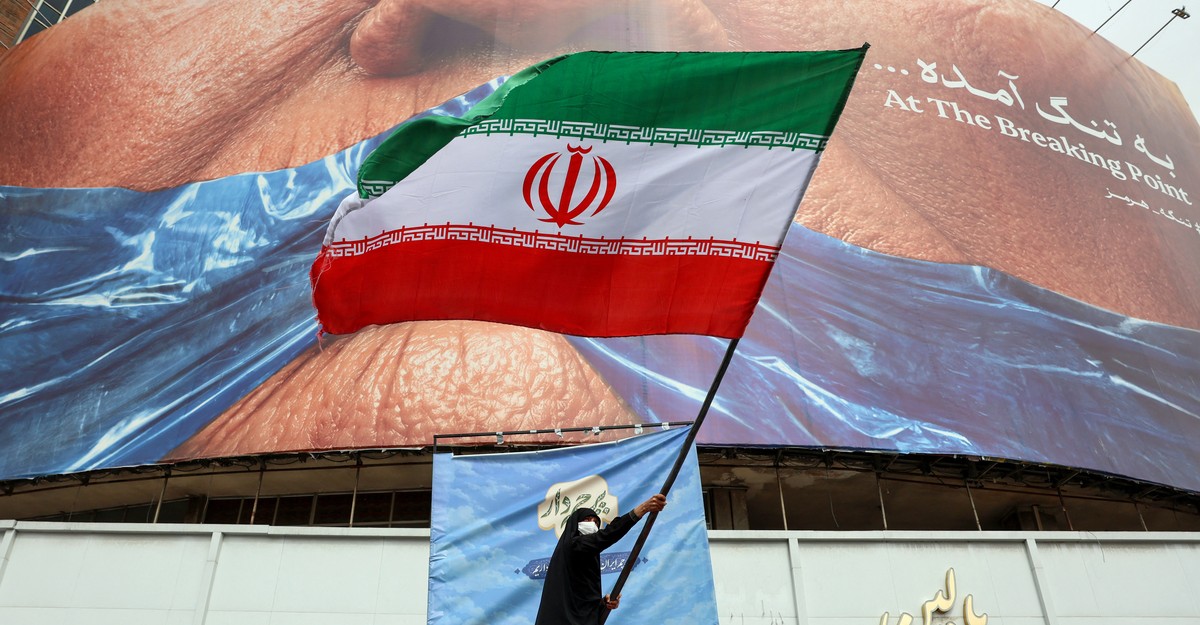
The article says the U.S. is moving toward a negotiated end to the Iran conflict, but frames it as a strategic defeat for America and a win for Tehran. It cites growing alarm among Trump allies and warns that any deal could be worse than the 2015 JCPOA, with Iran retaining leverage over nuclear and regional issues. The piece implies major geopolitical and market risks, including pressure on the Strait of Hormuz and the global economy.
This setup is less about the headline and more about the market function of uncertainty: until the terms are explicit, the dominant trade is not directional on Iran so much as volatility in defense, energy, and risk-sensitive cyclicals. A cease-fire or partial accommodation would likely compress the geopolitical premium embedded across crude, shipping insurance, and Middle East defense spend faster than it changes physical balances; the first-order move could be a sharp relief rally in global beta even if the strategic outcome is messy. The bigger second-order effect is that any deal perceived as weak will force allies to price a lower U.S. security backstop, which tends to benefit non-U.S. defense suppliers and hard-asset hedges while hurting discretionary and transport names.
The clearest catalyst window is days to weeks, not months: if language emerges that punts the nuclear issue or leaves maritime controls ambiguous, crude could mean-revert lower on reduced tail risk, while if talks collapse, the market likely re-prices a broader regional escalation premium. The asymmetry is that downside in oil from de-escalation can be fast, but upside from breakdown may be capped by already-stretched headlines and the market’s expectation that Washington will ultimately seek off-ramps. That makes long vol more attractive than outright directional energy exposure at current levels.
The contrarian miss is that the strongest relative winner may not be U.S. defense prime contractors but European and Asian military/security suppliers, because a narrative of U.S. strategic inconsistency accelerates procurement diversification. On the loser side, transport, airlines, and industrials with high Middle East fuel exposure are vulnerable to even a temporary oil spike, while the market may be overestimating how much of a weak deal would truly depress crude if physical supply remains constrained. In other words, the “deal” matters less for fundamentals than for risk premium liquidation or re-acceleration.
AI-powered research, real-time alerts, and portfolio analytics for institutional investors.
Request DemoOverall Sentiment
strongly negative
Sentiment Score
-0.80
Ticker Sentiment
