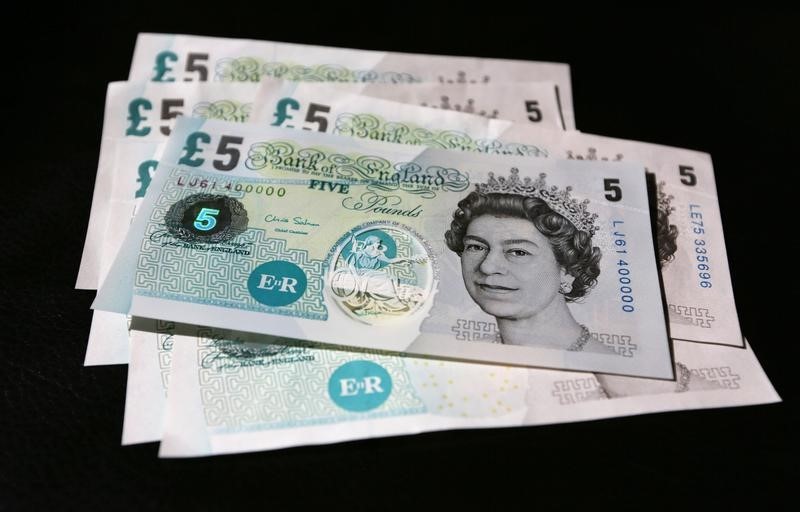
Bank of America is recommending hedging GBP exposure despite April’s strength, citing weak May seasonality, underpriced political risk ahead of local elections, and bearish technicals. GBP/USD has historically been the weakest G10 pair in May, falling 69% of the time by an average of 0.57%, with the bank favoring downside while 1.36 resistance holds and support seen at 1.3414 and 1.3381. Implied volatility in GBP/USD and EUR/GBP is near the bottom of 1-year ranges, suggesting complacency around upcoming uncertainty.
The setup is less about a pure macro GBP short and more about a crowded “carry + good data” consensus entering a seasonally hostile window with cheap protection. If realized volatility reverts higher around local elections, the first-order loser is spot GBP, but the second-order winner is GBP downside convexity: three-month vol anchored near the low end makes options relatively attractive versus selling spot outright. That matters because when an FX pair is technically weakening while implied vol is compressed, the market is often underpaying for a discrete catalyst.
The most interesting knock-on effect is cross-asset. A softer GBP into a risk-off May would tighten financial conditions at the margin for UK domestics and multinationals with unhedged USD costs, while exporters may lag because the move is being driven by global risk aversion rather than idiosyncratic UK growth. On the other side of the pair, EUR/GBP upside is the cleaner expression if the election outcome injects uncertainty without a sharp repricing of BoE expectations; that trade benefits from lower beta and less dependence on broad dollar direction.
The contrarian view is that the bearish seasonal pattern may be partly arbitraged already, and the real risk is a continuation of better-than-feared UK data that forces short-covering. If GBP/USD can reclaim and hold above the recent resistance area, the market could squeeze quickly because positioning is likely built for stability, not a trend break. The key reversal trigger is not just the election result, but whether the next 2-4 weeks produce another run of positive surprises that re-anchors rate differentials.
For timing, this is a near-term trade with a 2-6 week horizon rather than a multi-quarter structural short. If spot holds above support into the event, risk/reward shifts toward fading rallies rather than chasing downside; if support breaks, the move can accelerate because technicals and seasonal flows align.
AI-powered research, real-time alerts, and portfolio analytics for institutional investors.
Request DemoOverall Sentiment
mildly negative
Sentiment Score
-0.25
Ticker Sentiment
