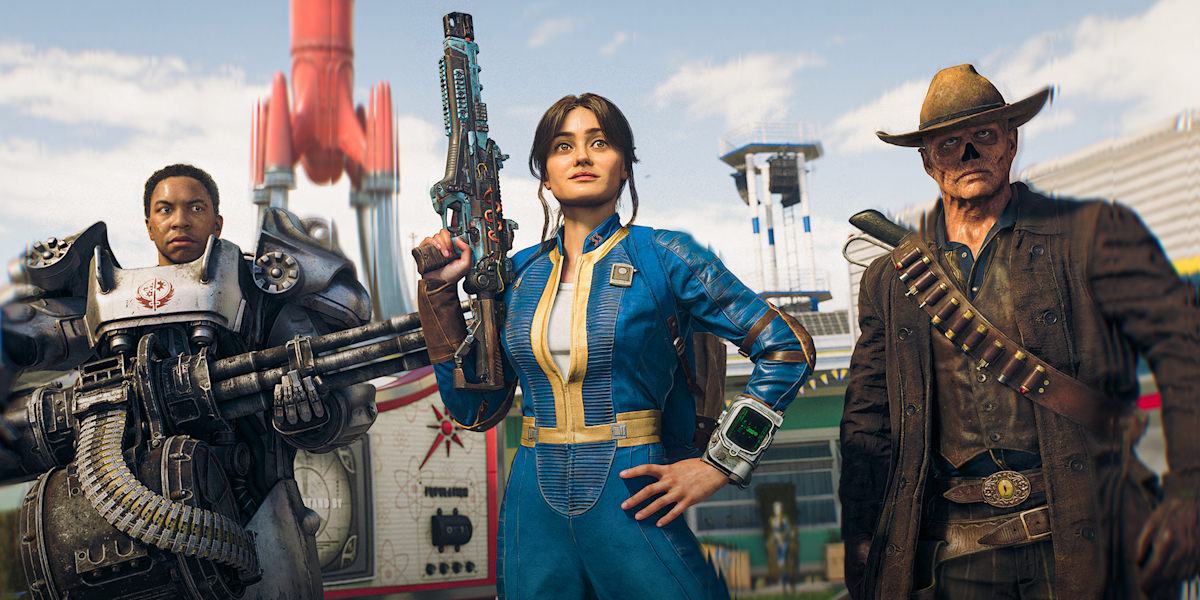
The article headline, 'Fallout Returns to Call of Duty,' signals a crossover or the reintroduction of Fallout-themed content within the Call of Duty franchise. No supporting details, timelines, corporate names, revenues, or figures were provided in the text to assess commercial implications or financial impact.
Market structure: A Call of Duty event (product launch, crossover content or controversy) disproportionately affects Microsoft (MSFT) given Activision is a Microsoft subsidiary; COD historically accounts for a material share of Xbox content & services (order-of-magnitude: single-IP swings can move gaming revenue by mid-single-digit % points). Winners: MSFT (digital sales, Game Pass ARPU), cloud providers (AMZN, MSFT Azure) and payment processors; losers: console/retail dependent sellers (GME) and rival publishers if COD steals engagement. Expect pricing power in live-ops microtransactions to move ARPU +/-10–20% during campaign windows.
Risk assessment: Tail risks include regulatory/antitrust flare-ups (new scrutiny of MSFT post-Activision, 1–5% valuation shock), a sustained monetization backlash that trims ARPU >10%, or large-scale technical outages raising cloud costs ~5–10% for a quarter. Immediate (days) risk is sentiment/DAU swings; short-term (weeks–months) is revenue recognition and promotions; long-term (quarters–years) is IP monetization cadence and subscription churn. Hidden dependency: live-ops revenue concentrated in top 10% of spenders – a 20% shift among whales has outsized P&L impact.
Trade implications: If engagement increases, prefer a modest 1–2% directional exposure to MSFT via 3–6 month call spreads (leverage but capped risk) and a 0.5–1% overweight to NVDA for cloud/GPU demand. If backlash, use a relative-value pair: long TTWO (Take-Two, TTWO) 0.75–1% vs short MSFT gaming exposure via 3-month puts sized to expected gaming revenue sensitivity. Use event-timed option straddles around major announcements when implied vol > realized vol by 20–30%.
Contrarian angles: Consensus will focus on headline engagement; it underestimates stickiness: historical Activision controversies saw DAU dips of 5–15% then recovery in 2–3 months, so knee-jerk selloffs can be overdone. Watch metrics not headlines: weekly DAU, ARPU, and store conversion — flag exits if weekly DAU drops >5% for two consecutive weeks or ARPU falls >10% QoQ. Unintended consequence: a monetization crackdown could push spend to third-party platforms (benefit EA/TTWO).
AI-powered research, real-time alerts, and portfolio analytics for institutional investors.
Request DemoOverall Sentiment
neutral
Sentiment Score
0.00
