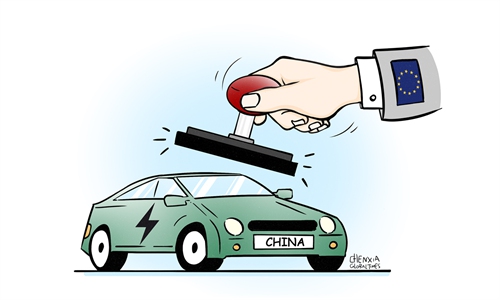
China’s Commerce Ministry warned it may take countermeasures after the EU’s proposed Industrial Acceleration Act was described as imposing discriminatory local-content, technology-transfer and procurement restrictions on foreign investors in batteries, EVs, photovoltaics and critical raw materials. The article says the legislation is still under review, but it adds to a broader EU shift toward economic-security tools, including cybersecurity, foreign-subsidy and sanctions measures that Chinese officials say are increasingly targeting China. While engagement continues, the risk is rising for China-EU trade, supply chains and companies operating in strategic sectors.
The market implication is less about an immediate tariff-style shock and more about a creeping re-rating of European industrial policy risk. If Brussels keeps widening “economic security” to include procurement, local content, and supply-chain eligibility, Chinese EV, battery, and solar firms face a multi-quarter squeeze on addressable market share, while European incumbents gain near-term pricing power but at the cost of higher capex and slower technology diffusion. The second-order winner is likely North American and select Korean/Japanese suppliers that can substitute into EU procurement without the same political baggage.
The bigger hidden risk is that this becomes a template for broader industrial screening beyond clean tech. That would hit not only Chinese exporters, but also European OEMs and project developers who rely on lowest-cost input chains; in practice, the EU may be importing a slower growth tax into its own green transition. For listed markets, the most exposed names are firms with Europe-heavy EV/battery revenue, plus logistics and industrial automation providers tied to cross-border capex cycles; the lagged effect is margin compression from duplicated compliance and localized sourcing over 6-18 months.
Near term, the most important catalyst is not the legislation itself but the political sequencing: committee approvals, Parliament amendments, and whether member-state resistance forces dilution. A softer version would likely spark relief in China-exposed cyclicals; a harder version would trigger retaliatory actions that broaden from symbolic counters to targeted procurement, licensing, or customs friction. Consensus may be overestimating Europe’s ability to execute a clean decoupling—internal fragmentation makes full containment unlikely—but underestimating how much damage even partial fragmentation does to project IRRs and order visibility.
AI-powered research, real-time alerts, and portfolio analytics for institutional investors.
Request DemoOverall Sentiment
moderately negative
Sentiment Score
-0.45
Ticker Sentiment
