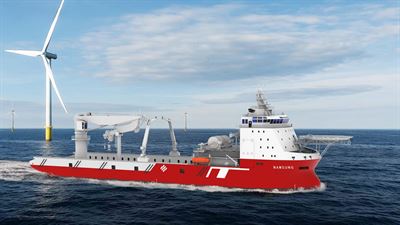
MacGregor has won a contract to supply a 400-tonne Active Heave Compensated (AHC) subsea crane for a new 127 m Floating Wind Farm Construction Vessel being built by Jiangsu Dajin Heavy Industry for operations managed by Hana Shipping; the order is booked in Q1 2026, with crane delivery at end-2027 and vessel delivery expected in Q2 2028. The vessel will support mooring and cable-laying for the Ulsan Floating Wind Farm ~70 km off Ulsan, South Korea, and the size/complexity of the crane underscores MacGregor's capabilities in large offshore wind equipment; MacGregor reported ~EUR 830m sales in 2025 and ~2,000 employees, giving the firm scale to support execution.
Market structure: The MacGregor 400t AHC win is a clear signal that a small set of engineering-capable OEMs will capture high-margin floating-wind equipment work; winners include large crane/subsea-integrators, specialised shipyards (Chinese and Korean), and owners/operators able to mobilise FWCVs, while small-volume crane makers and commoditised shipyards face pricing pressure. This deal raises technical entry barriers (complex under-deck hoist integration) and supports modest pricing power for bespoke units — expect order premiums of +5–15% versus standard cranes and multi-year delivery lead times into 2027–28.
Risk assessment: Tail risks include project delays (weather, permitting) that push delivery past end‑2027/Q2‑2028 causing warranty/cost overruns, Chinese export controls or tariffs on heavy equipment, and concentration risk if a handful of suppliers fail. Time horizons: immediate market reaction for suppliers on announcement days (days); booking/backlog recognition and margin flow (6–18 months); structural demand for FWCVs and supply-chain buildout (2027–2032). Hidden dependencies are port infrastructure, specialised crew training, and local content rules that can shift margin between OEMs and shipyards.
Trade implications: Favor selective exposure to renewables equipment and subsea contractors ahead of visible 2027 delivery schedules. Trade size: 1–3% positions in diversified clean-energy ETFs plus 0.5–2% in individual subsea contractors; use 9–18 month option spreads to leverage the 2027 delivery narrative while capping premium. Watch FX (KRW/CNY) and long‑dated rates — higher yields raise project financing costs and depress contractor equity multiples.
Contrarian angles: Consensus may underweight integration risk — large bespoke cranes often push suppliers into fixed‑price engineering risk and warranty exposure, which can compress margins if execution slips; historical parallel: 2014–16 offshore equipment boom where rapid order growth preceded margin contraction. If floating wind demand tracks slower than tendered projects, early‑mover suppliers could face overcapacity by 2029; size positions accordingly and prefer names with diversified aftermarket services.
AI-powered research, real-time alerts, and portfolio analytics for institutional investors.
Request DemoOverall Sentiment
mildly positive
Sentiment Score
0.35
