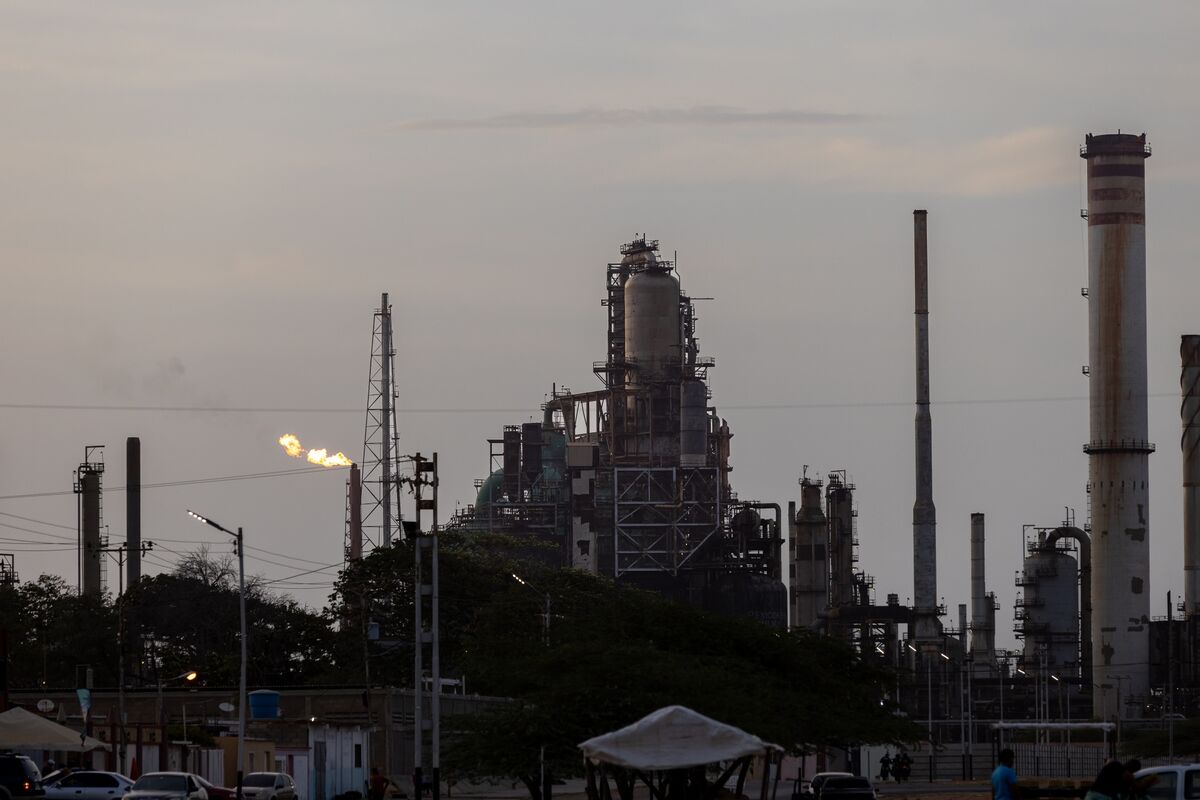
Venezuela’s crude exports surged to 1.16 million barrels a day in April, a seven-year high and more than double late-2023 levels. The rebound reflects a rapid recovery in oil sales after the US moved to control the country’s exports earlier this year, signaling materially improved supply from a major emerging-market producer. The move is supportive for global oil supply and could matter for energy markets.
The key market implication is not the headline volume itself but the speed at which sanctioned barrels are becoming “usable” again under a new enforcement regime. That tends to pressure the light/heavy crude complex first: refiners that were optimized for Venezuelan heavy grades regain a lower-cost feedstock option, which can compress differentials for Gulf Coast and Asian coking systems even if outright Brent is little changed. In other words, this is more bearish for specific crude spreads and upgrading margins than for broad flat-price oil.
Second-order, the rebound creates a credibility test for sanctions architecture. If export control can be rerouted and monetized this quickly, counterparties will increasingly price in a lower probability of durable supply loss from other geopolitically constrained producers, which subtly caps the risk premium embedded in deferred futures. The larger winner is any buyer with logistics and financing access to discounted barrels; the loser is the cohort of higher-cost marginal suppliers that rely on scarcity to support realizations.
The contrarian risk is that the market extrapolates permanence from a politically fragile arrangement. Export growth can reverse in weeks, not years, if operating discipline breaks, shipping/insurance channels tighten, or policy changes restore hard sanctions enforcement. That makes the correct expression less about directional crude beta and more about relative value in crude quality spreads and companies with exposure to heavy-oil replacement economics.
If the rebound persists for 1-3 months, it can bleed into product markets via lower feedstock costs and improved coker utilization, a mild headwind for diesel-linked inflation prints and a tailwind for refiners with heavy slates. But if the flow proves ephemeral, the trade becomes a classic squeeze: inventories look looser than they are, then tighten abruptly when the market realizes the barrels were policy-contingent rather than structurally returned.
AI-powered research, real-time alerts, and portfolio analytics for institutional investors.
Request DemoOverall Sentiment
moderately positive
Sentiment Score
0.35
