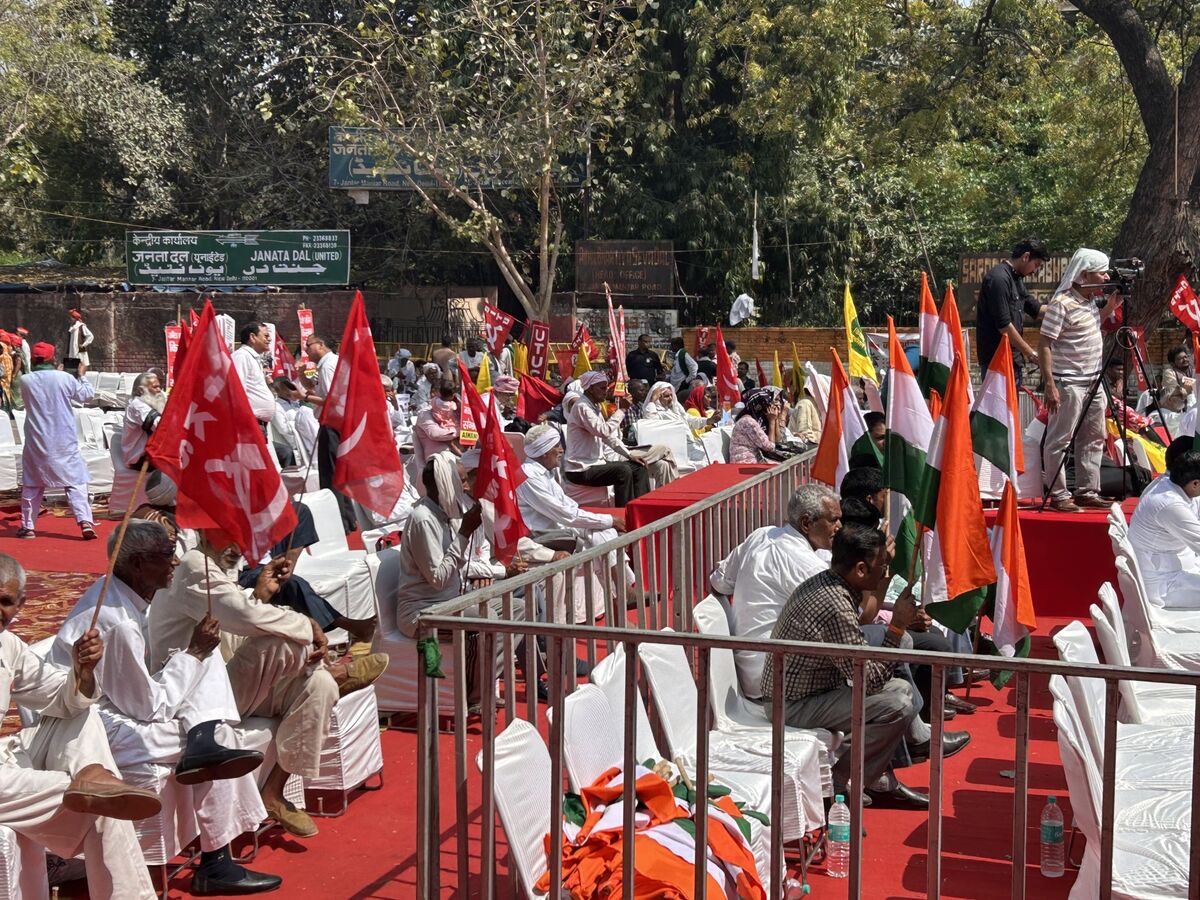
Hundreds of farmers and industrial workers staged a protest in Delhi demanding the government halt concessions to the US in trade talks and pass a law guaranteeing minimum crop prices. The protest coincides with spiking energy prices tied to the Middle East conflict, which raises diesel-driven input costs for farmers and intensifies cost pressure on Indian agriculture.
Political friction over trade negotiations raises the probability of near-term policy backstops that prioritize domestic prices over export openness; that mechanism tends to manifest as export curbs or higher export taxes within weeks-to-months rather than large immediate fiscal transfers. Those moves would tighten global supply for specific staples and push up seasonal volatility in commodity markets, creating idiosyncratic spikes that are tradable but short-lived (4–12 weeks) unless the concessions become permanent.
The immediate energy channel is a two-way risk: higher diesel/transport costs compress farm-level margins and increase calls for larger subsidies, which in turn risks widening India's fiscal deficits and steepening sovereign curves over a 3–12 month window. A 10–20% move in local diesel pricing versus a recent baseline meaningfully changes farmer cashflow and could swing planting decisions ahead of the next sowing season, amplifying commodity-price responsiveness to weather and policy simultaneously.
Second-order winners include non-Indian exporters of agri-commodities and manufacturers in Southeast Asia that can pick up lost production or supply-chain roles; exporters of fertilizer and energy stand to benefit if India curtails exports or faces higher domestic consumption. Losers are leveraged rural-focused lenders and local agricultural machinery firms whose loan books and sales are sensitive to a weak harvest cycle and lower capex — that payoff profile is asymmetric because political fixes (price guarantees, subsidies) can blunt producer bankruptcies but not repair margin compression.
Key catalysts to watch that will flip market direction are: official trade-negotiation language (days), budgetary subsidy announcements (weeks), and sowing-season planting reports (1–3 months). A rapid, market-friendly concession from Delhi — either cash transfers sized to offset diesel moves or a limited trade compromise — would materially reduce tail risk and should be treated as a trigger to trim hedges.
AI-powered research, real-time alerts, and portfolio analytics for institutional investors.
Request DemoOverall Sentiment
mildly negative
Sentiment Score
-0.25
