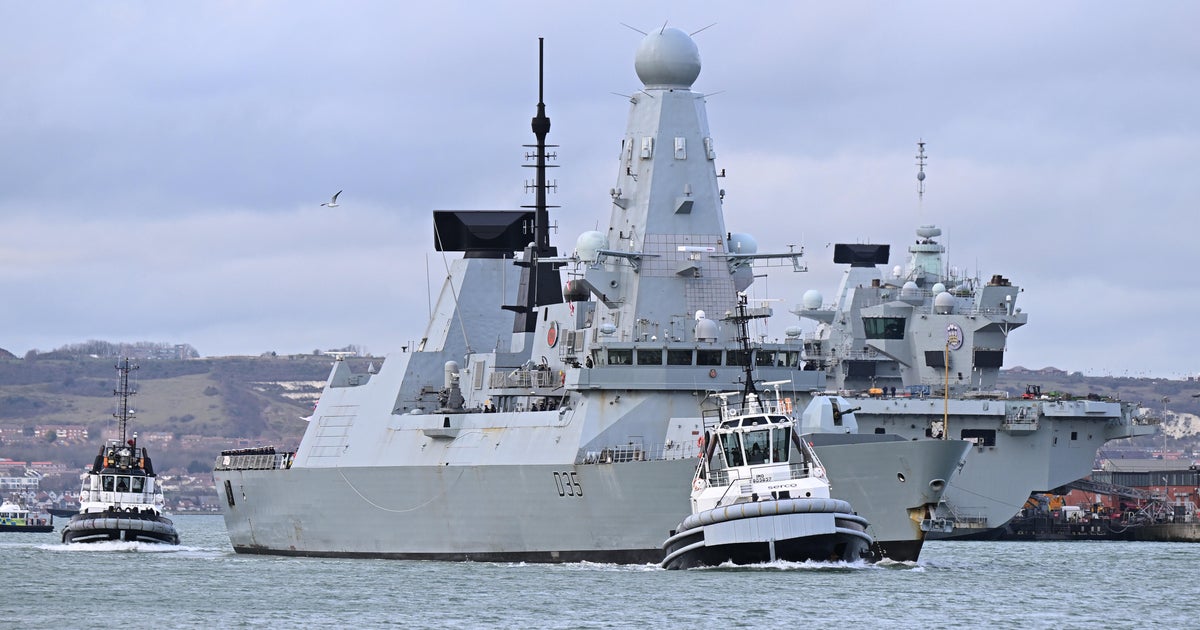
An Iranian drone strike that lightly damaged a runway at the UK base in Akrotiri has prompted French President Macron to visit Cyprus and spurred several European capitals to deploy additional warships and anti-drone/missile defenses. Cyprus (population <1.5M, ~100 miles from Lebanon/Syria) and UK sovereign bases Akrotiri and Dhekelia are now a strategic flashpoint, increasing regional escalation risk after Feb. 28 strikes on Iran. The U.K. has allowed U.S. access to three bases (Akrotiri, Diego Garcia and Fairford) for limited defensive purposes, while southern Cyprus hosts an ~11,000-strong Israeli property/tourist community, exposing travel and real estate to security shocks.
A step-up in deployments around Cyprus is a classic short, sharp procurement cycle: navies and airbases need anti-drone/point‑defense, radars, munitions and runway repair — equipment that flows from prime contractors to regional MROs and engineering firms. Expect a concentrated wave of $200–500m of incremental equipment and hardening spend in the next 3–12 months (one‑time buys and installation) plus $30–120m/yr of sustainment and spare‑parts demand thereafter, which disproportionately benefits suppliers with logistical footprints in the Eastern Mediterranean and sovereign‑contracting pedigrees.
Tourism and local real estate are the soft underbelly: short‑term visitation and transaction velocity can drop 20–40% around headline strikes, producing 3–12 month liquidity freezes in holiday‑heavy micro‑markets and a 5–15% repricing of marginal coastal inventory. That raises insurance/reinsurance pricing and operational costs for tour operators and charter fleets, creating a tactical dislocation between defense upside and leisure/travel downside.
Tail risk is binary and concentrated: a major NATO asset hit or Turkish escalation converts a procurement bump into multi‑year basing and expeditionary demand; absence of such escalation means most capex is front‑loaded and will mean‑revert within 6–12 months as political pressure to de‑escalate rises. The market is leaning hawkish; the contrarian read is that much of the defense benefit is a one‑to‑two quarter revenue shift rather than a structural multi‑year secular re‑rating unless conflict widens — structure trades to capture front‑loaded wins and hedge an eventual normalization.
AI-powered research, real-time alerts, and portfolio analytics for institutional investors.
Request DemoOverall Sentiment
mildly negative
Sentiment Score
-0.25
