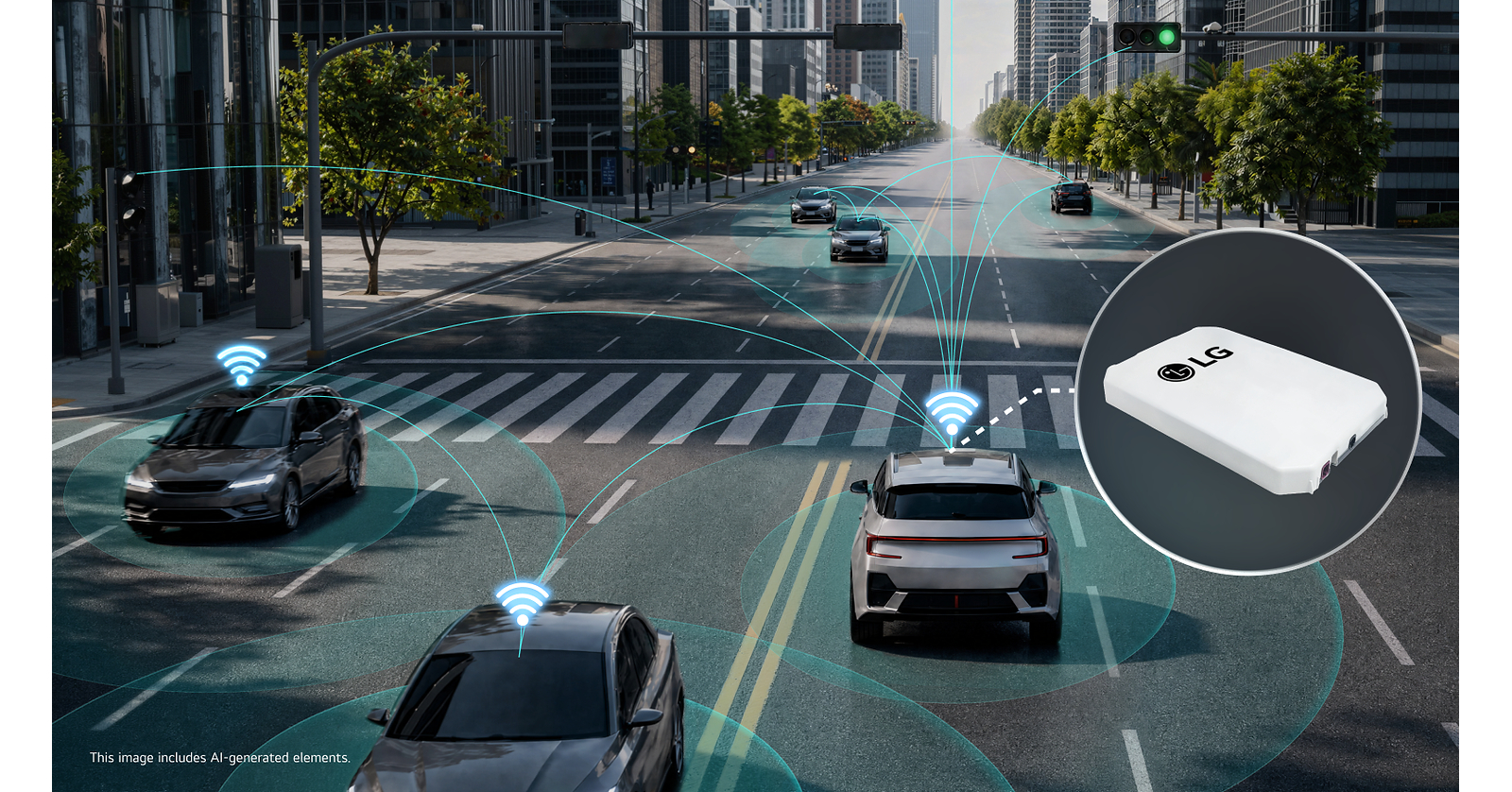
LG Electronics began mass production and started deliveries of its next-generation 5G Release 16 (R16) smart telematics solution to a premium European automaker, with the solution’s first production-vehicle deployment in Europe. The integrated unit combines a communications module and up to 12 antennas to reduce RF cabling, wiring complexity, weight, and cost, and is designed to support SDV use cases like OTA updates, V2X, and autonomous-driving data transmission. LG positions the platform (ATP software) to improve software reuse and stability while mitigating supply-chain risk by supporting multiple chipsets.
The real economic lever here is not the module itself but the re-architecture of the vehicle electrical stack: fewer discrete antenna/cable touchpoints should lower assembly complexity, validation burden, and warranty risk over time. That is modestly positive for premium OEM margins, especially on EV platforms where every kilogram and every wiring run matters; the hidden beneficiary may be the automaker’s range and software-update cadence more than the supplier headline.
For public comps, the pressure is on legacy content providers in wiring, RF cabling, and antenna-adjacent hardware, while vertically integrated Tier-1s with software-defined-vehicle exposure should defend share better. The first-order revenue uplift for LG is likely small in the near term because auto programs ramp slowly, but a repeatable platform win across multiple models could create a longer-duration backlog story. The main second-order effect is that integrated telematics increases switching costs once validated, which can make later sourcing decisions sticky.
The market should treat this as a design-win alert, not yet a material earnings event. The thesis reverses if the automaker uses the platform only on a narrow luxury program, if pricing gets re-bid after validation, or if alternative chipset/vendor modularity proves enough to blunt LG’s advantage. Over 1-3 months, watch for follow-on OEM nominations; over 6-18 months, the real test is whether this becomes a repeatable architecture standard rather than a one-off press release.
Contrarian view: consensus may underappreciate the benefit to OEM efficiency and EV range, but may also overestimate near-term supplier revenue. If anything, the stock market could be too quick to capitalize an architectural win without evidence of multi-program adoption.
AI-powered research, real-time alerts, and portfolio analytics for institutional investors.
Request DemoOverall Sentiment
mildly positive
Sentiment Score
0.25
Ticker Sentiment
