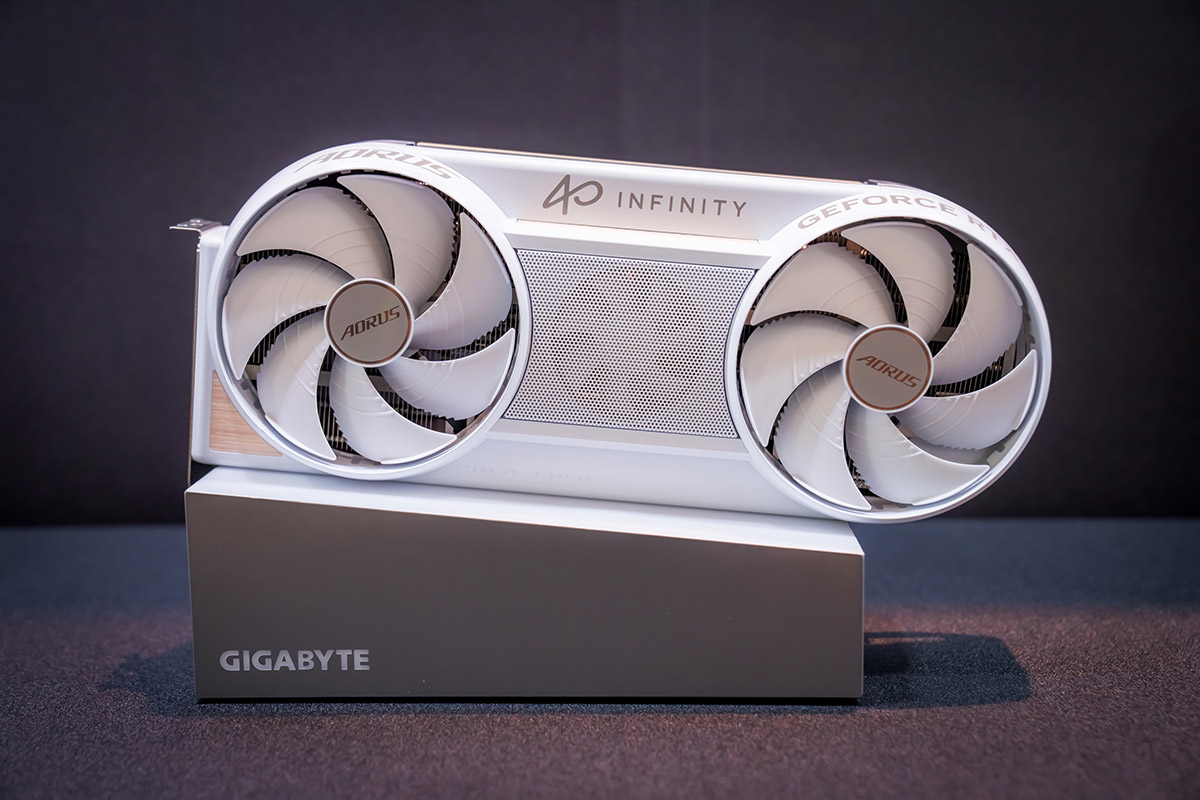
Gigabyte expanded its AORUS RTX 5090 Infinity line to additional RTX 50-series GPUs, including the RTX 5080, RTX 5070 Ti, and RTX 5070. The RTX 5080 will ship in two variants, including a white AORUS RTX 5080 Infinity Wood model, while the RTX 5090 Infinity remains tied to an NVIDIA Founders Edition-based PCB. The article is a product lineup update with no pricing, availability, or financial impact disclosed.
This is more meaningful as a branding and margin signal than as a pure unit-volume event. By extending the premium “Infinity” treatment across multiple RTX 50 SKUs, Gigabyte is trying to extract higher ASPs from a category where raw GPU performance is increasingly commoditized; the economic value sits in industrial design, perceived exclusivity, and channel differentiation. The important second-order effect is that board partners are now competing more on enclosure, aesthetics, and SKU fragmentation than on silicon content, which tends to support mix and gross margin even if end-market demand is only mid-cycle.
The biggest beneficiary is likely the add-in-board ecosystem that can command pricing power without needing NVIDIA to change the core chip roadmap. That said, the use of Gigabyte-owned PCBs on most of these models suggests more design flexibility and potentially better supply-chain control, which can improve launch cadence and reduce dependency on reference-board constraints. If this line gains traction, it could pressure less differentiated competitors that still rely on standard designs, especially in the premium desktop segment where retail buyers are willing to pay for “collector” positioning.
The contrarian risk is that these halo products may be a late-cycle sign of saturation: when vendors lean into cosmetics and special editions, it can indicate that true performance upgrades are becoming harder to monetize. Over the next 1-3 quarters, watch whether premium GPU sell-through is driven by genuine gaming/creator demand or by channel stuffing ahead of broader consumer spending weakness. If launch excitement fades quickly, the earnings impact for board partners could reverse faster than the marketing narrative suggests.
From an investment standpoint, this is a mildly positive read-through for hardware names with strong premium branding and channel reach, but not enough to justify chasing the move without confirmation from margins and inventory data. The cleaner trade is to favor companies with differentiated ecosystems and avoid those dependent on commodity board sales. The setup matters most if CES-driven demand translates into sustained preorder conversion and ASP expansion rather than one-off publicity.
AI-powered research, real-time alerts, and portfolio analytics for institutional investors.
Request TrialOverall Sentiment
neutral
Sentiment Score
0.12
