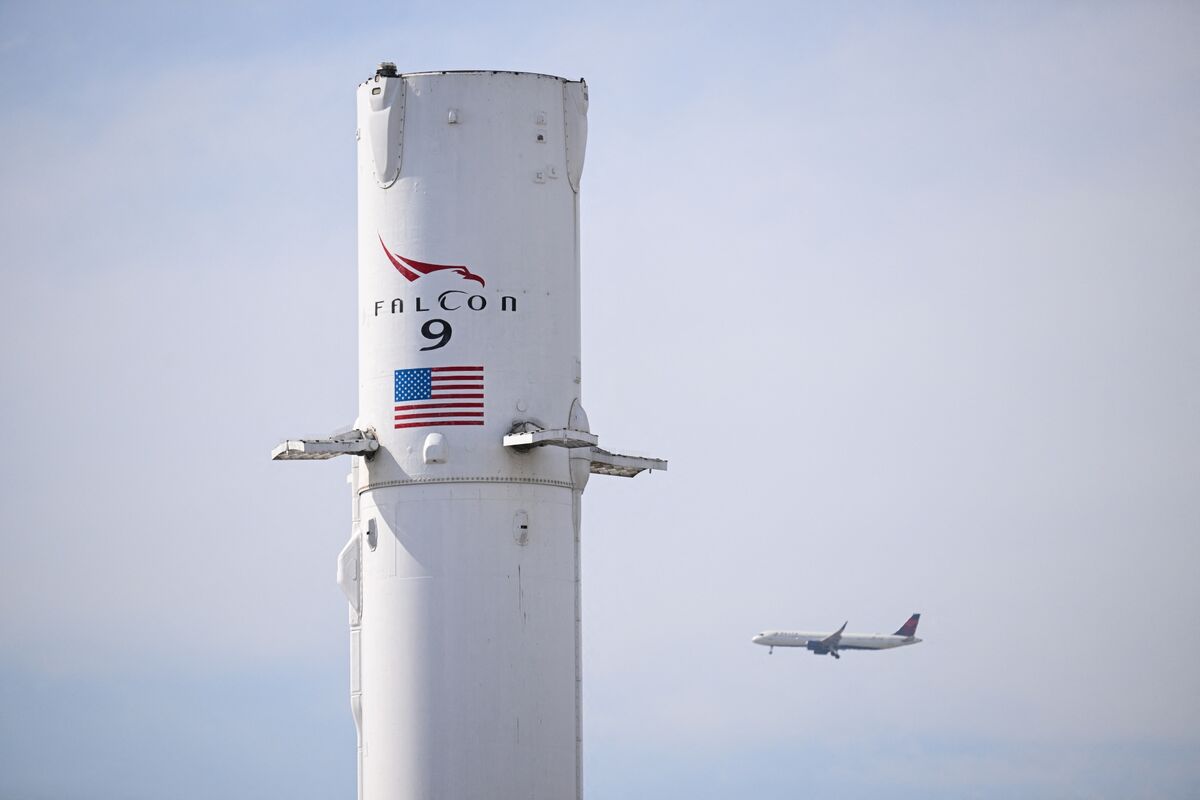
SpaceX’s $25 billion bond offering is weakening quickly in the secondary market, with paper losses reaching roughly $305 million relative to Treasuries by late Thursday. Traders say the deal is being pressured by fast-money accounts looking to flip the bonds, even as SpaceX shares have largely stabilized and expected passive equity-index buying of about $5.4 billion may provide support. The message is negative for SpaceX credit, though the move is still more of a deal-specific flow story than a broad market shock.
The signaling problem is bigger than the mark-to-market move in the new issue. A weak first secondary read on a marquee private credit debut suggests the street overestimated the depth of real fundamental demand and underestimated how much of the order book was funded by short-horizon flippers; that is a classic setup for wider concessions in future private-company financings. The key second-order effect is that any incremental capital raise by the issuer—whether debt, employee liquidity, or another equity-linked transaction—now faces a higher clearing bar, which can quietly raise the cost of capital even if headline valuation appears unchanged.
What matters for positioning is the asymmetry between equity support and credit digestion. Passive index-related buying can cushion the stock over days to weeks, but it does little for bonds, so the capital structure may start to diverge: equity can remain sticky while credit keeps leaking. That creates a potential reputational overhang for the broader private-market ecosystem, especially for late-stage venture and crossover buyers who rely on smooth exits and stable secondary pricing to justify marks.
The near-term catalyst set is technical rather than fundamental: if the bonds keep trading poorly into month-end, dealers may reduce balance-sheet support and fast money may be forced to de-risk, extending the downdraft over 1-3 weeks. The contrarian view is that this could be more about microstructure than credit quality; if the issuer remains in favor with public equity flows, the bond weakness may normalize once the short-term supply clears. Still, the first move is usually the wrong one to fade in these deals when there is no natural long-only bond bid beneath the trade.
AI-powered research, real-time alerts, and portfolio analytics for institutional investors.
Request DemoOverall Sentiment
mildly negative
Sentiment Score
-0.25
