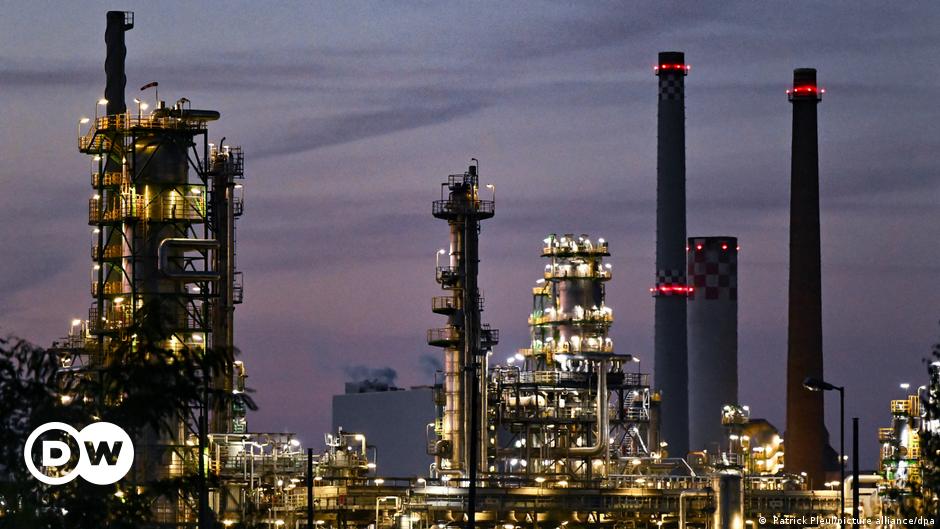
Russia plans to prohibit Kazakh crude transit via the Druzhba pipeline to Germany from May 1, affecting about 17% of the PCK Schwedt refinery's roughly 12 million metric tons of annual throughput. The refinery supplies more than 90% of Berlin and the surrounding region's petrol, diesel and heating fuel, though German officials said broader national supply is not immediately at risk because alternative imports are available. The move heightens energy-security concerns amid already tight global fuel markets and ongoing EU efforts to end Russian fossil-fuel dependence.
This is less about the lost barrels and more about Russia demonstrating it can still impose marginal pain on Europe at a time when the region is already operating with thin product buffers. The immediate transmission is not crude scarcity but refined-product tightness: a Schwedt capacity reduction would matter most in diesel, heating oil, and jet/kerosene, where Europe’s spare capacity is structurally weaker than for gasoline. That makes the next-order effect a regional price wedge: German inland product differentials should firm faster than Brent, and nearby refiners with access to non-Russian crude likely capture an outsized crack-spread windfall.
The key market risk is a short-duration squeeze in logistics, not a lasting loss of supply. Germany can reroute crude, but rerouting is costly and time-sensitive, so the first 2-6 weeks after any cutoff should see higher freight, storage utilization, and product import demand from neighboring markets. The bigger tail risk is political escalation: if this is framed as a response to sanctions or pipeline security, it could broaden from a Kazakhstan transit issue into wider infrastructure interference, which would raise the geopolitical risk premium on European energy assets even if physical volumes stay intact.
The contrarian read is that the market may overestimate the absolute supply impact and underestimate the signaling impact. If Schwedt remains operational at reduced rates, the headline shock could fade quickly, but the episode reinforces that Europe’s residual Russian-linked exposure still creates optionality for Moscow to create local bottlenecks. That argues for buying volatility in European energy and industrial inputs rather than chasing a directional crude move.
AI-powered research, real-time alerts, and portfolio analytics for institutional investors.
Request TrialOverall Sentiment
moderately negative
Sentiment Score
-0.45
