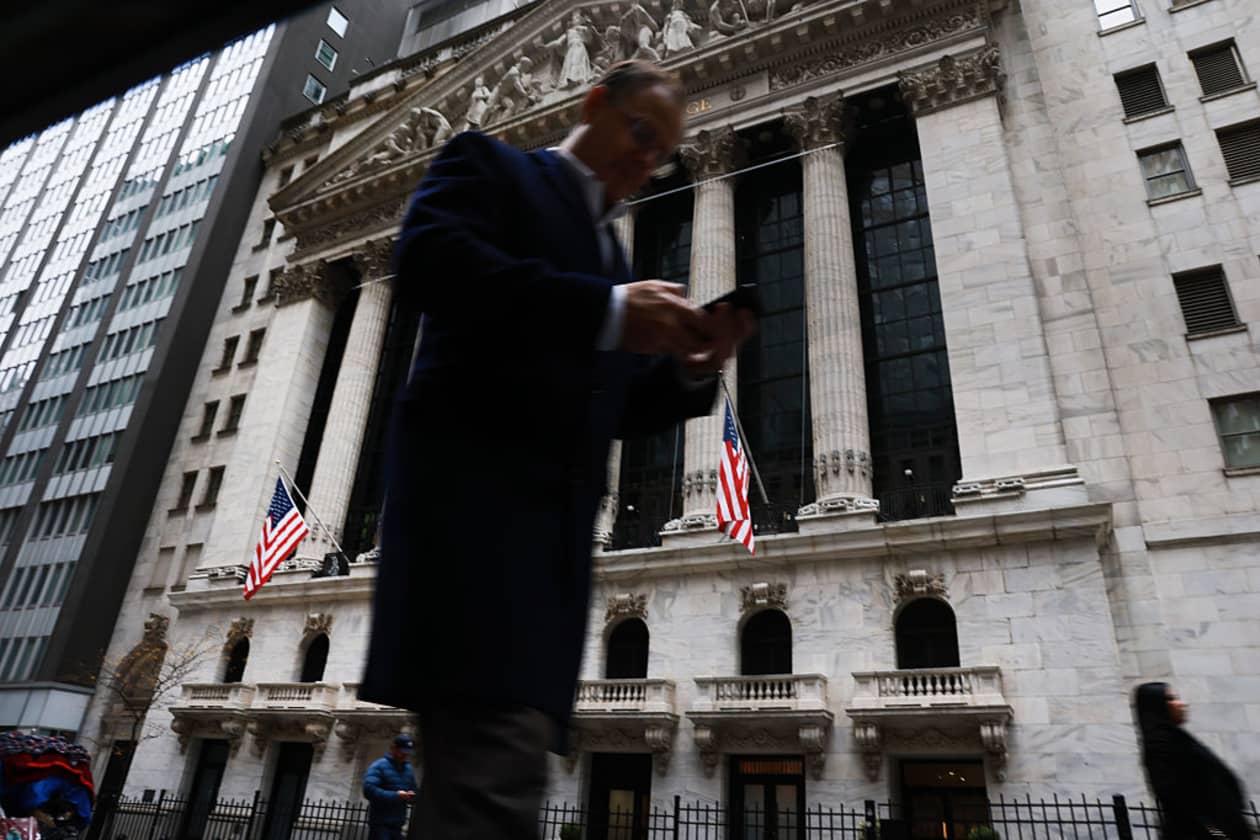
U.S. equities rallied for a fourth straight day ahead of Thanksgiving, with the Dow and S&P gaining about 0.7% on Wednesday (week-to-date +2.6% and +3.2%) and the Nasdaq up 0.8% (week-to-date +4.2%), though the S&P remains down ~0.4% for November and the Nasdaq about 2.2%. Strength was concentrated in AI-related names such as Alphabet and Broadcom and aided by the S&P moving above its 50-day moving average; expectations for a December 25-basis-point Fed cut surged to roughly 85% from 30.1% a week earlier after comments from Fed officials, shifting sentiment toward a risk-on stance. Investors are positioning for continued easing into 2026 and broader participation in the AI trade after a strong Q3 earnings season.
Market structure: The short-term winners are large-cap AI-exposed names (GOOG/GOOGL, AVGO, select cloud providers) and rate-sensitive small-cap cyclicals; losers include long-duration bond bulls and any legacy-tech vendors without clear AI monetization. Broadcom and Alphabet expanding up the AI stack increases their pricing power for chips/services; that favors high-margin vendors and cloud CSPs while pressuring commodity hardware margins. Lower front-end yields implied by an 85% December cut push investors toward equities and small caps, tightening demand for equity risk and reducing demand for safety assets.
Risk assessment: Key tail risks are a Fed no-cut surprise (yields +20–40 bps), renewed China export-control escalation hitting AVGO revenues, or AI regulation/antitrust actions versus GOOG within 3–12 months. Immediate risk (days) is Fed-speech-driven volatility; short-term (weeks) hinges on December Fed decision and December earnings commentary; long-term (quarters) depends on AI revenue monetization and semiconductor capacity expansions. Hidden dependencies include options/gamma positioning into year-end, ETF flows into tech/SMID, and corporate buybacks slowing if rates re‑normalize.
Trade implications: Favor concentrated, defined-risk longs in GOOG/GOOGL (1–2% portfolio) and AVGO (0.5–1%) to capture AI re‑rating, scaled in 25–50% now and rest after the Dec Fed outcome; use 4–8 week call spreads to limit downside. Consider pair trades long AVGO vs short INTC to capture AI-savvy share gains and inventory risk; overweight SMH/IWM by +2–3% relative and underweight TLT by -2% if cut priced. Set tactical exits: trim if S&P500 closes below its 50-day MA for 5 consecutive sessions or if 10‑yr yield rises >25 bps from current levels.
Contrarian angles: The market has largely priced a December cut (85%)—that positioning is crowded and vulnerable to disappointment; if the Fed delays, expect a fast rotation out of tech into cash/energy. The AI narrative is broadening but may be overallocated to a narrow group (GOOG/AVGO/NVDA); history (late‑2018/early‑2019 Fed pivot) shows rallies can extend but also reverse sharply on macro slippage. Unintended consequences include amplified volatility from crowded options and cross-border flows reversing if USD weakens >1.5% in two weeks.
AI-powered research, real-time alerts, and portfolio analytics for institutional investors.
Request DemoOverall Sentiment
mildly positive
Sentiment Score
0.35
Ticker Sentiment
