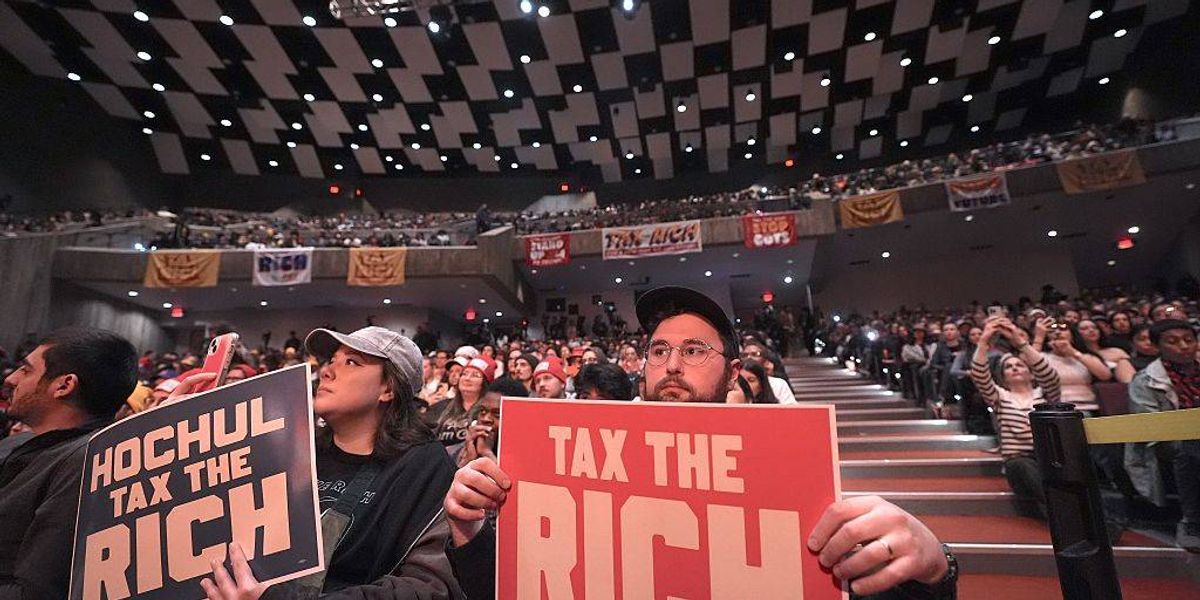
Vornado CEO Steven Roth criticized proposed tax hikes on wealthy homeowners, including a pied-à-terre tax on luxury properties valued above $5 million, framing the rhetoric as hostile to the rich. The article also cites worsening consumer conditions, with the share of Americans earning a living wage falling to 50.7% in 2025 from 55.8% in 2021, alongside record-low University of Michigan sentiment. Additional pressure comes from rising energy prices above $4.50 per gallon amid the Iran conflict, reinforcing a weaker macro backdrop.
The immediate market takeaway is not the political theater itself, but the signal that pricing power in trophy real estate is becoming more policy-sensitive just as affordability pressure is worsening across the consumer base. For VNO, the bigger issue is not a one-off pied-a-terre levy; it is that luxury urban asset owners now face a rising “regulatory discount” layered on top of weak office fundamentals and a still-fragile transaction market. That can compress cap rates at the margin, reduce high-end foreign/absentee demand, and make sponsors more selective on new NYC capital deployments over the next 6-18 months.
The second-order winner may be municipal-bond investors and politically advantaged suburban/residential alternatives, while the losers extend beyond VNO to any landlord or developer with exposed luxury inventory in blue-state metros. If the tax debate gains traction, it can also accelerate portfolio rotation away from Manhattan second-home demand into Miami, Dallas, and Sun Belt primary-residence markets. For public REITs, the larger risk is not direct tax incidence but valuation multiple compression as investors price a higher probability of localized rent, fee, and transaction frictions.
DAY is less directly exposed, but the living-wage deterioration reinforces a slower-hiring, tighter-margin labor backdrop for HR software budgets. That tends to hurt net-new bookings and seat expansion more than retention, especially if mid-market customers defer workflow upgrades while discretionary wage pressure remains sticky. In a risk-off labor environment, software names tied to headcount growth can de-rate even without an earnings miss.
Contrarian read: the market may be overestimating how much of this rhetoric becomes binding policy in the near term. The more tradable effect is sentiment and cap-rate pressure, not immediate cash flow loss. If lawmakers face pushback from the real estate lobby and high-income voters, the headline risk could fade quickly, making this a better short-the-rally setup than a structural short unless tax language advances through committee or ballot mechanics.
AI-powered research, real-time alerts, and portfolio analytics for institutional investors.
Request DemoOverall Sentiment
mildly negative
Sentiment Score
-0.25
Ticker Sentiment
