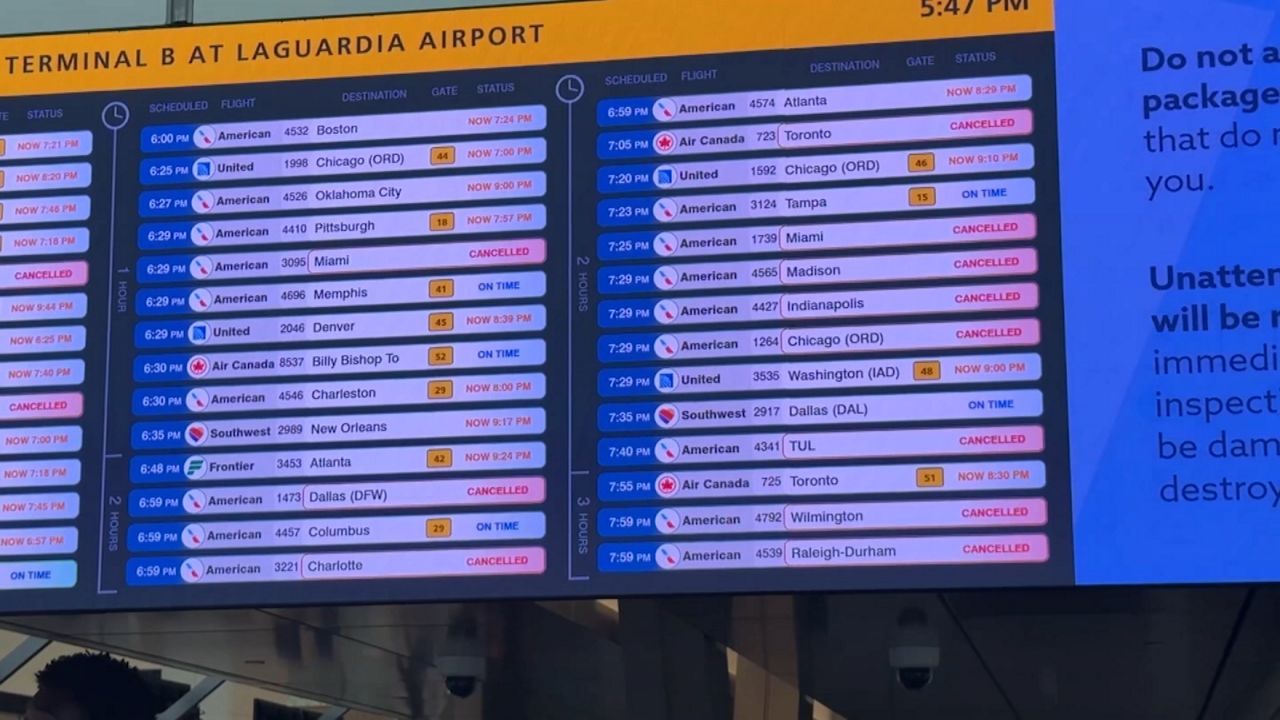
A sinkhole discovered on LaGuardia’s Runway 4/22 shut down one of the airport’s two runways, triggering ground delays, a ground stop, and multiple cancellations. Travelers were stranded with conflicting explanations from airlines, and some were told rebookings would not be reimbursed because disruptions were classified as weather-related. The incident is operationally disruptive for passengers and airport traffic, but it is unlikely to have broader market impact.
This is a near-term disruption, not a structural demand event, so the first-order impact is on schedule integrity and cost absorption rather than passenger volumes. The larger issue is that an airport with only two runways effectively becomes capacity-constrained when one is unavailable: even a few hours of closure can cascade into next-day re-fleeting, crew mispositioning, and disproportionate cancellation risk, especially for ultra-low-cost carriers that run tighter utilization and have less spare aircraft. That makes ULCC the cleanest public-market proxy for incremental operational pain, even if the headline cause is blended with weather.
The second-order effect is margin dilution from irregular operations: hotel/meal re-accommodation, crew overtime, aircraft re-routing, and lost same-day turns can easily overwhelm the revenue from affected flights over a 24-72 hour window. The carriers most exposed are those with high airport concentration and low schedule flexibility; the winners are larger network airlines with hub alternatives and better disruption management, since they can capture stranded demand and often rebook higher-yield passengers. If the runway fix takes days instead of hours, the issue can extend into booking behavior for the next 1-2 weeks as travelers avoid the airport or demand higher flexibility.
The contrarian view is that the market may over-discount a one-off operational shock because the visible cancellations are being misattributed to weather, muting the apparent earnings impact. But that opacity can cut both ways: once the true source is recognized, investor focus shifts from revenue loss to avoidable controllable costs and management credibility, which matters more for ULCC than for the broader airline complex. The event is also a reminder that infrastructure fragility is a hidden volatility source for transportation names; repeated disruptions would justify a higher risk premium even if end-demand stays intact.
AI-powered research, real-time alerts, and portfolio analytics for institutional investors.
Request DemoOverall Sentiment
moderately negative
Sentiment Score
-0.35
Ticker Sentiment
