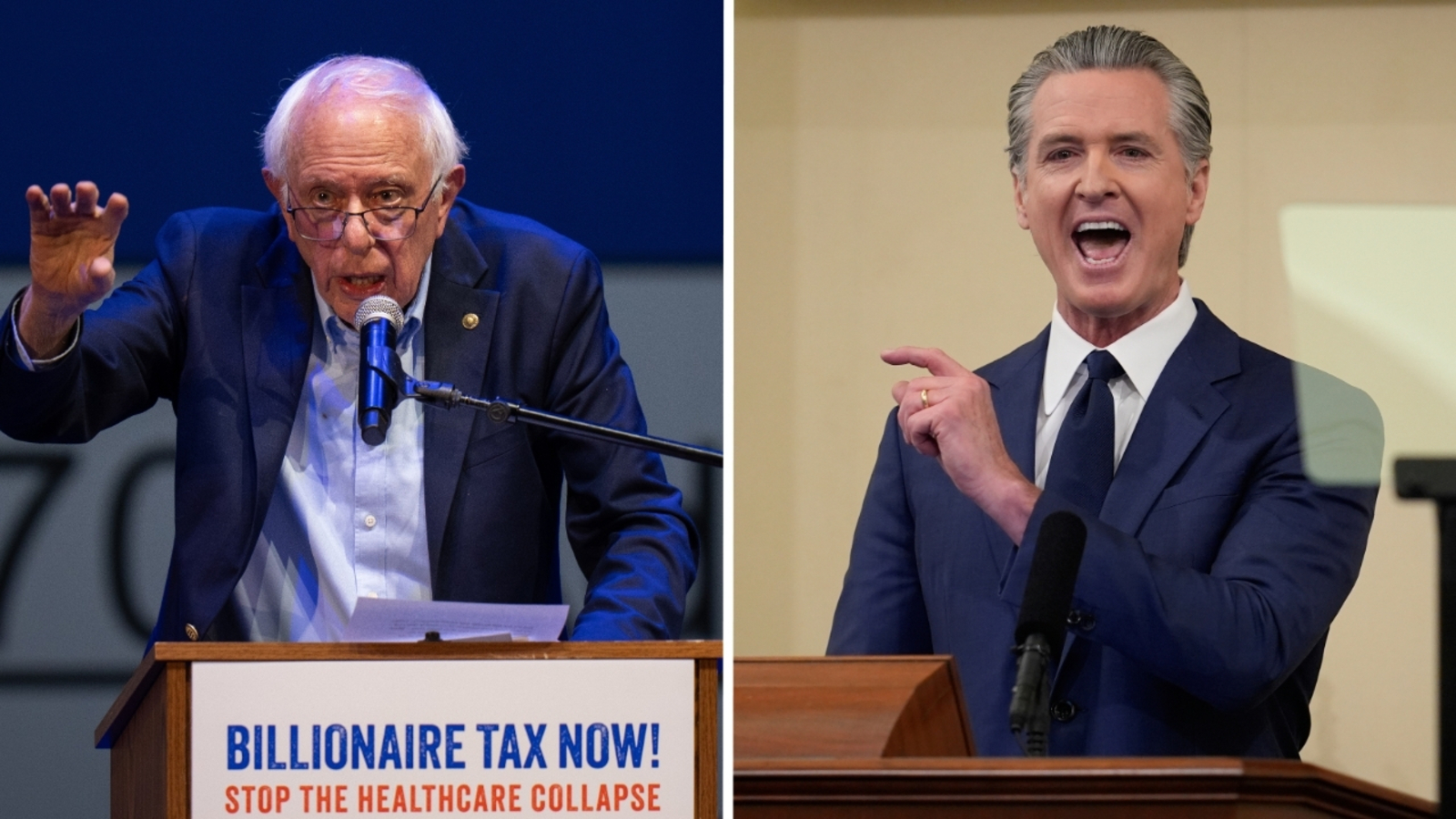
California activists are pushing a ballot initiative to impose a one-time 5% tax on billionaires' assets — including stocks, art, businesses, collectibles and IP — to replace federal cuts to health services, with supporters (including Bernie Sanders) campaigning and opponents (notably Gov. Gavin Newsom and tech leaders) warning of billionaires fleeing and damage to state finances. Backers must collect more than 870,000 signatures to qualify for the ballot; political infighting among Democrats risks complicating the broader midterm message and could have regional fiscal and corporate relocation implications that may cost the state hundreds of millions of dollars.
Market structure: Direct losers are high-net-worth Californians, California-centric growth stocks (especially META --- higher political salience) and CA commercial real estate; winners are advocacy groups, out‑of‑state fiscally competitive regions and short-volatility sellers on tech. Competitive dynamics shift marginally toward diversified national/global tech (lower migration sensitivity) and away from single-state-dependent cap tables; expect 3–7% re‑rating pressure on headline names if petitions gain traction. Cross-asset: CA muni yields could widen 20–80bps, muni CDS cheapen, tech IV to rise 15–40% on headline risk; dollar and commodities see only muted moves. Risk assessment: Tail risks include (A) wealth tax enacted and replicated in other states or at federal level (low probability, high impact: -10–25% for targeted equities) and (B) large capital flight from CA triggering longer-term tax base decline and muni stress. Time horizons: immediate (days) – headline-driven 3–8% spikes; short (weeks–months) – fundraising and hiring slowdowns; long (quarters–years) – potential structural valuation multiple compression. Hidden dependencies: private startup valuations, VC fundraising, and art/collectible markets will amplify second-order liquidity effects. Key catalysts: signature filing (>870k), court injunctions, Newsom administrative countermeasures, and midterm election outcomes (next 30–120 days). Trade implications: Tactical short META (ticker META) sized 1.5–2% portfolio via 3‑month put spreads to cap premium, enter on a >5% headline gap or within 30 days of petition validation; target 20–40% return, stop-loss 12%. Implement a dollar‑neutral pair trade: short META vs long GOOGL (equal notional 1:1) sized 1–2% to capture relative resilience in Alphabet’s ad/Cloud mix over Meta’s concentrated ad/meta exposure. Buy CA muni exposure (individual insured bonds or ETF allocation 2–3%) if 10‑yr CA muni – US Treasury spread widens by >40bps, sell into spread compression. Options strategy: buy 30–60 day straddles on META around key calendar events (petition deadline, convention) if IV spikes >25% above 90-day realized. Contrarian view: The market is likely overpricing permanence: proposal must clear >870k signatures and survives constitutional/legal attack; probability of enactment within 18 months is <40% in our view, implying current implied equity downside >10% is overstated. Historical parallels (state tax scares in CA/IL) show large short-term volatility but limited long-term earnings impact; a >15% sell‑off in GOOGL/META would likely present a buying opportunity for fundamentally strong franchises. Unintended consequence: wealthy owners may de‑risk by delisting/private transactions, reducing free float and potentially supporting mid‑term prices despite headline risk.
AI-powered research, real-time alerts, and portfolio analytics for institutional investors.
Request DemoOverall Sentiment
moderately negative
Sentiment Score
-0.35
Ticker Sentiment
