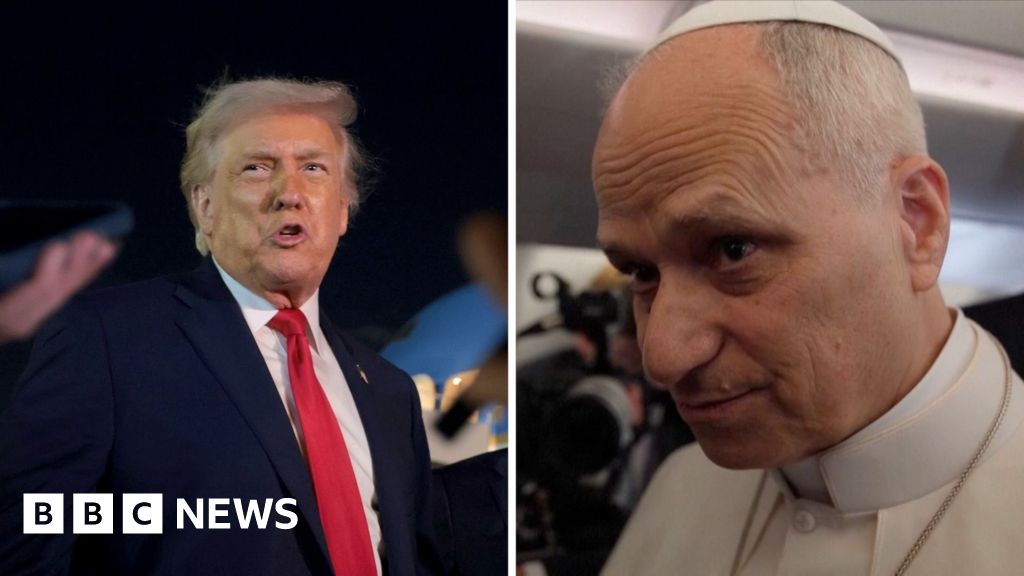
The article says President Trump’s attacks on Pope Leo and an AI-generated image of himself have triggered backlash from some conservative Catholics, especially amid disagreement over the Iran war. Several prominent Catholic voices are distancing themselves from Trump, arguing the conflict fails just-war criteria and could erode his support among Catholic voters. The piece is politically significant but has limited direct market impact.
The immediate market read is not about theology; it is about coalition management. A public clash with a symbolic authority figure can erode support at the margin among older, higher-propensity voters who are disproportionately valuable in tight-state turnout models, especially when the dispute touches morality rather than policy details. The more interesting second-order effect is that the Iran war is compressing a previously usable Republican/Catholic alignment into a harder choice set: nationalist messaging versus anti-war social doctrine. That raises the odds of localized drop-off in enthusiasm, not mass defections, which matters most in the next 2-3 election cycles and in special elections where turnout elasticity is highest.
For policy, the bigger risk is that this becomes a template for resistance from institutionally respected validators. If conservative Catholic voices keep signaling discomfort, the White House loses an outside-the-party permission structure that has helped sanitize hardline positions. That does not force a U-turn on the war, but it increases the probability of rhetorical softening, personnel reshuffles, or a deliberate outreach campaign within weeks. The market implication is higher headline volatility around defense-adjacent and immigration-linked names, but only if the dispute broadens beyond a niche faith issue into a wider narrative of overreach.
The AI-image angle is a governance tell: it suggests weak message discipline and a willingness to provoke core supporters for engagement, which can be positive for attention but negative for coalition durability. In political markets, that usually supports short-dated volatility rather than directional conviction. The contrarian point is that the backlash may be overread: many of the loudest critics are still ideologically aligned with the president on immigration and cultural issues, so support may prove sticky unless there is a clear electoral cost in polling.
Best trading setup is to express this as a volatility event, not a beta call. The path dependency is key: if polling among White Catholics or Catholic swing voters deteriorates over the next 2-6 weeks, the issue can move from symbolic to actionable for campaign strategists. If the administration de-escalates with the Vatican, the trade likely mean-reverts quickly; if it doubles down, the damage compounds through trust and credibility, not just one news cycle.
AI-powered research, real-time alerts, and portfolio analytics for institutional investors.
Request TrialOverall Sentiment
neutral
Sentiment Score
-0.10
