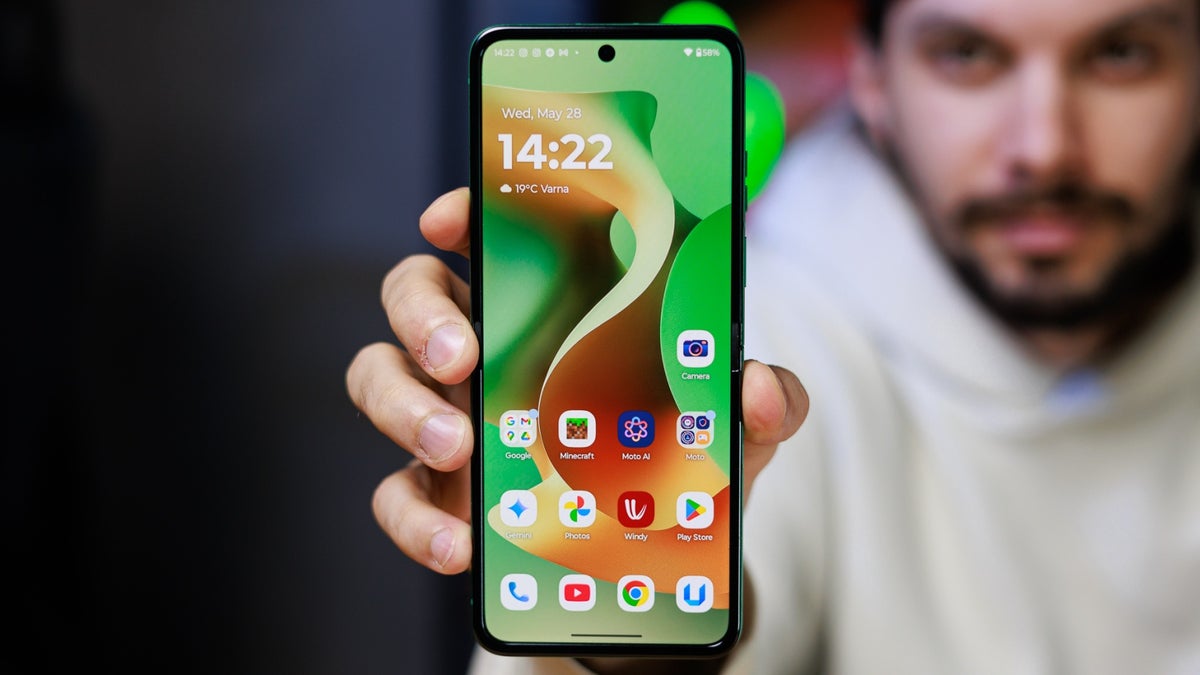
Motorola's rumored 2026 Razr lineup is expected to launch on May 21, 2026 with prices of $799.99 for the Razr, $1,099.99 for the Razr+, $1,499.99 for the Razr Ultra, and $1,899.99 for the Razr Fold. The report suggests mostly incremental hardware changes, while the Razr and Razr+ are each expected to cost $100 more than their 2025 predecessors and the Razr Ultra about $200 more in the same configuration. The article is mildly negative for demand and brand competitiveness because higher prices appear to come with limited spec upgrades.
Motorola is signaling a classic “good enough” refresh strategy at the exact moment the US foldable market is becoming more price-sensitive, not less. The real issue is not the incremental spec delta, but the implied elasticity: a $100 step-up in the entry and mid-tier models raises the hurdle rate for first-time foldable buyers just as Samsung and Google are normalizing the category with more credible software ecosystems. That matters because foldables still sell on perceived novelty; once price parity with mainstream flagships disappears, conversion rates can deteriorate faster than unit-share models suggest.
The more interesting second-order effect is on Qualcomm. If Motorola is truly reusing a last-year-class Snapdragon platform in the premium flip, it reinforces a broader thesis that Android OEMs are stretching silicon cycles to protect margins rather than chasing performance leadership. Near term, that is neutral-to-slightly negative for QCOM’s premium-tier content growth, because design wins may still ship, but mix shifts toward older, cheaper SoCs compress ASP uplift. Over a 6-12 month horizon, the bigger risk is that foldables stop being a meaningful halo category for component suppliers if launch excitement is diluted by pricing fatigue.
The contrarian view is that the market may be overestimating demand damage from higher sticker prices and underestimating carrier subsidy support. In the US, foldables are still mostly financed, so list price is less binding than monthly payment; if carriers use promos to keep headline installments flat, unit demand could hold up better than feared while Motorola captures higher gross dollars per device. The real watch item is not launch week buzz, but whether return rates and trade-in generosity deteriorate by late summer, which would show that consumers are rejecting the product-value proposition rather than just its MSRP.
Catalyst-wise, the next 30-60 days matter for QCOM only insofar as the product launch confirms whether Motorola is leaning on recycled silicon across its 2026 lineup. If that happens, the stock’s near-term upside from handset momentum should be capped, while downside protection comes from the still-dominant premium Android installed base. The setup is more of a margin-quality question than a volume story, and that usually resolves over several quarters rather than at announcement.
AI-powered research, real-time alerts, and portfolio analytics for institutional investors.
Request DemoOverall Sentiment
mildly negative
Sentiment Score
-0.15
Ticker Sentiment
