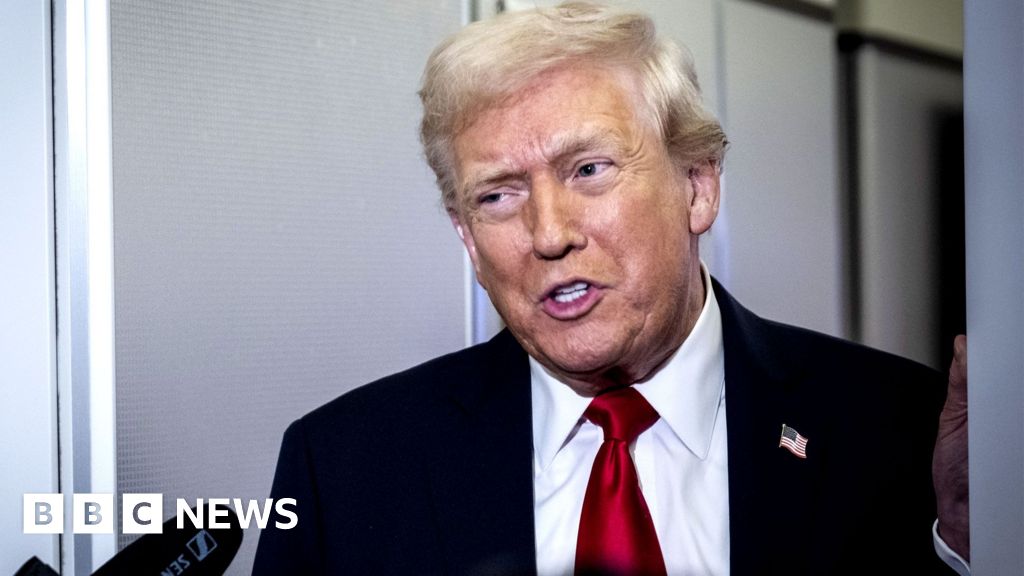
A leaked October call transcript reported by Bloomberg shows special envoy Steve Witkoff advising Russian foreign policy adviser Yuri Ushakov on how to flatter President Trump while discussing a US-drafted 28-point peace plan that initially reflected many Russian positions on the war in Ukraine. Trump defended Witkoff as a dealmaker even as the plan was revised after criticism from Ukraine and European allies; Witkoff has visited Moscow several times and is due to meet Putin next week. The episode, and subsequent Trump-Putin phone engagement and debate over providing long-range Tomahawk missiles to Kyiv, increases political and geopolitical uncertainty that could complicate US–European coordination on the conflict and modestly elevate tail risk for defense and risk-sensitive assets.
Market structure: A perceived US tilt toward a negotiated outcome that flatters Russia would mechanically pressure US/EU defense demand expectations and risk premiums priced into BA, LMT, RTX and ETF ITA; downside of 5–15% is plausible over 3–6 months if concrete arms curbs are announced. Energy and commodity risk premia fall (WTI -5% to -12% tail), while pro-risk FX (EUR, RUB) and cyclical EU names could re-rate higher; sovereign bond yields would likely rise modestly (10–30bp) on a global risk-on shift.
Risk assessment: Tail risks include a political backlash that triggers sanctions, supply shocks or expedited weapons deliveries — each could invert the market within days. Immediate horizon (0–14 days) is dominated by headlines and summit outcomes; short-term (1–3 months) by policy actions (Tomahawks/no Tomahawks) and long-term (3–18 months) by budget reallocation and election outcomes. Hidden dependencies: congressional responses, bank exposures to sanctioned Russian entities, and private actors (RDIF ties) can rapidly change counterparty risk.
Trade implications: Implement option structures (defense put spreads, oil put spreads), FX directional positions (EURUSD longs) and volatility hedges (VIX call spreads) sized for conviction: 1–3% of capital per idea with 30–90 day horizons. Use event triggers (summit occurs, 7‑day no‑Tomahawk window) to initiate/close; re-price if US 10y yield moves >15bp or WTI moves >8%.
Contrarian angles: Consensus assumes de-escalation lowers defense stocks — underpriced is the opposite tail where leaks provoke hawkish US legislative action and faster weapons flow, re-rating defense +10–25% quickly. Historical parallels: 2014 Crimea saw rapid defense repricing and commodity volatility; therefore hedge both directions and avoid binary single-name exposure.
AI-powered research, real-time alerts, and portfolio analytics for institutional investors.
Request DemoOverall Sentiment
mildly negative
Sentiment Score
-0.25
